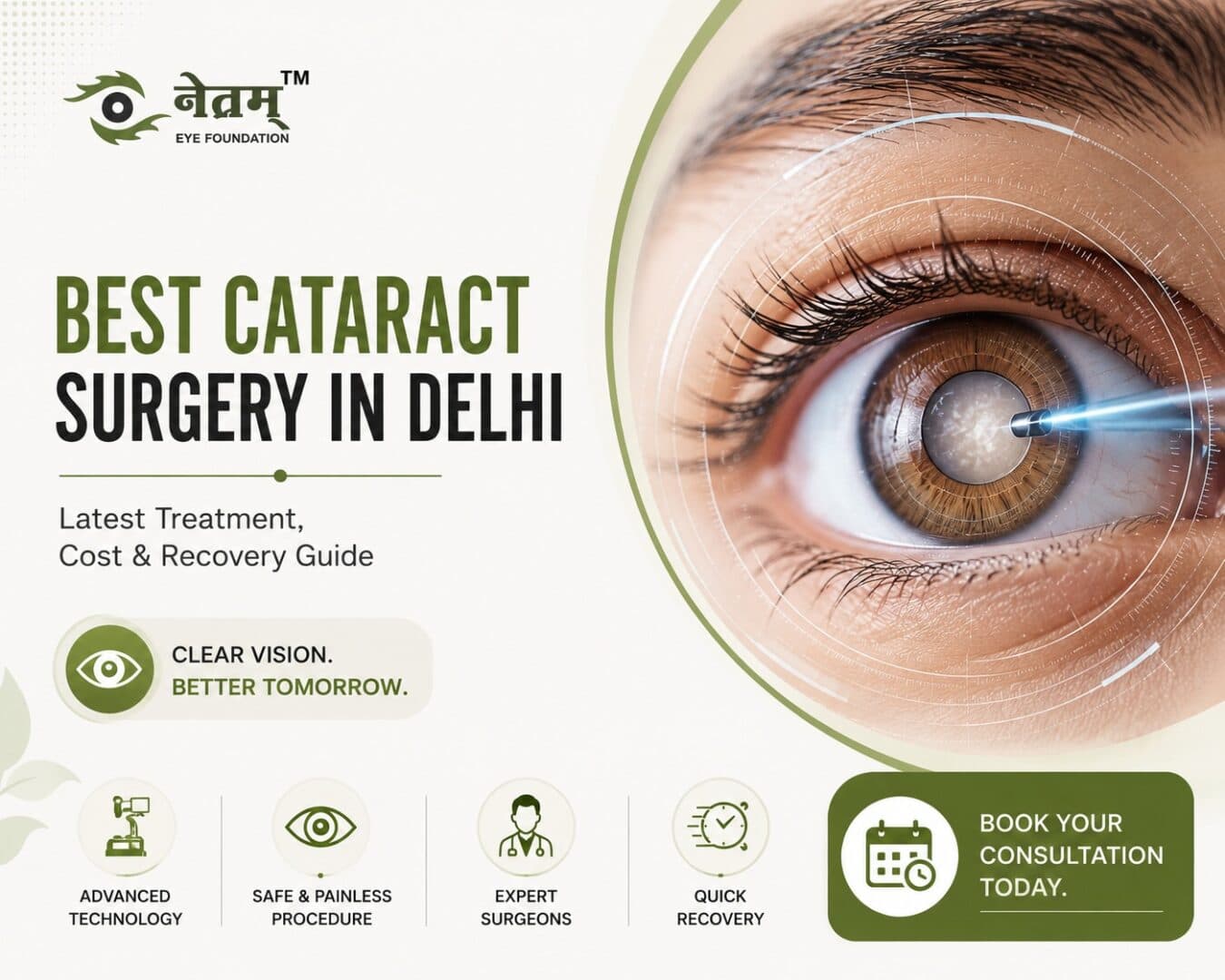
Best Cataract Surgery in Delhi – Latest Treatment, Cost & Recovery Guide
Cataracts are one of the most common causes of vision impairment worldwide, affecting millions of people as they age. The condition gradually clouds the eye’s natural lens, leading to blurry vision, difficulty with night driving, and a general dimming of the world’s colors. The good news? Cataract surgery is one of the safest and most effective procedures in modern medicine, capable of restoring crystal-clear vision in just minutes.
For those seeking the best cataract surgery in Delhi, the options are abundant, but choosing the right center requires more than just a quick online search. This guide delves into the latest cataract surgery techniques, associated costs, recovery timelines, and key factors to consider. We will also shine a spotlight on Netram Eye Foundation, a compassionate and highly skilled eye care center offering the best cataract surgery in Delhi, to help you make an informed decision for your vision.
Understanding Cataracts and the Need for Surgery
A cataract is essentially the clouding of the eye’s natural lens, which sits behind the iris and the pupil. This lens works much like a camera lens, focusing light onto the retina at the back of the eye to produce clear images. As we age, proteins in the lens can clump together, forming a cloudy area that blocks some light from reaching the retina.
While cataracts are primarily an age-related condition, they can also develop due to other factors, including diabetes, prolonged exposure to ultraviolet light, smoking, and eye injuries. Initially, stronger lighting and eyeglasses can help manage symptoms. However, as the cataract progresses, vision impairment can significantly interfere with daily activities like reading, driving, and recognizing faces.
When cataracts start to affect your quality of life, surgery is the only effective treatment. There is no medication or eye drop that can reverse or dissolve cataracts. Modern cataract surgery involves removing the clouded lens and replacing it with a clear, artificial intraocular lens (IOL). It’s a highly successful procedure with a success rate that exceeds 99%.
Why Delhi for Cataract Treatment?
Delhi has emerged as a premier destination for eye care in India, offering a unique blend of world-class infrastructure, experienced surgeons, and affordable treatment options. The city is home to numerous state-of-the-art eye hospitals and foundations that attract patients not only from across India but also from abroad. The cost of cataract surgery in Delhi is significantly lower than in Western countries, yet the quality of care often matches or exceeds international standards. This is precisely why many consider Delhi as the go-to destination for the best cataract surgery in Delhi and surrounding regions.
Latest Cataract Surgery Techniques in Delhi
The field of cataract surgery has seen remarkable advancements in recent decades. Modern procedures are minimally invasive, highly precise, and offer faster recovery times than ever before. Here are the latest techniques available at top eye centers offering the best cataract surgery in Delhi, including Netram Eye Foundation.
1. Phacoemulsification (Phaco)
Phacoemulsification is the gold standard for cataract surgery today. This technique uses ultrasound energy to break the cloudy lens into tiny fragments. These fragments are then gently suctioned out of the eye through a small incision.
-
Key Features:
-
Small Incision: The incision is typically less than 3 millimeters, which is self-sealing and does not require stitches in most cases.
-
Less Trauma: Because the incision is so small, there is less trauma to the eye tissues, leading to quicker healing.
-
Quick Procedure: The surgery itself is usually completed within 10 to 15 minutes, often in just 3 minutes of operating time for skilled surgeons.
-
2. Microincision Cataract Surgery (MICS)
MICS is an evolution of phacoemulsification, taking the minimally invasive approach even further. In this procedure, the incision is reduced to 1.8 millimeters or even smaller.
-
Advantages:
-
Greater Stability: The smaller wound is more stable and less likely to distort the cornea’s shape.
-
Less Astigmatism: Reduced surgical induced astigmatism means potentially better unaided vision after surgery.
-
Faster Visual Recovery: Many patients experience clear vision as early as the day after surgery.
-
3. Laser-Assisted Cataract Surgery (FLACS)
Femtosecond Laser-Assisted Cataract Surgery (FLACS) represents the pinnacle of precision in cataract surgery. A laser is used to perform the most delicate steps of the procedure, which were traditionally done by hand.
-
Enhanced Precision:
-
Corneal Incisions: The laser creates precise incisions with customized shape and depth.
-
Capsulotomy: It creates a perfectly circular opening in the lens capsule, ensuring the new IOL is centered correctly.
-
Lens Fragmentation: The laser softens and breaks the cataract, reducing the amount of ultrasound energy needed. This is particularly beneficial for patients with hard cataracts or other eye conditions.
-
4. Premium Intraocular Lenses (IOLs)
The lens implanted during surgery is just as important as the technique used. While a standard monofocal IOL provides excellent vision at one distance (usually far), patients may still need glasses for reading or intermediate vision. “Premium” IOLs have been developed to reduce or even eliminate the need for glasses.
Types of Premium IOLs:
-
Multifocal IOLs: These lenses have multiple focusing zones, allowing you to see clearly at various distances.
-
Toric IOLs: Designed specifically to correct astigmatism.
-
Extended Depth of Focus (EDOF) IOLs: Provide a continuous range of vision from distance to intermediate.
At centers like Netram Eye Foundation, doctors like Dr. Anchal Gupta work with patients to select the most suitable IOL based on their lifestyle and visual needs. This personalized approach is what sets apart the best cataract surgery in Delhi from the rest.
The Cost of Cataract Surgery in Delhi
One of the primary reasons patients choose Delhi for cataract surgery is the affordability. The cost can vary widely based on a number of factors, including the type of procedure, the hospital’s infrastructure, the surgeon’s experience, and, most significantly, the type of IOL chosen. Despite the variations, Delhi remains one of the most cost-effective cities globally for the best cataract surgery in Delhi.
Estimated Cost Breakdown
| Treatment Component | Estimated Cost (INR) |
|---|---|
| Standard Phacoemulsification with Monofocal IOL | ₹25,000 – ₹45,000 |
| Laser-Assisted Cataract Surgery (FLACS) with Monofocal IOL | ₹45,000 – ₹70,000 |
| Phacoemulsification with Premium IOL (Multifocal/Toric) | ₹60,000 – ₹1,50,000+ |
| FLACS with Premium IOL | ₹80,000 – ₹2,50,000+ |
It is important to note that these are estimates and can vary.
Factors Influencing Cost
-
Type of Intraocular Lens (IOL): This is the biggest cost driver. Standard monofocal IOLs are budget-friendly, while premium lenses are more expensive due to their advanced optics.
-
Surgical Technique: Laser-assisted surgery incurs an additional cost compared to standard phacoemulsification because of the technology involved.
-
Hospital/Foundation: The brand, location, and amenities of the eye center also impact the final bill. However, choosing the best cataract surgery in Delhi doesn’t always mean the highest cost; it means the best value.
-
Doctor’s Fee: Highly experienced surgeons with a high success rate may charge a premium for their expertise.
-
Pre- and Post-Operative Care: This includes consultations, diagnostic tests, medications, and follow-up visits.
Many eye foundations and hospitals offer comprehensive packages that cover all expenses from pre-surgery consultation to post-operative care, providing patients with clarity and peace of mind. This transparent pricing is another hallmark of the best cataract surgery in Delhi.
Cataract Surgery Recovery Guide
A successful cataract surgery is only half the battle won; a smooth recovery is crucial to achieving the best possible visual outcome. Modern techniques have made recovery faster, but following your doctor’s instructions is essential. Even with the best cataract surgery in Delhi, recovery discipline determines the final outcome.
The Immediate Aftermath (First 24 Hours)
-
Rest: You will be asked to rest for a few hours after the surgery.
-
Shield: Your eye will be covered with a protective shield to prevent accidental rubbing or pressure.
-
Vision: Many patients notice an immediate improvement in vision, but it is also common to experience some blurriness for the first few days as the eye adjusts.
-
Discomfort: There is usually very little pain, but a sensation of scratchiness or grittiness is common.
The First Week Post-Surgery
-
Light Activities: You can resume light activities such as reading, watching television, and walking almost immediately.
-
Eye Drops: You will be prescribed antibiotic and anti-inflammatory eye drops. Strictly adhere to the schedule and do not stop or change the dosage without consulting your doctor.
-
Protection: Avoid getting soap, water, or any foreign particles into your eye. When washing your face, use a clean, damp cloth and be careful around the eye area.
-
Avoid Strain: Do not bend down to pick up objects or engage in any activity that increases pressure in your head. Avoid heavy lifting and strenuous exercise.
-
Results: Studies show that by the first week after surgery, 90% of patients have achieved a stable or improved uncorrected distance visual acuity.
One Month to Three Months (Full Recovery)
-
Long-term Healing: While you can resume most normal activities, the eye is still healing. The surgical wound takes about 1 to 3 months to heal completely.
-
No Rubbing: Under no circumstances should you rub or press on your eye. This can dislodge the new IOL or cause complications.
-
Avoid Strenuous Activities: Continue to avoid activities that could cause eye injury, such as swimming or contact sports, until cleared by your doctor.
-
Follow-up: Regular follow-up appointments are a must. You will typically be seen at 1 day, 1 week, and 1 month after surgery.
-
Final Result: Your final vision will be more stable by the 3-month mark. This is when your prescription for glasses, if needed, will be finalized.
General Recovery Timeline
| Time After Surgery | What to Expect |
|---|---|
| 1 Day | Vision may be clearer. The protective shield is removed. 83% have improved vision. |
| 1 Week | Most daily activities can be resumed. Can usually return to work. 90% have improved vision. |
| 1 Month | Most restrictions (like strenuous exercise) are lifted. Follow-up consultation is held. |
| 3 Months | The eye is fully healed. Vision stabilizes, and a final glasses prescription is determined. |
Featured Center: Netram Eye Foundation
When searching for the best cataract surgery in Delhi, the Netram Eye Foundation stands out as a center of excellence and compassion. Located in C.R. Park, New Delhi, Netram Eye Foundation combines advanced technology with a patient-first approach. It is widely regarded as a top destination for the best cataract surgery in Delhi due to its consistent track record of successful outcomes.
Why Choose Netram Eye Foundation?
-
Expertise and Experience: The foundation is led by skilled ophthalmologists like Dr. Anchal Gupta, who has extensive experience in performing successful cataract surgeries. The surgical expertise ensures that procedures are swift and effective, solidifying its reputation for the best cataract surgery in Delhi.
-
Patient-Centric Care: Patients at Netram Eye Foundation are treated with dignity and compassion. They focus not just on treating the eye, but on understanding the patient’s journey and anxieties.
-
Advanced Technology: They utilize modern phacoemulsification techniques to ensure minimal downtime and rapid visual recovery, which is essential for the best cataract surgery in Delhi.
-
Trust and Integrity: The foundation’s commitment to its patients is seen through its long-term relationships and high patient satisfaction. This trust is what makes them a preferred choice for the best cataract surgery in Delhi.
Netram Eye Foundation is more than just an eye hospital; it’s a place where vision is restored and lives are transformed. Many patients travel from afar to experience what is often called the best cataract surgery in Delhi at this very foundation.
Patient Stories of Hope
The real testament to a center’s quality is the lives it changes. Netram Eye Foundation has numerous inspiring stories, such as that of Abdul Kalam, a patient whose unwavering faith and trust in the foundation led him to get both his eyes successfully treated for cataracts by Dr. Anchal Gupta.
Similarly, Madhumati Devi, who was nervous before her surgery, found immense comfort in Dr. Gupta’s friendly approach. She was amazed that within just 3 minutes on the operating table, her vision was restored to the coveted 6/6 clarity. These stories highlight not just the medical success but the compassionate environment of the foundation, further proving why it offers the best cataract surgery in Delhi.
FAQs About Cataract Surgery
1. What is the best age for cataract surgery?
There is no specific age. Surgery is recommended when cataracts interfere with your daily life and visual needs. Many experts agree that the best cataract surgery in Delhi is available for patients of all age groups.
2. Is cataract surgery a major operation?
While it is a surgery, modern phacoemulsification is minimally invasive, taking only 10-15 minutes and requiring only local anesthesia. This is the standard for the best cataract surgery in Delhi.
3. When can I return to work?
Most patients can return to work and normal activities after about one week, especially after undergoing the best cataract surgery in Delhi with advanced techniques.
4. Will I need glasses after cataract surgery?
It depends on the IOL chosen. With standard monofocal IOLs, reading glasses are often needed. Premium multifocal IOLs can reduce or eliminate the need for glasses. Your surgeon will guide you to the best option.
5. What are the restrictions after cataract surgery?
-
No rubbing eyes.
-
Avoid heavy lifting and strenuous exercise for a month.
-
Keep water out of the eye for at least two weeks.
-
Follow the eye drop schedule strictly.
6. Is cataract surgery painful?
No. The eye is numbed with local anesthesia, and you will be given a mild sedative to relax. Most patients experience no pain during the procedure, especially with the best cataract surgery in Delhi.
7. How quickly does vision improve?
Many patients see improvements within 24 hours. However, full stabilization of vision can take up to 3 months.
Conclusion
Choosing to undergo cataract surgery is a significant step toward a clearer, brighter future. With world-class facilities and expert surgeons like those at Netram Eye Foundation, Delhi offers some of the best and most affordable cataract surgery options globally. In fact, Delhi has become synonymous with the best cataract surgery in Delhi for both domestic and international patients.
If you or a loved one are facing the challenges of cataracts, don’t let fear or confusion hold you back. Advances in technology and care have made this journey safe and successful. The best cataract surgery in Delhi is within your reach, offering a pathway to restored vision and an improved quality of life. Trust the experts, trust the process, and reclaim your vision today.
Medically reviewed by Dr. Anchal Gupta, Netram Eye Foundation. This article is for general awareness and is not a substitute for a personal consultation.