Blurred Distance Vision
The most common symptom. Road signs, classroom boards, or television screens may appear blurred while reading or viewing nearby objects remains clear.
■UNDERSTANDING THE CONDITION
Myopia is a refractive condition in which light entering the eye focuses in front of the retina instead of directly on it, causing distant objects to appear blurry while near objects remain clear.
This focusing error typically occurs when the eyeball grows longer than normal or when the cornea becomes too curved. Myopia commonly develops during childhood or adolescence and may gradually progress until early adulthood. Environmental factors such as prolonged near work, increased screen time, and limited outdoor activity may contribute to its development and progression.
With proper diagnosis and appropriate correction provided by an ophthalmologist in Delhi, myopia can be effectively managed to restore clear distance vision and, in suitable cases, reduce reliance on corrective eyewear.
Myopia primarily involves the cornea, crystalline lens, and axial length of the eyeball. When the eye becomes slightly longer than normal or the cornea is excessively curved, incoming light rays focus in front of the retina rather than directly on it, leading to blurred distance vision.
Myopia is a common refractive error affecting distance vision. Key characteristics include:
■CLINICAL PRESENTATION
Symptoms of myopia often develop gradually and may become noticeable during school years when distant viewing is frequently required:
Blurred Distance Vision
The most common symptom. Road signs, classroom boards, or television screens may appear blurred while reading or viewing nearby objects remains clear.
Squinting to Improve Focus
Individuals with myopia often squint in an attempt to sharpen visual clarity. Squinting reduces the amount of unfocused light entering the eye.
Eye Strain
Continuous effort to focus on distant objects causes eye fatigue or discomfort, particularly during tasks requiring frequent distance viewing.
Frequent Headaches
Eye strain associated with uncorrected myopia can lead to headaches, particularly after prolonged visual tasks such as studying or screen work.
Sitting Close to Screens
Children with myopia often prefer sitting closer to televisions, tablets, or classroom boards in order to see clearly — one of the earliest behavioural signs.
Difficulty Driving at Night
Blurred distance vision may become more pronounced in low-light conditions, making night driving challenging due to glare and reduced contrast.
These symptoms may indicate complications associated with high or progressive myopia and require prompt evaluation:
Flashes or Floaters
Same day evaluationSudden flashes of light or new floaters may indicate retinal complications associated with high myopia requiring urgent assessment.
Distorted Vision
Immediate evaluationIf straight lines appear wavy or distorted, it may indicate retinal involvement requiring immediate examination.
Sudden Vision Changes
Urgent assessmentAny sudden or unexplained change in vision should be evaluated promptly to rule out retinal problems or other ocular conditions.
Rapid Increase in Myopia
Within 1 weekA sudden increase in spectacle power, particularly in children or adolescents, may indicate progressive myopia requiring specialist monitoring.
Severe Blurred Vision
Within 1 weekIf distance vision becomes significantly blurred and interferes with daily activities such as driving, professional evaluation is recommended.
Persistent Eye Strain
Within 1 weekContinuous eye fatigue despite wearing corrective lenses may suggest progression of myopia or an incorrect prescription.
Ask yourself these questions to determine if an eye examination is needed:
If you answered "yes" to any of these questions, a comprehensive eye examination at an eye clinic in Delhi can confirm whether myopia is present and determine the best correction options.
■TRIGGERS & ROOT CAUSES
Myopia develops due to a combination of genetic predisposition and environmental influences. These lifestyle factors are the most commonly modifiable contributors:
Prolonged Near Work
HighExtended periods of reading, writing, studying, or computer work place continuous demand on the eye's focusing system. Long durations of near work may contribute to excessive eye growth in children and adolescents.
Excessive Screen Time
HighSustained use of smartphones, tablets, and computers requires continuous near focusing. Prolonged screen exposure without adequate breaks increases visual demand, particularly in children and teenagers.
Limited Outdoor Activity
HighResearch suggests that children who spend less time outdoors may have a higher likelihood of developing myopia. Exposure to natural daylight and distant viewing outdoors supports healthy eye growth.
Poor Visual Habits
ModerateHolding reading materials very close or studying in dim lighting may increase visual strain and contribute to prolonged near focusing stress on the eyes.
Continuous Study Without Breaks
ModerateLong hours of uninterrupted reading or studying place sustained demand on the eye's focusing muscles. Regular breaks to shift focus to distant objects help relieve this strain.
Early Academic Visual Demand
ModerateChildren exposed to intensive reading and digital learning from an early age often spend significant time on near-vision tasks, increasing the likelihood of developing myopia during childhood.
Structural and environmental factors that affect eye growth and focusing ability contribute to myopia development:
Genetic Predisposition
Children with one or both parents who have myopia are more likely to develop the condition due to inherited tendencies affecting eye growth.
Eye Growth Abnormalities
Excessive elongation of the eyeball during development causes light rays to focus in front of the retina rather than on it.
Reduced Exposure to Natural Light
Limited exposure to outdoor daylight may influence normal eye growth and increase myopia risk in children.
Urban Lifestyle
Urban environments often involve increased indoor activities and screen usage, which may contribute to higher myopia prevalence.
Educational Visual Demand
Academic environments requiring prolonged reading and digital device use may increase visual stress and myopia risk.
Environmental Visual Stress
Frequent exposure to screens and artificial lighting can increase visual strain and near-focus demand on the eyes.
In some cases, myopia may be associated with underlying genetic or systemic factors:
Genetic Eye Disorders
Certain inherited eye conditions may influence refractive development and predispose individuals to myopia.
Connective Tissue Disorders
Some systemic disorders affecting connective tissue can alter eye structure and contribute to increased axial length.
Retinal Conditions
High myopia may sometimes be associated with retinal thinning or degenerative changes requiring regular monitoring.
Developmental Eye Conditions
Abnormal ocular development during childhood may affect refractive power and contribute to myopia.
Systemic Disorders
Rare systemic conditions may influence ocular growth and refractive status.
■CLINICAL EVALUATION
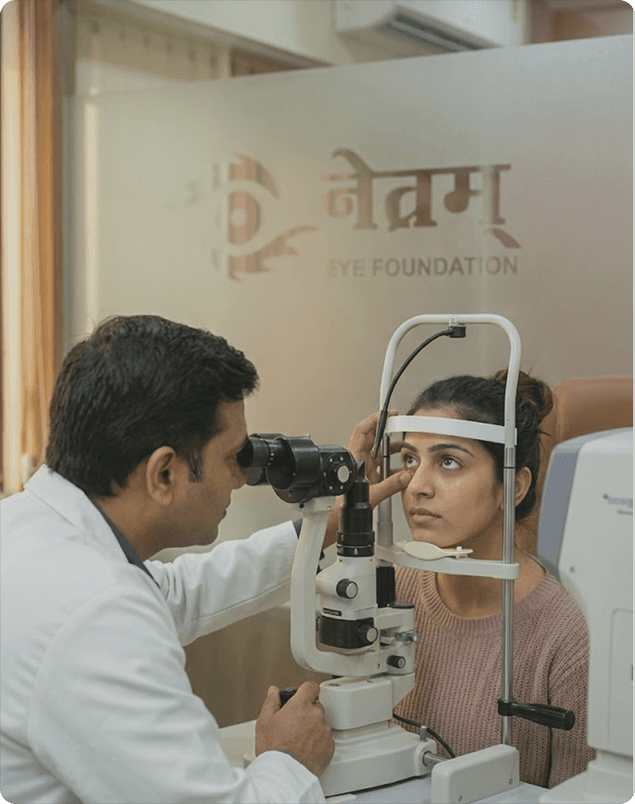
Myopia is diagnosed through a comprehensive eye examination. Your specialist will typically evaluate:
■MANAGEMENT & TREATMENT
Use Corrective Eyewear
Prescription glasses or contact lenses help focus light correctly onto the retina and restore clear distance vision immediately.
Limit Screen Time
Reducing prolonged use of digital devices decreases visual strain and supports healthier visual habits, particularly in children.
Follow the 20-20-20 Rule
Every 20 minutes, look at something 20 feet away for 20 seconds to allow the eyes to relax from near-focus demand.
Encourage Outdoor Activities
Outdoor play and exposure to natural light may help slow the progression of myopia in children by supporting healthy eye development.
Maintain Healthy Visual Habits
Adequate lighting, proper reading distance, and regular breaks help reduce strain and support long-term eye health.
Schedule Regular Eye Exams
Routine eye examinations allow early detection of changes in refractive power and timely adjustment of corrective prescriptions.
LASIK Laser Vision Correction
For stable adult myopiaLaser reshaping of the corneal surface to correct the refractive error, significantly reducing or eliminating the need for glasses.
Orthokeratology (Ortho-K)
For myopia control in childrenSpecially designed rigid contact lenses worn overnight that temporarily reshape the cornea, providing clear daytime vision without lenses.
Atropine Eye Drops
For myopia progression in childrenLow-concentration atropine drops used to slow the progression of myopia in children during the active growth phase.
Prescription Contact Lenses
When glasses are not preferredDaily or monthly contact lenses that provide clear distance vision as an alternative to spectacle correction.

■SURGICAL INTERVENTION
For eligible adults whose myopia has stabilised, refractive procedures such as LASIK and other laser vision correction techniques can significantly reduce or eliminate dependence on glasses or contact lenses. The cornea is reshaped using a precise laser to correct the refractive error.
Surgery is considered when myopia has been stable for at least one year, the cornea is of adequate thickness and suitable profile, and the patient wishes to reduce their reliance on corrective eyewear. At Netram Eye Foundation in Delhi, advanced refractive surgery technology ensures safe and precise vision correction with thorough pre-operative assessment.
■ALL YOUR QUESTIONS ANSWERED
Myopia occurs when the eyeball grows longer than normal or the cornea becomes excessively curved, causing light to focus in front of the retina instead of on it. Both genetic and environmental factors contribute.
Yes, myopia often progresses during childhood and adolescence, typically stabilising in the early to mid-20s. High myopia that continues to progress requires regular monitoring for associated retinal complications.
It cannot be reversed, but vision can be corrected effectively with glasses, contact lenses, or refractive surgery such as LASIK. Surgery offers a long-term reduction in dependence on corrective eyewear.
Yes. Children with one myopic parent have a moderately higher likelihood of developing myopia; children with two myopic parents have a significantly higher risk.
Research suggests that spending time outdoors in natural light may help slow myopia progression in children. The exact mechanism is not fully understood but is thought to relate to light intensity and distance viewing.
Laser vision correction procedures are considered safe and effective when performed by experienced ophthalmologists on suitable candidates. Pre-operative screening is essential to confirm eligibility.
Still have questions? Our team is here to help.
Schedule Consultation
REQUEST AN APPOINTMENT