Blurred or Distorted Vision
One of the most common symptoms is blurred or distorted vision at both near and distant ranges. Objects may appear stretched, tilted, or unclear due to uneven focusing of light on the retina.
■UNDERSTANDING THE CONDITION
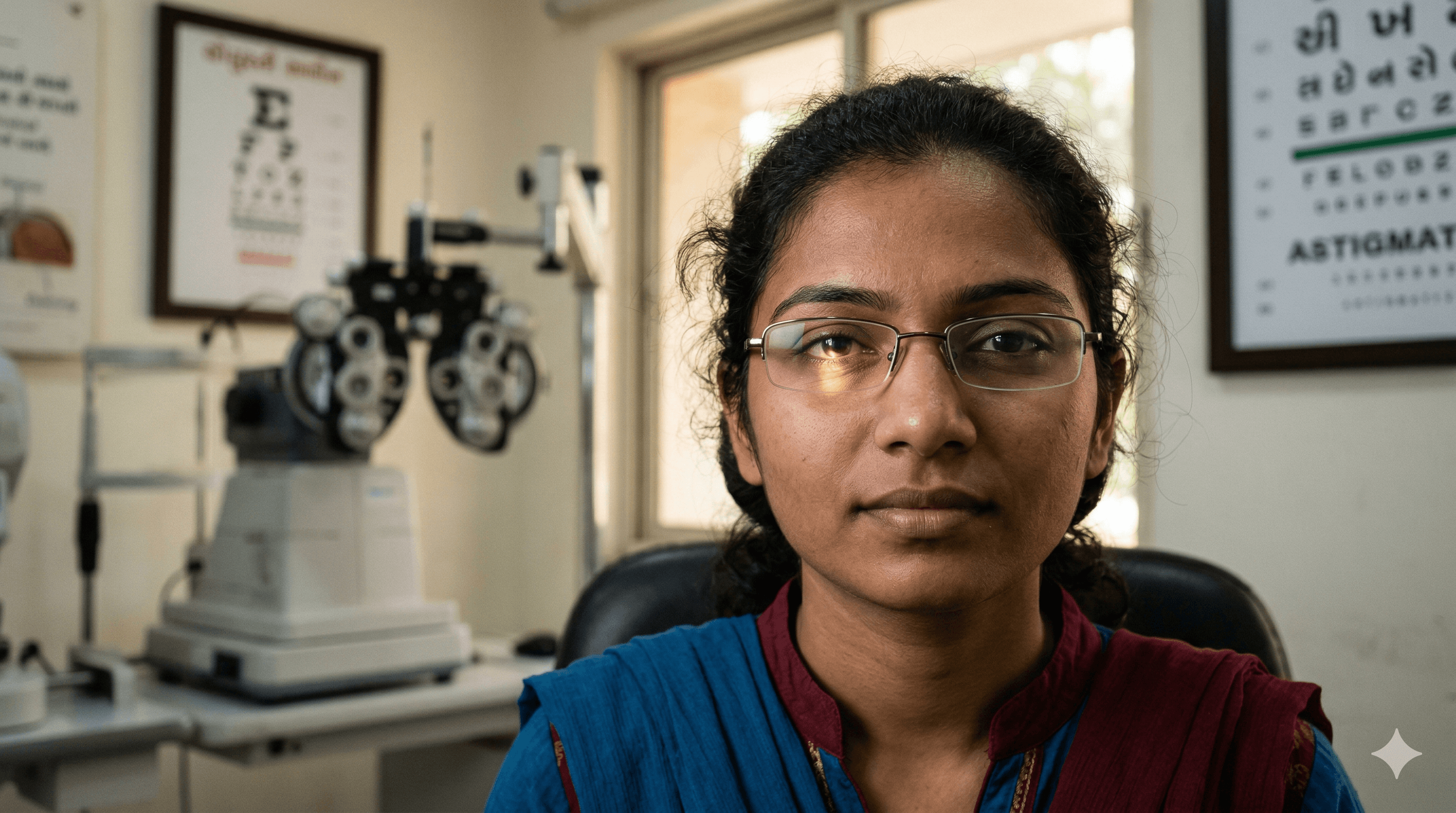
Astigmatism is a refractive condition in which the cornea or lens has an irregular curvature, preventing light from focusing evenly on the retina. Instead of forming a single sharp focal point, light rays focus at multiple points, resulting in blurred or distorted vision. The cornea in astigmatism is shaped more like a football than a sphere, causing different meridians to have different refractive powers.
This irregular curvature may occur due to genetic factors or developmental variations in the shape of the cornea. Astigmatism may affect both near and distant vision and can occur at any age. Many individuals with mild astigmatism may not initially notice symptoms, but moderate or severe astigmatism can lead to eye strain, headaches, and difficulty maintaining clear focus — concerns routinely managed at an eye clinic in Delhi.
With proper diagnosis and correction, astigmatism can be effectively managed. Regular eye examinations are important to monitor any changes in the degree of astigmatism and ensure that optical corrections remain accurate and up to date.
Astigmatism primarily involves the cornea or the crystalline lens of the eye. When these structures have uneven curvature, incoming light rays do not focus evenly on the retina, resulting in distorted or blurred vision at all distances, as assessed through comprehensive examination at an eye hospital in Delhi.
Astigmatism is a common refractive error affecting both near and distant vision. Key characteristics include:
■CLINICAL PRESENTATION
Symptoms of astigmatism can vary depending on the degree of irregular curvature in the eye:
Blurred or Distorted Vision
One of the most common symptoms is blurred or distorted vision at both near and distant ranges. Objects may appear stretched, tilted, or unclear due to uneven focusing of light on the retina.
Difficulty Seeing Fine Details
Individuals may have difficulty seeing fine details clearly, especially during reading, writing, or other detailed visual tasks.
Eye Strain
Continuous effort to maintain clear vision can lead to eye fatigue, particularly during prolonged visual tasks such as reading, studying, or screen use.
Frequent Headaches
Eye strain caused by uncorrected astigmatism may lead to headaches, particularly after extended periods of visual concentration.
Squinting to See Clearly
People with astigmatism often squint to improve focus temporarily by reducing scattered light entering the eye and creating a pinhole effect.
Difficulty Seeing at Night
Astigmatism may cause glare or halos around lights, making night driving and low-light navigation more challenging.
These symptoms require prompt evaluation to rule out significant astigmatism or additional ocular conditions:
Sudden Vision Changes
Immediate evaluationAny sudden change in vision should be evaluated promptly to rule out other eye conditions beyond refractive error.
Double Vision
Same day evaluationUncorrected astigmatism may sometimes cause overlapping images or ghosting that interferes significantly with daily function.
Severe Blurred Vision
Within 1 weekIf blurred vision significantly interferes with daily activities such as reading or driving, a comprehensive eye examination is recommended.
Distorted or Warped Vision
Within 1 weekIf objects appear unusually stretched, tilted, or warped, it may indicate significant astigmatism or an underlying corneal condition requiring assessment.
Persistent Eye Strain Despite Rest
Within 1 weekContinuous eye fatigue despite adequate rest may indicate uncorrected or undercorrected astigmatism requiring updated optical prescription.

Ask yourself these questions to determine if medical evaluation is needed:
If you answered "yes" to any of these questions, a comprehensive eye examination with an eye care specialist in Delhi can determine whether astigmatism is present and provide appropriate correction.
■TRIGGERS & ROOT CAUSES
While astigmatism is primarily caused by irregular corneal or lens curvature, certain lifestyle factors can worsen symptoms or contribute to its development:
Prolonged Digital Screen Use
ModerateExtended use of smartphones, tablets, and computers requires sustained visual focus. Continuous screen exposure may increase visual strain and make symptoms of astigmatism more noticeable.
Continuous Near Work
ModerateActivities such as reading, studying, or writing for extended periods require sustained focusing effort. When performed without regular breaks, prolonged near work may increase visual fatigue and highlight symptoms.
Poor Visual Ergonomics
LowImproper reading posture, incorrect viewing distance, or poorly positioned screens can increase strain on the eyes and worsen visual discomfort associated with uncorrected astigmatism.
Inadequate Lighting Conditions
LowWorking or reading in dim lighting forces the visual system to work harder and may worsen visual strain in individuals with astigmatism.
Excessive Eye Rubbing
ModerateFrequent and vigorous eye rubbing may alter the corneal surface over time and contribute to irregular curvature in susceptible individuals, potentially worsening astigmatism.
Visual Fatigue from Intensive Work
LowLong hours of continuous visual concentration such as studying or office work can lead to visual fatigue and make symptoms of astigmatism significantly more noticeable.
Specific ocular and environmental factors contribute to the development or worsening of astigmatism:
Irregular Corneal Shape
Astigmatism most commonly occurs when the cornea is shaped irregularly, with different curvatures in different meridians causing uneven focusing of light rays.
Lens Irregularities
In some cases, irregular curvature of the crystalline lens (lenticular astigmatism) may contribute to the overall refractive error.
Genetic Predisposition
Astigmatism often runs in families, suggesting a hereditary influence on the development of corneal shape and curvature.
Eye Injuries or Trauma
Trauma to the eye may alter the shape of the cornea and lead to acquired irregular astigmatism.
Post-Surgical Corneal Changes
Certain corneal procedures or previous eye surgeries may alter the refractive power and introduce or change the degree of astigmatism.
Certain ocular and systemic conditions may contribute to the development of irregular or significant astigmatism:
Keratoconus
This progressive corneal condition causes thinning and forward bulging of the cornea, leading to irregular astigmatism that often cannot be fully corrected with glasses alone.
Corneal Scarring
Infections, injuries, or inflammation causing corneal scars may result in irregular corneal curvature and associated astigmatism.
Connective Tissue Disorders
Certain systemic conditions affecting connective tissues, such as Marfan syndrome, may influence the structure of the cornea and lens.
Genetic Eye Disorders
Inherited eye conditions may predispose individuals to irregular corneal development and associated refractive abnormalities.
■CLINICAL EVALUATION
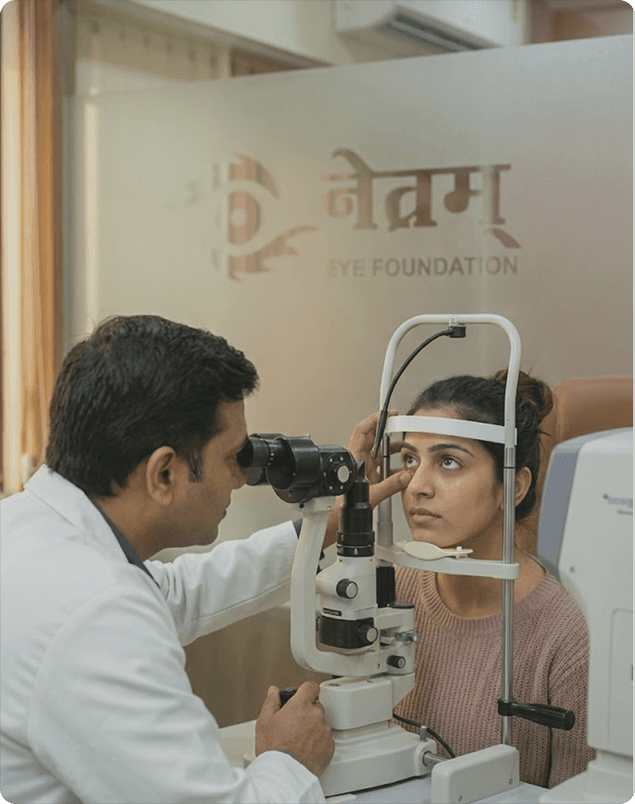
Astigmatism is diagnosed through a comprehensive eye examination using precise optical and corneal measurement equipment:
■MANAGEMENT & TREATMENT
Use Corrective Eyewear
Prescription glasses or toric contact lenses help correct uneven light focusing and restore clear, comfortable vision for daily activities.
Follow the 20-20-20 Rule
Every 20 minutes of screen or near work, look at something 20 feet away for 20 seconds to reduce eye strain and visual fatigue.
Maintain Proper Screen Distance
Keep digital devices at an appropriate viewing distance (typically 50–70 cm for computers) to reduce accommodative strain on the eyes.
Ensure Adequate Lighting
Work and read in well-lit conditions to minimise the extra visual effort required and reduce associated eye strain and headaches.
Avoid Excessive Eye Rubbing
Reducing vigorous eye rubbing helps maintain corneal integrity and may help prevent progressive corneal changes in susceptible individuals.
Schedule Regular Eye Exams
Routine examinations help monitor changes in refractive power and maintain optimal vision correction as astigmatism may change over time.
Spectacle Correction
First-line treatmentCylindrical or sphero-cylindrical lenses in glasses provide effective correction for regular astigmatism and are suitable for all age groups.
Toric Contact Lenses
For contact lens wearersSpecially designed toric soft or rigid gas-permeable contact lenses correct astigmatism while providing a wider field of clear vision than glasses.
Laser Vision Correction (LASIK / PRK)
For permanent correctionLaser refractive procedures reshape the corneal surface to correct astigmatism, potentially eliminating the need for glasses or contact lenses in suitable candidates.
Toric Intraocular Lens Implantation
During cataract surgeryFor patients undergoing cataract surgery, toric IOLs can simultaneously correct pre-existing astigmatism, improving uncorrected visual acuity post-operatively.

■SURGICAL INTERVENTION
Surgery is not required for most patients with astigmatism, as glasses and contact lenses provide effective correction. However, for individuals who wish to reduce or eliminate dependence on optical aids, laser refractive procedures such as LASIK, LASEK, or PRK can permanently correct astigmatism by reshaping the cornea. Surgery is considered when astigmatism is stable, the corneal thickness and topography are suitable, and the patient has realistic expectations about the outcome.
Careful pre-operative assessment is essential to ensure patient selection, as not all corneas are suitable for laser correction. At Netram Eye Foundation in Delhi, advanced corneal topography and wavefront analysis are used to plan refractive procedures with precision, helping patients achieve the best possible visual outcomes with minimal risk.
■ALL YOUR QUESTIONS ANSWERED
Astigmatism occurs when the cornea or crystalline lens has an irregular curvature. In the most common form (corneal astigmatism), the cornea is shaped more like a rugby ball than a sphere, with different curvatures in different meridians. This causes light to focus at multiple points on the retina rather than a single point, resulting in blurred or distorted vision. Genetic factors are believed to be the primary influence, but eye injuries, certain corneal conditions such as keratoconus, and previous eye surgery can also cause or worsen astigmatism.
Yes, genetic factors play a significant role in the development of astigmatism. It often runs in families, and children of parents with astigmatism are more likely to develop the condition. However, the degree of astigmatism can vary considerably between family members. Environmental factors and eye habits may also influence the severity of symptoms over time.
Astigmatism may change gradually, particularly during childhood and adolescence when the eye is still developing. In most adults, the degree of astigmatism remains relatively stable, though it can change with age or following eye injuries. In conditions such as keratoconus, astigmatism may progressively worsen over time and requires specialised management. Regular eye examinations help monitor any changes and ensure that optical corrections remain appropriate.
Yes, laser refractive procedures such as LASIK, LASEK, or PRK can permanently reshape the cornea and correct astigmatism in suitable candidates. Toric intraocular lenses used during cataract surgery can also address astigmatism. However, not everyone is a candidate for surgical correction — factors such as corneal thickness, stability of the prescription, and overall eye health must be carefully assessed before surgery is recommended.
Yes. Myopia (nearsightedness) causes distant objects to appear blurred due to the eye being too long. Hyperopia (farsightedness) causes near objects to be blurred due to insufficient focusing power. Astigmatism, on the other hand, causes blurring at both near and distant ranges due to uneven corneal or lens curvature. Many individuals have a combination of astigmatism with either myopia or hyperopia, which can be corrected with a combined prescription in glasses, toric contact lenses, or refractive surgery.
Laser vision correction procedures are considered safe and effective for astigmatism when performed on appropriately selected candidates by experienced surgeons. Pre-operative assessment including corneal topography, pachymetry, and wavefront analysis ensures that the cornea is suitable for treatment. Complications are uncommon and can include dry eyes, halos, or undercorrection — most of which are manageable. Patients should discuss their individual suitability and expected outcomes with their ophthalmologist before proceeding.
Still have questions? Our team is here to help.
Schedule Consultation
REQUEST AN APPOINTMENT