One of the earliest signs of RP is difficulty seeing in low-light conditions. Activities such as driving at night or walking in poorly lit areas become challenging as rod photoreceptors begin to deteriorate.

Retinitis Pigmentosa
Primary Cells Affected
Rod and Cone Photoreceptors
Onset
Usually in childhood or early adulthood
Progression
Gradual; rate varies by individual
■UNDERSTANDING THE CONDITION
What Is Retinitis Pigmentosa?
Retinitis pigmentosa refers to a group of genetic eye diseases that cause progressive degeneration of retinal photoreceptor cells. These specialised cells — rods and cones — are responsible for converting light into electrical signals that the brain interprets as vision. When photoreceptor cells gradually deteriorate, the retina loses its ability to process visual information.
In the early stages, rod cells are typically affected first. Because rods support night vision and peripheral vision, patients often notice difficulty seeing in dim lighting or a gradual narrowing of their visual field. As the disease progresses, cone cells responsible for central vision and colour perception may also become involved, making activities such as reading, recognising faces, or focusing on small objects increasingly challenging.
The rate of progression varies widely among individuals. Some people maintain useful central vision for many decades, while others experience more rapid visual impairment. Although there is currently no definitive cure, regular monitoring by a specialist at an eye hospital in Delhi helps detect complications early and supports long-term vision management.
Part of Eye Affected
Nature of Condition
■CLINICAL PRESENTATION
Symptoms & Early Warning Signs
Typical Symptoms
One of the earliest signs of RP is difficulty seeing in low-light conditions. Activities such as driving at night or walking in poorly lit areas become challenging as rod photoreceptors begin to deteriorate.
As the disease progresses, side vision slowly narrows. Individuals may begin to feel as though they are looking through a tunnel — a condition commonly referred to as tunnel vision.
People with RP may struggle to adapt when moving from a bright environment into a darker room, making navigation in dim hallways or outdoor spaces at night increasingly difficult.
The total area of vision gradually decreases over time, making it harder to notice objects approaching from the sides.
Some individuals with RP develop sensitivity to bright light, causing visual discomfort or glare in sunlight or brightly lit environments.
Objects that appear clear in bright lighting may become difficult to distinguish when lighting conditions are poor.
Red Flag Symptoms
Immediate evaluation
Any sudden deterioration in vision requires immediate ophthalmic evaluation to rule out secondary complications.
Urgent assessment
A sudden or noticeable narrowing of side vision may indicate accelerated progression of retinal degeneration.
Urgent assessment
Advanced narrowing of the visual field that significantly affects daily activities warrants specialist review.
Within 1 week
Difficulty seeing in low light that interferes with everyday activities may indicate worsening retinal function.
Within 1 week
Bumping into objects or difficulty moving in familiar environments may indicate worsening peripheral vision loss.
Within 1 week
New symptoms such as increased glare, light sensitivity, or colour changes should be evaluated by a retinal specialist.

- Do you have difficulty seeing clearly in dim lighting or at night?
- Have you noticed a gradual narrowing of your side or peripheral vision?
- Do you struggle to adapt when moving from a brightly lit area into a darker room?
- Do you experience increased sensitivity or discomfort in bright sunlight?
- Does a family member have a history of inherited retinal disease or visual impairment?
If you answered yes to any of the above, early evaluation by an eye specialist in Delhi is recommended for comprehensive retinal assessment.
■TRIGGERS & ROOT CAUSES
High
Individuals with a family history of inherited retinal disease may not undergo regular eye examinations. Without early screening, subtle retinal changes may remain undetected for many years.
High
Early symptoms such as mild night blindness are often dismissed as temporary problems. Delayed consultation may postpone diagnosis and specialist evaluation.
Moderate
Long-term exposure to intense sunlight without protective eyewear may increase oxidative stress within retinal cells and potentially accelerate degeneration.
Moderate
Diets lacking antioxidants, omega-3 fatty acids, and essential nutrients such as vitamin A may affect overall retinal health.
Moderate
Individuals with inherited retinal disease may not realise the importance of early evaluation and genetic counselling for themselves or family members.
High
Seeking care only after noticeable vision loss may delay supportive management and opportunities for monitoring complications.
Ocular & Environmental Factors
Most cases of retinitis pigmentosa are caused by inherited genetic mutations affecting the structure and function of retinal photoreceptor cells. Over 60 genes have been associated with RP.
Individuals with a family history of RP have a significantly increased likelihood of developing the condition. RP can be inherited in autosomal dominant, autosomal recessive, or X-linked patterns.
Progressive loss of rod and cone cells leads to the characteristic visual symptoms of RP, beginning with night blindness and peripheral vision loss.
Characteristic bone-spicule pigment deposits may appear in the retina during disease progression, visible during dilated retinal examination.
Cellular oxidative stress within retinal cells may contribute to the rate of photoreceptor degeneration.
Although genetic in origin, visual symptoms often become more noticeable and progressive as individuals age.
Underlying Medical Conditions
A genetic condition that affects both hearing and vision, Usher syndrome is one of the most common causes of combined deafblindness and is associated with RP.
A rare inherited disorder associated with retinal degeneration, obesity, polydactyly, and other systemic features.
Various inherited retinal diseases may include RP as part of their clinical presentation, including Leber congenital amaurosis and choroideremia.
Certain metabolic conditions such as abetalipoproteinaemia may cause retinal degeneration resembling RP.
Chronic intraocular inflammation may contribute to retinal degeneration in some patients.
Mutations in the RPE65 gene and other retinal genes influence disease severity and rate of progression, and are relevant for emerging gene therapy treatments.
■CLINICAL EVALUATION
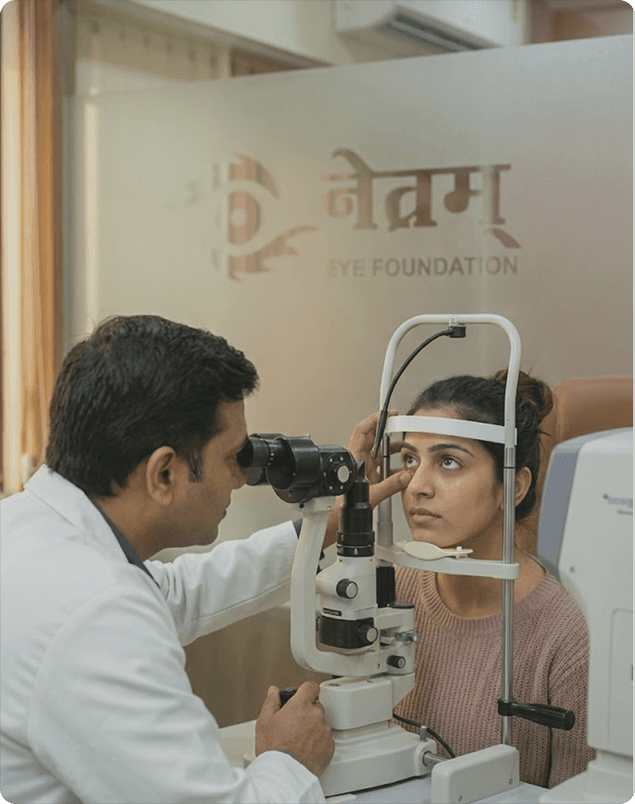
How Is Retinitis Pigmentosa Diagnosed?
Initial Consultation
- Detailed personal and family history to identify inherited retinal disease patterns
- Dilated retinal examination to assess characteristic pigmentary changes and disc pallor
- Optical coherence tomography (OCT) to evaluate photoreceptor layer thickness
- Visual field testing to document the extent of peripheral vision loss
- Electroretinography (ERG) to measure the electrical response of rod and cone photoreceptors
Diagnostic Timeframe
Initial Consultation20–30 minutes
Comprehensive Retinal Examination30–45 minutes
Advanced Imaging (if required)20 minutes
Treatment PlanningSame day
■MANAGEMENT & TREATMENT
Treatment Options for Retinitis Pigmentosa
Self Care & Lifestyle Adjustments
Protect Eyes from UV Light
Wearing sunglasses with UV protection and wide-brimmed hats outdoors may help protect retinal cells from additional light-induced oxidative stress.
Maintain Healthy Nutrition
Balanced diets rich in antioxidants (vitamins C and E), omega-3 fatty acids, and foods containing lutein and zeaxanthin may support overall retinal health.
Attend Regular Eye Examinations
Routine monitoring with your retinal specialist helps detect complications such as posterior subcapsular cataracts or cystoid macular edema that are treatable.
Use Low Vision Aids
Assistive devices including magnifiers, screen readers, and specialised lighting help individuals maintain independence in daily activities as vision changes.
Monitor Vision Changes
Any new or rapidly worsening visual symptoms should be reported to your retinal specialist promptly to assess for secondary complications.
Follow Specialist Advice
Regular consultation with a retinal specialist ensures long-term monitoring, genetic counselling access, and awareness of emerging treatment options.
Medical & Clinical Treatments
Vitamin A Palmitate Supplementation
Supportive TherapyHigh-dose vitamin A palmitate supplementation has been shown in some studies to modestly slow the rate of ERG decline in certain forms of RP. Supplementation should only be undertaken under specialist supervision with regular monitoring.
Treatment of Secondary Complications
Complication ManagementTreatable complications associated with RP — including cataract and cystoid macular edema — can be managed surgically or with medications such as carbonic anhydrase inhibitors to improve vision.
Gene Therapy (Voretigene Neparvovec)
Emerging TreatmentGene therapy using voretigene neparvovec (Luxturna) is approved for patients with biallelic RPE65 mutation-associated retinal dystrophy and represents a significant advance in treating this specific genetic form of inherited retinal disease.

■SURGICAL INTERVENTION
Surgical & Supportive Interventions
There is currently no surgical procedure that reverses the primary genetic degeneration of photoreceptors in retinitis pigmentosa. However, surgical intervention may be required for secondary complications. Posterior subcapsular cataracts, which develop in a significant proportion of RP patients, can be treated with routine cataract surgery and intraocular lens implantation to improve visual clarity. In patients with significant cystoid macular edema that does not respond to topical or oral carbonic anhydrase inhibitors, intravitreal steroid implants may be considered. Retinal implant technologies, such as the Argus II retinal prosthesis, have been developed for patients with very advanced RP and may offer limited visual perception.
At Netram Eye Foundation in Delhi, our retinal specialists provide comprehensive evaluation and personalised long-term management plans for patients with inherited retinal dystrophies. The team stays updated with the latest advances in retinal therapeutics, including emerging gene therapy and stem cell research, to ensure patients receive the most current evidence-based guidance for their condition.
■ALL YOUR QUESTIONS ANSWERED
What causes retinitis pigmentosa?
Retinitis pigmentosa is caused by inherited genetic mutations that affect the structure and function of retinal photoreceptor cells. Over 60 different genes have been identified as causing RP. It can be inherited in autosomal dominant, autosomal recessive, or X-linked patterns.
Is retinitis pigmentosa hereditary?
Yes, RP is almost always hereditary. Individuals with a parent or sibling affected by RP have a higher likelihood of developing the condition. Genetic counselling is recommended for affected individuals and their families to understand inheritance patterns and risk for future generations.
Can retinitis pigmentosa cause blindness?
RP may cause significant vision loss over time, particularly affecting night vision and peripheral vision. While many patients retain useful central vision for years or decades, severe cases can progress to significant visual impairment. The rate of progression varies considerably between individuals.
Is treatment available for retinitis pigmentosa?
While there is no complete cure, supportive management includes protecting eyes from UV light, treating secondary complications such as cataracts and macular edema, and using low vision aids. Gene therapy (Luxturna) is available for the specific RPE65 mutation subtype. Stem cell therapy and other treatments are currently under clinical research.
How is retinitis pigmentosa diagnosed?
RP is diagnosed through a combination of dilated retinal examination, optical coherence tomography (OCT), visual field testing, and electroretinography (ERG). ERG is particularly important as it measures the electrical response of photoreceptor cells. Genetic testing may also be performed to identify the causative mutation.
Are new treatments being researched for RP?
Yes, there is significant research activity in gene therapy, optogenetics, retinal prostheses, and stem cell therapy for RP. Gene therapy using Luxturna has been approved for one specific genetic subtype. Other gene therapy trials for different RP mutations are ongoing internationally.
If you or a family member has difficulty with night vision, tunnel vision, or has a family history of inherited retinal disease, early specialist evaluation is recommended.
Schedule Consultation
REQUEST AN APPOINTMENT