Bulging of the Eyes (Proptosis)
Forward displacement of the eyeball is the hallmark of TED, resulting from expanding orbital soft tissue and fat. Proptosis may be unilateral or bilateral and can be measured objectively with an exophthalmometer.

■UNDERSTANDING THE CONDITION
Thyroid Eye Disease occurs when TSH receptor antibodies — produced as part of the autoimmune process underlying Graves' disease — cross-react with receptors expressed on orbital fibroblasts, fat cells, and extraocular muscle cells. This immune activation triggers inflammation, glycosaminoglycan accumulation, and tissue oedema within the confined bony orbit.
As the orbital contents enlarge within this rigid space, the eyeball is pushed forward, producing the characteristic proptosis (exophthalmos) associated with the condition. Swelling and fibrosis of the extraocular muscles impair their coordinated movement, causing double vision, while eyelid retraction exposes more of the ocular surface to the environment — leading to dryness, irritation, and in severe cases, corneal damage. These orbital changes are carefully assessed by an ophthalmologist in Delhi during specialist evaluation.
TED progresses in two phases: an active inflammatory phase characterised by worsening redness, swelling, and proptosis, followed by a stable fibrotic phase in which inflammation subsides but structural changes persist. Treatment strategy differs significantly depending on the disease phase, making accurate clinical staging a fundamental component of management planning.
Thyroid Eye Disease affects the orbit — the bony cavity housing the eyeball — along with the extraocular muscles, orbital fat, and eyelids. As inflammation enlarges these structures within the confined orbital space, the eyeball is displaced forward and eye movements become restricted, compromising both appearance and visual function as assessed at an eye hospital in Delhi.
Thyroid Eye Disease is an autoimmune orbital inflammatory condition driven by cross-reactive immune responses. Defining characteristics include:
■CLINICAL PRESENTATION
Symptoms of Thyroid Eye Disease vary considerably with disease stage and severity. Common presenting features include:
Bulging of the Eyes (Proptosis)
Forward displacement of the eyeball is the hallmark of TED, resulting from expanding orbital soft tissue and fat. Proptosis may be unilateral or bilateral and can be measured objectively with an exophthalmometer.
Redness and Conjunctival Irritation
Inflammatory changes and increased ocular surface exposure cause conjunctival injection, watering, and a persistent gritty discomfort that worsens throughout the day.
Dryness and Gritty Sensation
Eyelid retraction and lagophthalmos (incomplete closure) reduce the protective covering of the cornea, accelerating tear evaporation and producing chronic ocular surface dryness.
Double Vision (Diplopia)
Inflammation and subsequent fibrosis of the extraocular muscles — particularly the inferior and medial recti — restricts their movement, causing misalignment and double vision that is often most noticeable on upward gaze.
Eyelid Retraction
Upper eyelid retraction produces a characteristic wide-eyed appearance with scleral show above the cornea. This sign, along with a staring expression, is among the most recognisable features of Graves' orbitopathy.
Eye Pain or Orbital Pressure
Many patients experience a dull ache, deep orbital pressure, or pain on eye movement, reflecting active orbital inflammation during the disease's active phase.
These symptoms indicate potentially sight-threatening disease activity requiring urgent specialist assessment:
Sudden or Progressive Vision Loss
Immediate evaluationAcute or rapidly progressive vision reduction may indicate dysthyroid optic neuropathy — compression of the optic nerve by enlarged extraocular muscles at the orbital apex, requiring emergency intervention.
Severe or Rapidly Worsening Eye Bulging
Same day evaluationA rapid increase in proptosis suggests highly active orbital inflammation or possible orbital compartment syndrome, both of which require urgent ophthalmological assessment and may necessitate emergency decompression.
Persistent Double Vision
Within 1 weekContinuous binocular diplopia that interferes with reading, driving, or daily tasks may indicate progressive extraocular muscle involvement requiring medical or surgical intervention.
Severe Orbital Pain
Within 1 weekIntense pain around the eyes, particularly on eye movement, may reflect a period of high disease activity requiring systemic immunosuppressive therapy to prevent further orbital tissue damage.
Inability to Close the Eyes Fully
Urgent assessmentLagophthalmos — failure of complete eyelid closure — risks corneal exposure keratopathy, ulceration, and potentially permanent corneal scarring if not urgently managed with lubricants and eye protection.
Progressive Worsening of All Symptoms
Immediate evaluationRapid overall progression across multiple symptoms during the active phase indicates high-severity disease that may warrant intravenous corticosteroids or urgent orbital decompression surgery.

Ask yourself these questions to determine if medical evaluation is needed:
If you answered "yes" to any of these questions, an early assessment by an orbital specialist in Delhi is strongly recommended to evaluate orbital involvement and initiate timely management.
■TRIGGERS & ROOT CAUSES
Several modifiable lifestyle factors significantly influence the onset, severity, and progression of Thyroid Eye Disease:
Poor Control of Thyroid Hormone Levels
HighPersistently elevated or fluctuating thyroid hormone levels sustain autoimmune activation and promote ongoing orbital inflammation. Consistent medication adherence, regular monitoring, and prompt dose adjustments are fundamental to minimising TED progression.
Smoking and Tobacco Use
HighSmoking is the single most powerful modifiable risk factor for TED. It substantially increases the risk of developing the condition, worsens disease severity, and significantly reduces the efficacy of immunosuppressive and radioiodine treatments. Smoking cessation must be prioritised at diagnosis.
Delayed Diagnosis of Thyroid Disorder
HighUndiagnosed or inadequately treated thyroid disease allows autoimmune activity to continue unchecked, increasing the risk and severity of orbital involvement. Early thyroid screening in symptomatic individuals reduces the cumulative orbital inflammatory burden.
Ignoring Early Ocular Symptoms
ModerateMild dryness, subtle eyelid changes, or slight proptosis are early warning signs that are frequently dismissed. Delayed ophthalmological review allows the inflammatory process to progress to a more severe and potentially irreversible stage.
Chronic Stress and Immune Dysregulation
ModeratePsychological stress modulates immune system activity and may influence autoimmune disease activity. While not a direct cause, chronic stress alongside irregular sleep and poor dietary habits may amplify autoimmune responses and worsen disease trajectory.
Low Awareness of the Eye–Thyroid Connection
LowMany patients with thyroid disorders are unaware that the condition can affect their eyes. This knowledge gap delays ophthalmological referral and orbital evaluation, allowing preventable complications to develop before appropriate management is initiated.
Several orbital and environmental factors directly influence the severity and course of Thyroid Eye Disease:
Autoimmune-Mediated Orbital Inflammation
TSH receptor antibody cross-reactivity with orbital fibroblasts drives the glycosaminoglycan accumulation and tissue oedema that expand the orbital contents and cause proptosis.
Extraocular Muscle Enlargement
Inflammation and oedema of the recti muscles reduce their flexibility and contractility, causing restricted eye movement and binocular diplopia.
Orbital Fat Expansion
Autoimmune activation of orbital preadipocytes promotes excess fat production within the orbit, contributing to proptosis independently of muscle swelling.
Eyelid Retraction and Lagophthalmos
Sympathetic overactivation and levator muscle changes cause upper eyelid retraction, increasing corneal exposure and risk of exposure keratopathy.
Dry or Irritating Environments
Air-conditioned indoor environments, dust, and pollution worsen the ocular surface dryness caused by eyelid retraction, increasing discomfort and risk of corneal damage.
Systemic conditions closely associated with Thyroid Eye Disease include:
Graves' Disease
The most common associated condition; Graves' disease causes hyperthyroidism driven by TSH receptor stimulating antibodies that also target orbital tissues.
Hyperthyroidism
An overactive thyroid sustains the autoimmune environment conducive to orbital inflammation and increases the risk of active TED.
Hypothyroidism
TED can occur in euthyroid or hypothyroid individuals, though less commonly; treated hypothyroidism following radioiodine therapy may be associated with worsening eye disease.
Autoimmune Thyroid Disorders
Other immune-mediated thyroid conditions may share overlapping autoimmune pathways that predispose to orbital tissue involvement.
Family History of Autoimmune Disease
A family background of Graves' disease or other autoimmune conditions increases individual susceptibility to TED due to shared genetic predisposition.
■CLINICAL EVALUATION
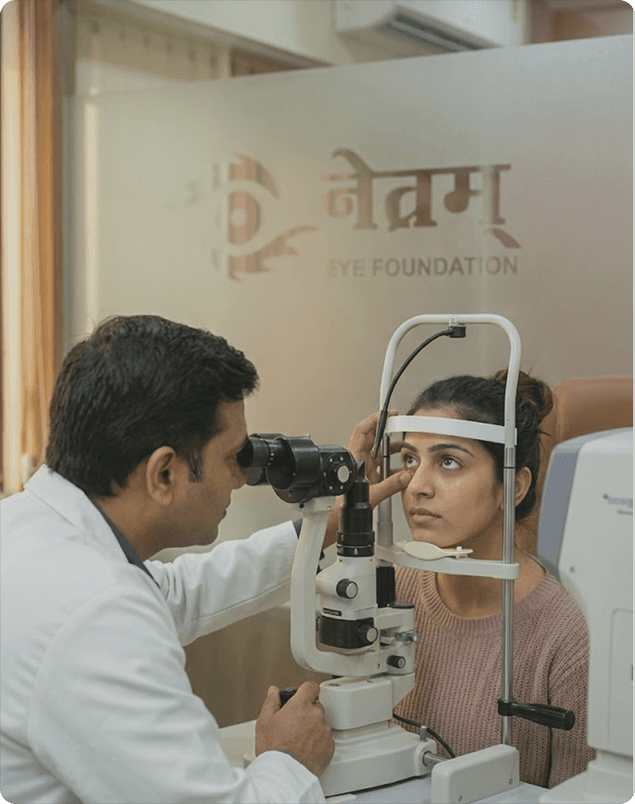
Diagnosis of TED requires a comprehensive ophthalmic and systemic evaluation. Your specialist will assess:
■MANAGEMENT & TREATMENT
Maintain Stable Thyroid Control
Consistent adherence to thyroid medications and regular monitoring of hormone levels helps stabilise the autoimmune environment and reduce ongoing orbital inflammation.
Quit Smoking Immediately
Smoking cessation is the single most impactful lifestyle change for TED patients, shown to reduce disease severity, improve treatment response, and decrease the risk of long-term orbital complications.
Use Lubricating Eye Drops Regularly
Preservative-free artificial tears used frequently throughout the day — and lubricating ointment at night — help protect the exposed corneal surface from dryness-related damage.
Protect Eyes from Environmental Irritants
Wearing wraparound glasses outdoors and avoiding air-conditioned, dusty, or smoky environments reduces ocular surface exposure and minimises irritation from environmental factors.
Wear Tinted or UV-Protective Glasses
Prism glasses can help manage mild diplopia, while tinted lenses reduce photophobia and protect the cornea in patients with eyelid retraction and corneal exposure.
Regular Ophthalmological Monitoring
Scheduled ophthalmological review every 3–6 months during the active phase allows timely detection of optic nerve involvement and guides adjustments to the management plan.
Intravenous Methylprednisolone
For moderate-to-severe active TEDPulsed intravenous corticosteroids are the primary medical treatment during the active inflammatory phase, reducing orbital inflammation, proptosis, and soft tissue changes when administered promptly.
Teprotumumab (Anti-IGF-1R Therapy)
Biologic treatment for active TEDA monoclonal antibody targeting the insulin-like growth factor-1 receptor, shown to significantly reduce proptosis, diplopia, and clinical activity scores in moderate-to-severe active Thyroid Eye Disease.
Orbital Radiotherapy
Adjunct for active inflammatory diseaseLow-dose external beam radiotherapy to the orbits reduces extraocular muscle inflammation and is often combined with corticosteroids for enhanced efficacy in the active phase.
Selenium Supplementation
For mild active TEDOral selenium supplementation has been shown in clinical trials to reduce inflammatory activity and improve quality of life in patients with mild active Thyroid Eye Disease.

■SURGICAL INTERVENTION
Surgical intervention in Thyroid Eye Disease is typically reserved for the stable phase, after orbital inflammation has subsided and the condition has remained inactive for at least 3–6 months. Surgery follows a staged sequence: orbital decompression to reduce proptosis and protect the optic nerve, followed by strabismus surgery to correct diplopia, and finally eyelid surgery to address retraction and cosmetic concerns. Each step must be completed and stable before proceeding to the next to ensure predictable outcomes.
Not all patients require surgical intervention — many with mild-to-moderate TED achieve satisfactory outcomes with medical management alone. However, for those with significant proptosis, disabling diplopia, or corneal exposure threatening vision, surgery offers life-changing functional and aesthetic benefits. At Netram Eye Foundation in Delhi, orbital and oculoplastic surgical expertise ensures individually tailored surgical planning and safe, effective outcomes for patients with Thyroid Eye Disease.
■ALL YOUR QUESTIONS ANSWERED
Thyroid Eye Disease is caused by an autoimmune process in which the immune system produces antibodies — primarily TSH receptor antibodies — that mistakenly target receptors expressed on orbital fibroblasts, fat cells, and extraocular muscles. This triggers inflammation, glycosaminoglycan accumulation, and tissue expansion within the orbit. The condition is most strongly associated with Graves' disease, a form of autoimmune hyperthyroidism, but can occur in individuals with other thyroid disorders or even normal thyroid function.
While TED is most commonly associated with Graves' disease and hyperthyroidism, it can also occur in patients with hypothyroidism or in individuals who are euthyroid (normal thyroid function) at the time of diagnosis. The ocular manifestations of TED are driven by shared autoimmune mechanisms rather than thyroid hormone levels directly, which explains why treating the thyroid disorder alone does not always resolve the eye disease. Coordinated management between an ophthalmologist and endocrinologist is therefore essential.
Yes. In its more severe forms, TED can significantly impair vision through several mechanisms: optic nerve compression by enlarged extraocular muscles at the orbital apex (dysthyroid optic neuropathy), corneal ulceration from exposure due to lagophthalmos, and persistent diplopia that interferes with daily activities. Dysthyroid optic neuropathy is a sight-threatening emergency requiring immediate immunosuppressive treatment or emergency orbital decompression. Regular optic nerve monitoring is therefore a core component of TED surveillance.
Yes, significantly. Smoking is the strongest modifiable risk factor for TED. Smokers with Graves' disease are up to eight times more likely to develop TED than non-smokers, and those who develop the condition experience more severe orbital involvement, worse proptosis, greater muscle restriction, and poorer responses to medical and radioiodine treatments. The mechanisms include increased oxidative stress, hypoxia-driven orbital fibroblast activation, and impaired immune regulation. Smoking cessation is one of the most effective interventions available to reduce TED severity.
Not always. Mild TED with minimal proptosis, no diplopia, and no corneal or optic nerve involvement may be managed conservatively with lubricating drops, selenium supplementation, and close monitoring. Treatment with immunosuppressive agents or surgery is indicated when there is threat to visual function, moderate-to-severe proptosis, disabling diplopia, or corneal exposure. Treatment decisions are guided by the Clinical Activity Score, which quantifies inflammatory activity and helps determine the optimal timing and type of intervention.
Early diagnosis is critically important for Thyroid Eye Disease. The active inflammatory phase — during which the condition can be modified with immunosuppressive treatment — lasts a finite period of approximately 6–24 months. Intervention during this window offers the greatest opportunity to reduce orbital tissue damage, preserve function, and minimise residual deformity. Once the disease enters the stable fibrotic phase, medical therapy is largely ineffective and surgical correction becomes the primary treatment modality. Early specialist referral therefore directly impacts long-term outcomes.
Still have questions? Our team is here to help.
Schedule Consultation
REQUEST AN APPOINTMENT