Blurred Central Vision
One of the earliest signs is mild blurring in the centre of vision. Reading small text or viewing objects clearly may become progressively more difficult.

■UNDERSTANDING THE CONDITION
A macular hole occurs when a small opening develops in the macula — the central area of the retina responsible for sharp, detailed vision. The macula plays an essential role in allowing us to see fine details, recognise faces, read, and drive. The condition often begins when the vitreous gel inside the eye gradually shrinks with age and pulls on the retina at its point of adherence over the macula.
If the tractional forces become strong enough, this pulling can create a small full-thickness break in the macular tissue. As the hole enlarges, central vision becomes increasingly blurred and distorted. In advanced cases, a dark or empty area appears in the centre of the visual field. As emphasised by specialists at a retinal clinic in Delhi, early diagnosis and prompt surgical intervention offer the best chance of visual recovery.
Macular holes are staged according to size and degree of involvement. Stage 1 (impending) may occasionally resolve spontaneously. Stages 2, 3, and 4 (full-thickness holes of increasing size) require surgical treatment — vitrectomy with internal limiting membrane peeling and gas tamponade — to achieve closure and improve vision.
A macular hole affects the macula — the central 5mm of the retina responsible for the highest resolution, colour vision, and the visual acuity required for reading, driving, and face recognition. Damage to this critical zone has a disproportionate impact on visual function compared to peripheral retinal damage.
Macular hole is a retinal condition affecting central vision. Key characteristics include:
■CLINICAL PRESENTATION
Macular holes typically develop gradually — many patients first notice subtle changes in central vision before the condition becomes more advanced:
Blurred Central Vision
One of the earliest signs is mild blurring in the centre of vision. Reading small text or viewing objects clearly may become progressively more difficult.
Distorted Vision (Metamorphopsia)
Straight lines may appear slightly bent or wavy — the edges of doors, window frames, or lines of text may appear distorted or kinked.
Difficulty Reading
Patients may find it increasingly harder to read books, newspapers, or digital screens as central vision becomes less sharp and letters appear blurred.
Difficulty Recognising Faces
As the macula becomes progressively affected, recognising faces at a distance or in detail becomes challenging.
Dark Spot in Central Vision
Some individuals notice a small dark or empty area in the centre of vision as the macular hole progresses to a more advanced stage.
Reduced Visual Clarity
Objects that once appeared sharp may begin to appear slightly blurred, distorted, or less well-defined when viewed through the affected eye.
These symptoms suggest rapid progression and require prompt retinal specialist evaluation:
Rapid Central Vision Loss
Immediate evaluationSudden worsening of central vision may indicate enlargement of the macular hole to a larger stage, where earlier surgery improves outcomes.
Dark or Missing Spot in Central Vision
Same day evaluationA well-defined dark or missing spot appearing in the centre of the visual field suggests a full-thickness macular hole at an advanced stage requiring surgical assessment.
Sudden Increase in Central Distortion
Same day evaluationIf straight lines suddenly appear significantly more distorted, it may indicate rapid progression of the macular hole requiring urgent evaluation.
Persistent or Worsening Blurred Central Vision
Within 1 weekCentral blurring that is noticeably worsening over weeks warrants prompt specialist assessment to determine hole stage and optimal treatment timing.
Difficulty Performing Detailed Tasks
Within 1 weekWhen reading, writing, driving, or face recognition becomes significantly impaired by central visual changes, a retinal evaluation is recommended.

Ask yourself these questions to determine if medical evaluation is needed:
If you answered "yes" to any of these questions, schedule a retinal evaluation with an eye specialist in Delhi — early detection and surgical treatment of macular holes can significantly improve visual outcomes.
■TRIGGERS & ROOT CAUSES
Macular holes most commonly develop due to age-related vitreous changes, though awareness and healthcare behaviours influence the timing of diagnosis:
Age-Related Vitreous Detachment
HighAs people age, the vitreous gel gradually shrinks and separates from the retina. If adhesion at the macula is strong, this separation can exert traction sufficient to create a macular hole.
Ignoring Early Visual Changes
ModerateMany individuals initially ignore symptoms such as mild central distortion or blurring, attributing them to tired eyes or aging. Delayed evaluation may allow a small hole to enlarge.
Lack of Regular Eye Examinations
ModerateRoutine retinal examinations help detect early-stage macular traction or impending holes before they become full-thickness, allowing earlier and potentially less complex treatment.
Excessive Eye Strain
LowAlthough eye strain alone does not cause macular holes, prolonged visual fatigue may make underlying retinal changes more noticeable and delay earlier reporting of symptoms.
Delayed Treatment of Retinal Conditions
LowUntreated retinal disorders or previous eye injuries may contribute to macular changes or vitreoretinal interface abnormalities over time.
Limited Awareness of Retinal Symptoms
LowMany patients are unaware that distorted or blurred central vision can indicate a treatable retinal condition, often leading to delays in seeking evaluation.
Specific ocular factors increase the likelihood of macular hole development:
Posterior Vitreous Detachment (PVD)
Age-related separation of the vitreous from the retina is the underlying event in most macular holes. When the vitreous remains abnormally adherent at the fovea, traction increases during PVD.
High Myopia (Severe Nearsightedness)
Severely myopic eyes are longer than normal, which stretches and thins the retina at the macula, increasing susceptibility to tractional forces and spontaneous macular hole formation.
Eye Trauma or Injury
Blunt or penetrating eye injury can directly damage the macula and create traumatic macular holes, even in younger individuals.
Previous Eye Surgery
Certain intraocular procedures may alter vitreoretinal relationships and slightly increase the risk of macular hole formation.
Vitreomacular Traction
Persistent partial vitreous attachment at the macula without full PVD can exert chronic tractional forces that progressively thin and ultimately rupture the macular tissue.
Certain systemic and retinal conditions increase the risk or complications of macular hole:
High Myopia
Severe nearsightedness creates structural vulnerability in the central retina and is a recognised risk factor for spontaneous macular hole development.
Diabetic Retinopathy
Diabetes affects retinal blood vessels and vitreoretinal adhesion, increasing the risk of tractional forces and macular complications.
Retinal Detachment
Previous retinal detachment or its repair may affect macular structural integrity and increase the risk of subsequent macular complications.
Inflammatory Eye Conditions
Chronic intraocular inflammation may weaken retinal tissue and alter the vitreoretinal interface, predisposing to macular hole formation.
■CLINICAL EVALUATION
Macular holes are diagnosed through comprehensive retinal examination and high-resolution imaging:

■MANAGEMENT & TREATMENT
Monitor Central Vision Daily
Use an Amsler grid daily to monitor for new or worsening distortion or dark spots in central vision, and report any significant changes promptly.
Attend Regular Eye Examinations
Routine retinal follow-up allows monitoring of hole size and stage, informing the optimal timing for surgical intervention.
Protect Eyes from Injury
Avoid activities that increase the risk of eye trauma, which can worsen an existing macular hole or trigger new retinal damage.
Manage Existing Eye Conditions
Conditions such as high myopia, diabetic retinopathy, and other retinal diseases should be actively managed to reduce the risk of complications.
Control Systemic Conditions
Maintaining blood sugar, blood pressure, and cholesterol within healthy ranges supports retinal vascular health and reduces additional risk factors.
Follow All Specialist Advice
Adhering to treatment recommendations, post-operative positioning instructions, and follow-up schedules is critical for optimal surgical outcomes.
Observation (Stage 1 / Impending Holes)
For early-stage casesA small proportion of impending (stage 1) macular holes may close spontaneously. These are monitored closely with regular OCT imaging for evidence of progression.
Pharmacological Vitreolysis (Ocriplasmin)
For vitreomacular tractionIn selected cases with focal vitreomacular adhesion, intravitreal injection of ocriplasmin can dissolve the traction and potentially allow hole closure without surgery.
Pars Plana Vitrectomy with ILM Peeling
Primary surgical treatmentRemoval of the vitreous gel and careful peeling of the internal limiting membrane (ILM) reduces tractional forces and allows the macular tissue to flatten and close.
Gas Tamponade and Face-Down Positioning
Post-surgical adjunctFollowing vitrectomy, a gas bubble is injected to maintain pressure on the macular hole. Patients must maintain face-down positioning for several days to allow hole closure.

■SURGICAL INTERVENTION
The majority of full-thickness macular holes (stages 2, 3, and 4) require surgical treatment with pars plana vitrectomy and internal limiting membrane (ILM) peeling. The procedure involves removing the vitreous gel and carefully peeling the ILM from around the macular hole, eliminating the tractional forces that prevent closure. A gas bubble is then injected to act as a tamponade, and patients are required to maintain a face-down position for several days postoperatively. Modern surgical techniques achieve hole closure rates of 85–95% for most hole sizes.
Early surgical intervention — before the hole enlarges — generally produces better visual outcomes. Many patients achieve significant improvement in central visual acuity over the months following surgery, though complete restoration of pre-macular hole vision is not always achieved. At Netram Eye Foundation in Delhi, advanced vitreoretinal surgical expertise and state-of-the-art imaging allow precise surgical planning to maximise the chance of macular hole closure and visual improvement.
■ALL YOUR QUESTIONS ANSWERED
Most macular holes develop as a result of age-related posterior vitreous detachment. As the vitreous gel shrinks and pulls away from the retina, if it remains abnormally adherent at the fovea (the centre of the macula), the tractional forces can create a small break in the macular tissue. High myopia, eye trauma, and vitreomacular traction syndrome are other important causes. In some cases, no identifiable cause is found.
Yes. The majority of macular holes can be effectively treated with vitrectomy surgery and internal limiting membrane (ILM) peeling. Modern surgical techniques achieve hole closure rates of 85–95%. Many patients experience meaningful improvement in central visual acuity following surgery, though the degree of recovery depends on the pre-operative hole size, duration, and the patient's individual retinal characteristics.
No. Macular holes affect central vision — the detailed, high-resolution vision used for reading, face recognition, and fine tasks — but peripheral (side) vision is not affected. Patients retain their peripheral vision, which means they can navigate around obstacles and remain independently mobile. However, loss of central vision can significantly affect quality of life and the ability to read, drive, or recognise faces.
Macular holes are most common in people over the age of 55, and are more frequently seen in women. People with high myopia (severe nearsightedness) are also at elevated risk due to the structural vulnerability of their elongated eyes. Those who have had a macular hole in one eye have approximately a 10–15% lifetime risk of developing a hole in the fellow eye.
The gold standard diagnostic tool is optical coherence tomography (OCT), which provides detailed cross-sectional images of the retinal layers and accurately measures hole size, stage, and configuration. Dilated fundus examination and Amsler grid testing are also important components of the assessment. OCT is used both for diagnosis and for planning surgical approach and monitoring post-operative healing.
Yes, the majority of patients experience significant improvement in central visual acuity following successful macular hole surgery. Improvement is gradual and may continue over 6–12 months after the procedure. The degree of recovery depends on how long the hole was present, its size, and whether the central photoreceptors have been permanently damaged. Surgery performed earlier in the course of the condition — when the hole is smaller — generally produces better visual outcomes.
Still have questions? Our team is here to help.
Schedule Consultation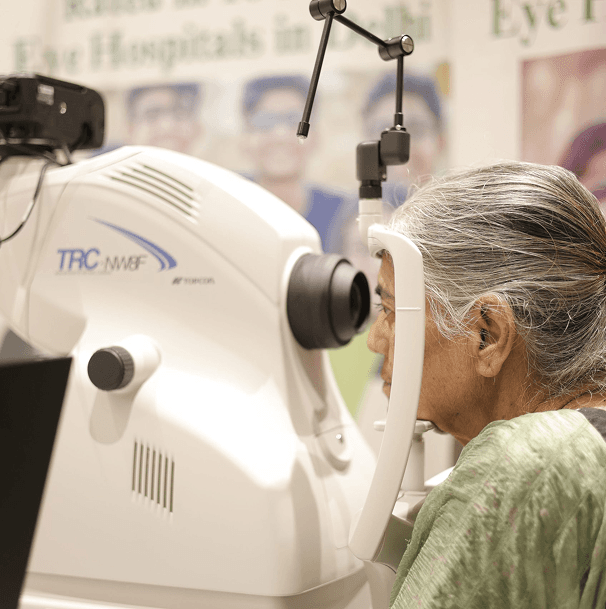
REQUEST AN APPOINTMENT