Full Spectrum of Keratoplasty — PK, DALK & DSAEK
We offer all three major keratoplasty procedures. Your procedure is chosen based on which corneal layers are diseased — maximising outcomes while minimising the risk of rejection.
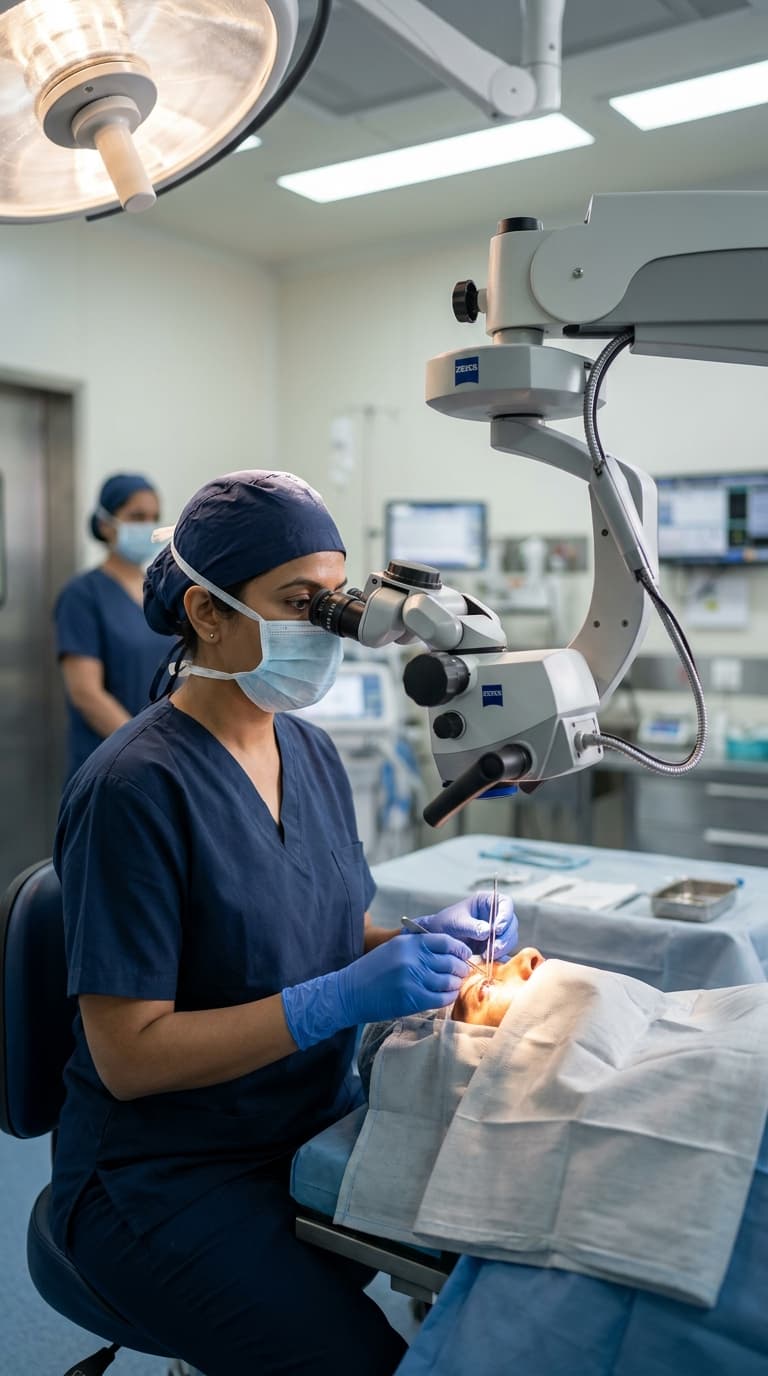
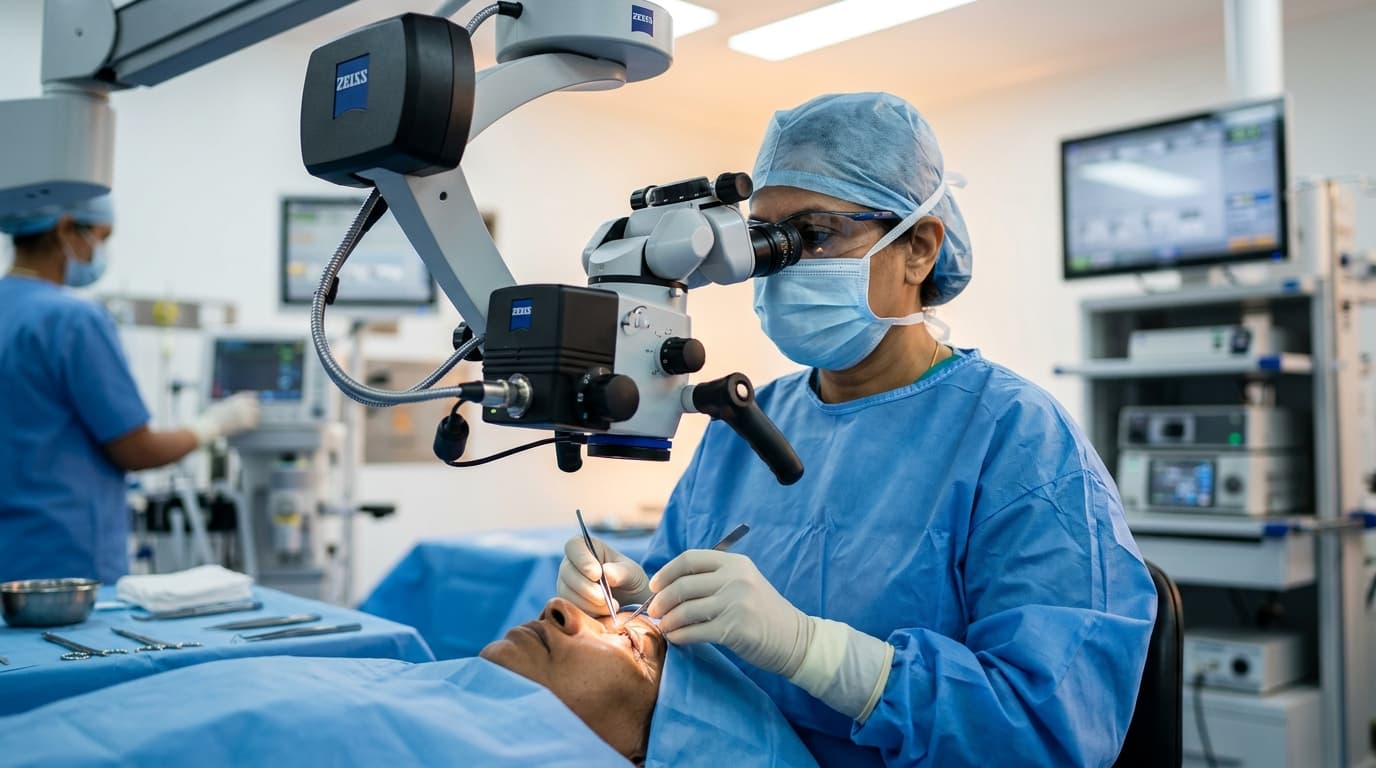
Restoring Clarity. One Layer at a Time.
Full Spectrum of Modern Keratoplasty — PK, DALK & DSAEK.
19+
Years of Excellence
10K+
Successful Surgeries
98.5%
Success Rate
4.9/5
(2k+ Reviews, Google)
WHY CHOOSE NETRAM
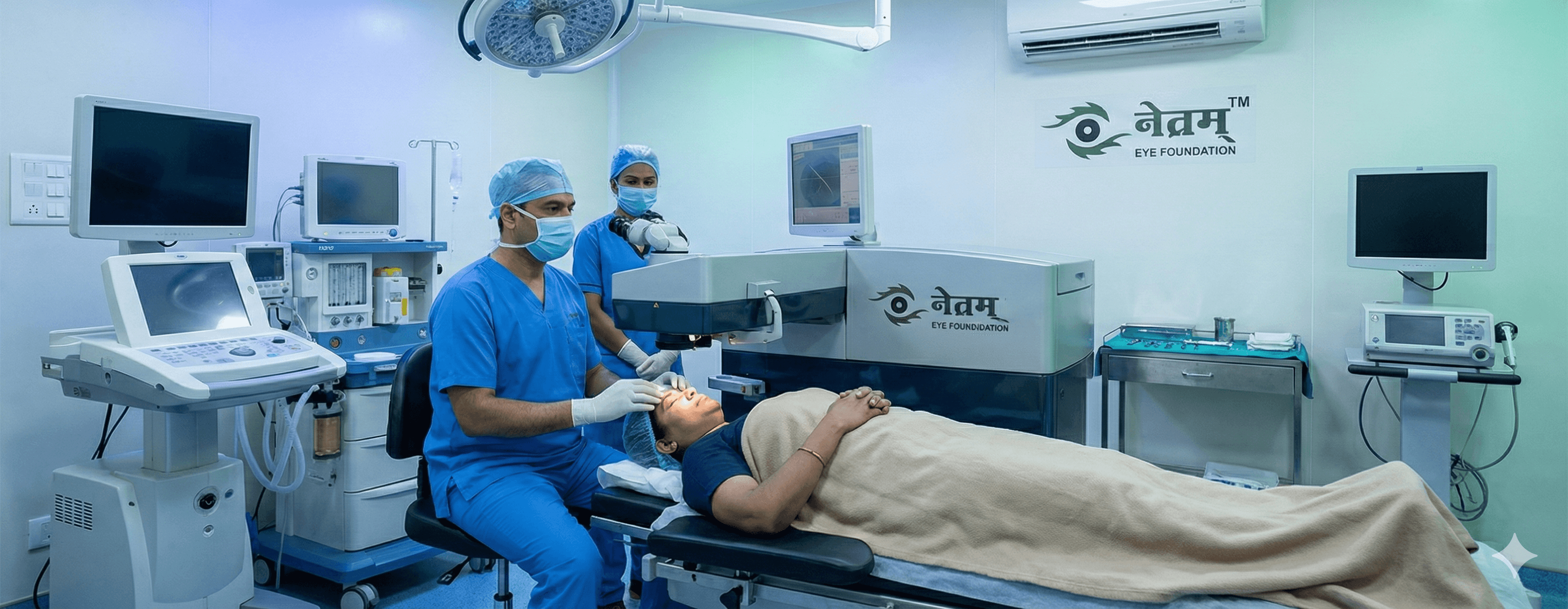
Schedule a free corneal evaluation with Dr. Anchal Gupta today.
TREATMENT OVERVIEW
A corneal transplant — also called keratoplasty or corneal graft — is a surgical procedure in which a diseased, scarred, or damaged cornea is replaced with healthy donor corneal tissue from a deceased human donor. The cornea is the clear, dome-shaped front surface of the eye that contributes approximately 65–70% of the eye's total focusing power.
When the cornea becomes permanently cloudy, scarred, irregularly shaped, or structurally compromised — from infection, injury, dystrophy, or degeneration — it can no longer transmit clear images to the retina. Glasses and contact lenses cannot correct this. A corneal transplant replaces the damaged tissue with healthy donor tissue, restoring clarity and vision.
Today, surgery is guided by the principle of replacing only the diseased corneal layer rather than the entire cornea. DALK replaces the front 95% of the cornea (anterior layers), preserving the patient's own endothelium. DSAEK replaces only the back layer (endothelium), preserving the patient's healthy anterior cornea. Full-thickness PK replaces the entire cornea and is reserved for conditions affecting all layers.
All corneal tissue used at Netram is procured from registered eye banks, screened for transmissible infections, evaluated for endothelial cell count (minimum 2000 cells/mm2), and assessed by slit-lamp before surgical use. Corneal tissue does not require blood group matching.
OUR APPROACH
Corneal transplantation is not a single surgery. At Netram, the procedure is selected based on which corneal layers are diseased, whether glaucoma or cataract also needs surgical treatment, and which approach offers the best balance of graft survival, visual recovery, and long-term safety.
DALK (Deep Anterior Lamellar Keratoplasty): Replaces the front 95% of the cornea while preserving healthy endothelium. Best for keratoconus, anterior scars, and stromal dystrophies. Its key advantage is zero endothelial rejection risk with strong long-term graft survival.
DSAEK (Descemet Stripping Automated Endothelial Keratoplasty): Replaces only the diseased endothelial layer and keeps the front of the cornea intact. Best for Fuchs' dystrophy and pseudophakic bullous keratopathy. It offers a sutureless small-incision approach with faster recovery and lower rejection risk than PK.
Penetrating Keratoplasty (PK): A full-thickness transplant that replaces all corneal layers. It is used for full-thickness scars, perforations, severe infections, and failed lamellar grafts when partial-thickness surgery is not suitable. Recovery is longer, and long-term steroids plus suture management are essential.
Keratoplasty with Glaucoma Surgery: A combined procedure for patients who need both corneal transplantation and surgical pressure control. It may be paired with trabeculectomy or tube surgery in the same session. The main goal is to protect the graft by controlling intraocular pressure at the time of transplant.
Keratoplasty with Cataract Surgery: A combined triple procedure for patients with both corneal disease and a visually significant cataract. PK or DSAEK is performed with phacoemulsification and IOL implantation in one session. This reduces the number of surgeries and avoids later cataract surgery through a grafted cornea.
Netram Eye Foundation
Hi there! Welcome to Netram Eye Foundation.
10:00 AM
Are you looking for corneal transplant surgery cost or appointment?
10:00 AM
MEET YOUR SURGEON
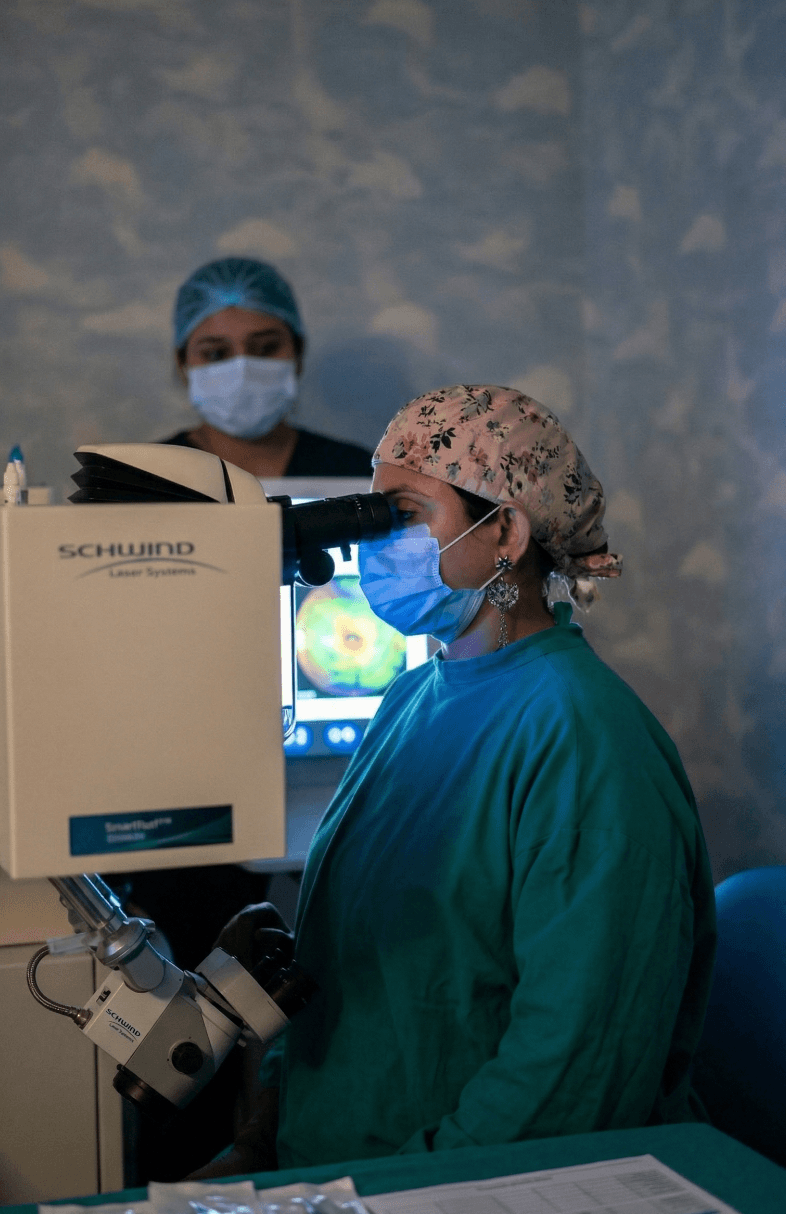
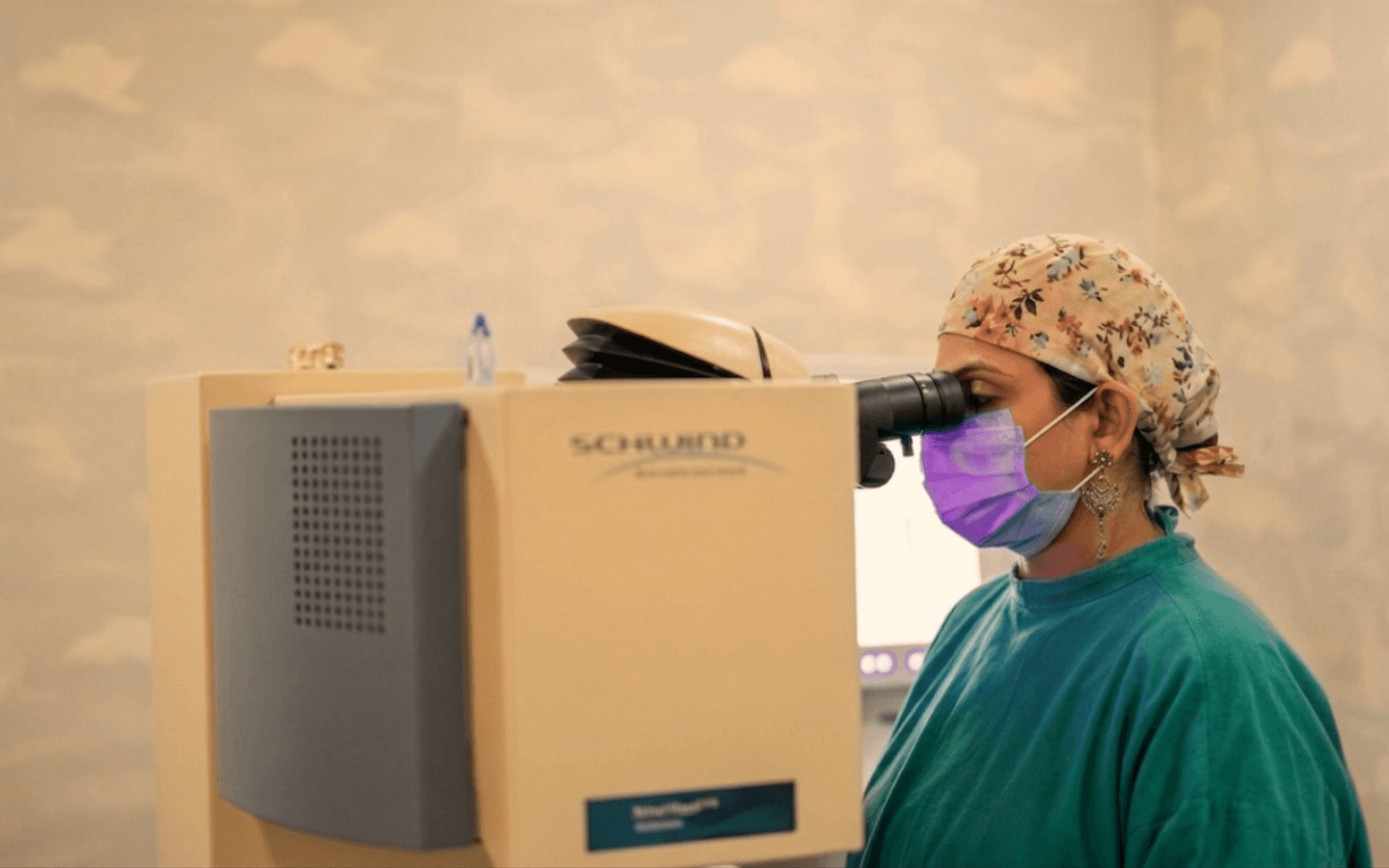
Fellowship in Cornea & Refractive Surgery
Expert in Cataract, Refractive (LASIK) & Cornea Procedures.
Among the fastest surgeon in India.
Thousands of successful vision correction surgeries.
Winner of many prestigious awards.
Known for precision, empathy, and ethical care.
19+
Years
Of Experience
2.5L+
Successful Procedures
7+
Areas of Surgical Expertise
"A corneal transplant gives someone their world back. It is one of the most technically demanding procedures I perform — and one of the most rewarding. The day a patient reads 6/12 for the first time after a DALK is a day I never take for granted."
CORNEAL TRANSPLANT PROTOCOLS — EVERYTHING YOU NEED TO KNOW
Corneal transplantation is not a single surgery. At Netram, the procedure is selected based on which corneal layers are diseased, whether glaucoma or cataract also needs surgical treatment, and which approach offers the best balance of graft survival, visual recovery, and long-term safety.
| Procedure | Indication / Description |
|---|---|
| DALK (Deep Anterior Lamellar Keratoplasty) | Keratoconus, anterior stromal scars, stromal dystrophies — endothelium preserved |
| DSAEK (Descemet Stripping Automated Endothelial Keratoplasty) | Fuchs' dystrophy, pseudophakic bullous keratopathy — anterior cornea preserved |
| Keratoplasty Surgery (Penetrating Keratoplasty — PK) | Full-thickness transplant — all-layer disease, perforations, failed lamellar grafts |
| Keratoplasty with Glaucoma Surgery | Combined PK/DSAEK + trabeculectomy or tube shunt for concurrent glaucoma |
| Keratoplasty with Cataract Surgery (Triple Procedure) | Combined PK/DSAEK + phaco + IOL implantation |
Every keratoplasty technique has distinct advantages and limitations. Here is a comprehensive side-by-side comparison to help you understand the differences before your consultation.
| Parameter | PK (Penetrating Keratoplasty) | DALK (Deep Anterior Lamellar) | DSAEK (Endothelial) |
|---|---|---|---|
| Layers replaced | All 5 layers (full thickness) | Anterior 95% (stroma + above) | Posterior 5% (endothelium only) |
| Patient's endothelium | Replaced with donor | Preserved — patient's own | Replaced with donor lenticule |
| Best indication | All-layer disease, perforations, failed lamellar grafts | Keratoconus, anterior stromal scars | Fuchs' dystrophy, PBK |
| Incision size | 7.0–8.5mm open-sky trephination | 7.0–8.5mm + partial dissection | 3–5mm self-sealing |
| Sutures required | Yes — 16 interrupted or running | Yes — 16 interrupted or running | No sutures (air bubble fixation) |
| Rejection risk | ~10% cumulative at 5 yrs | Near zero (no endothelium transplanted) | Lower than PK; ~5–8% at 5 yrs |
| Visual recovery | 12–18 months | 6–12 months | 1–3 months |
| Final vision quality | Variable — astigmatism common | Excellent — matches or exceeds PK | Good; slightly reduced contrast vs DMEK |
| Astigmatism post-op | High — suture-dependent | Moderate — suture-dependent | Minimal |
| Globe strength post-op | Reduced — scar at wound margin | Slightly reduced | Full strength — minimal incision |
| Graft survival (5 yr) | 70–90% (low-risk cases) | 95%+ (endothelium preserved) | 90–95% |
Corneal graft rejection is the most important long-term risk after keratoplasty. Understanding it, recognising it early, and responding immediately are the three things that determine whether your graft survives.
What is rejection? The immune system recognises the donor corneal tissue as foreign and mounts an inflammatory response to destroy it. This is called an allograft rejection episode. It is not the same as infection. It can occur weeks, months, or even years after surgery.
How common is it? In PK, cumulative rejection occurs in approximately 10% of cases at 5 years. In DALK, endothelial rejection is eliminated (the endothelium is the patient's own). In DSAEK, rejection occurs in approximately 5–8% — less than PK because less foreign tissue is transplanted.
Warning signs — RSVP: Redness, Sensitivity to light, Vision deterioration, Pain. If you experience any of these — particularly after a period of clear vision — contact us the same day. Every hour matters. Do not wait for a routine appointment.
Treatment: Immediate intensive topical steroids (prednisolone acetate 1% hourly) and urgent review. Most early rejection episodes can be reversed if treated promptly. Late or missed rejections lead to graft failure.
Prevention: Lifelong topical steroid drops (tapered over years). Avoid eye trauma. Report any red eye or vision change immediately. Do not stop drops without consulting your corneal surgeon — even years after surgery.
Emergency Contact If you notice sudden redness, light sensitivity, or vision loss in your grafted eye — call Netram Eye Foundation immediately on +91 93199 09455. This is a same-day emergency. Do not delay.
THE COMPLETE TREATMENT JOURNEY
From your first corneal evaluation to your final suture removal — we guide you through every step of the keratoplasty journey with complete transparency about what to expect, when, and why.
PRE-OP step 1 of 4
TESTIMONIALS

“I’m very thankful to Dr. Anchal Gupta for my successful eye operation. She explained the full process clearly, built my confidence, and made me feel genuinely cared for throughout....”
Sonu Kashyap
Eye Surgery Review
Prakash Chetri
Cataract Surgery

“One month after LASIK, my vision is much clearer at 6/4, beyond expectations. Thank you to Dr. Anchal and the team for such a smooth and reassuring experience....”
Shafiya Meditrip
LASIK Review
Ritika Kaushal
LASIK Surgery

“I had ICL surgery at Netram and felt supported from consultation to follow-up. Dr. Anchal Gupta and Dr. Neha Sharma explained everything patiently and made the whole journey comfortable and reassuring....”
Akshita Yadav
ICL Surgery Review
Subhankar
LASIK Surgery
■ALL YOUR QUESTIONS ANSWERED
Corneal transplantation (keratoplasty) replaces a diseased or scarred cornea with healthy donor tissue from a deceased human donor. It is one of the oldest, most studied, and most successful organ transplant procedures in medicine — with 5-year graft survival rates of 70–95% depending on the technique and indication. At Netram, we are fellowship-trained in corneal surgery and offer the full range of modern lamellar and full-thickness techniques.
PK (Penetrating Keratoplasty) replaces all five layers of the cornea and is used when disease affects all layers. DALK (Deep Anterior Lamellar Keratoplasty) replaces only the front 95% and preserves the patient's own endothelium — eliminating endothelial rejection risk. Best for keratoconus and stromal scars. DSAEK replaces only the innermost endothelial layer through a tiny incision — best for Fuchs' dystrophy and bullous keratopathy. The right choice depends entirely on which corneal layers are diseased in your eye.
No — corneal tissue does not require blood group or HLA matching. This is one of the unique immunological privileges of the cornea, which lacks blood vessels. Donor tissue is screened for infectious diseases (HIV, Hepatitis B and C, syphilis) and evaluated for endothelial cell quality, but no blood type compatibility is needed.
Recovery depends entirely on the technique. DSAEK patients often notice improvement within 1–3 months and reach stable vision at 3–6 months. DALK patients typically see gradual improvement over 6–12 months, with final acuity stabilising at 12–18 months after suture removal. PK patients have the longest recovery — 12–18 months. Glasses or rigid contact lenses are often needed after surgery to optimise final corrected visual acuity.
Rejection occurs when the immune system recognises the donor cornea as foreign and attacks it. Warning signs are the RSVP symptoms: Redness, Sensitivity to light, Vision deterioration, and Pain. If you experience any of these, contact us the same day — early treatment with intensive steroid drops reverses most rejection episodes. Prevention requires lifelong topical steroid drops (on a slow taper), protecting the eye from injury, and immediate reporting of any red eye or vision change. Never stop your drops without consulting your surgeon.
Topical steroid drops are the cornerstone of rejection prophylaxis after keratoplasty. After PK and DSAEK, steroids are continued long-term — often for years — on a very slow taper. After DALK, the taper may be faster since endothelial rejection is not a risk. Antibiotic drops are used for the first 4–6 weeks post-operatively. Your drop schedule will be tailored based on your specific procedure and graft health at follow-up visits.
Rigid gas-permeable (RGP) or scleral contact lenses are often the best way to optimise vision after PK and DALK — where post-operative astigmatism is common. Soft contact lenses are generally not effective on an irregular post-keratoplasty cornea. Lens fitting after corneal transplantation requires specialist expertise. We provide corneal topography-guided contact lens fitting at Netram. After DSAEK, soft or toric soft lenses may be sufficient as astigmatism is minimal.
Cost depends on the technique required — DALK, DSAEK, Penetrating Keratoplasty (PK), or a combined procedure with glaucoma or cataract surgery. These costs cover the surgical procedure; donor tissue (eye bank), consumables, and post-operative medications are additional. Cashless insurance and EMI options are available. Please contact us for a personalised cost estimate.
A failed graft can often be treated with a repeat transplantation (regraft). DSAEK failure (endothelial) can be managed with re-DSAEK or DMEK. DALK failure due to endothelial decompensation can be managed with DSAEK, preserving the previously transplanted anterior donor stroma. Regraft surgery carries a higher rejection risk than primary grafts, and outcomes vary based on the cause of failure and the state of the eye. We manage complex regraft cases at Netram.
Eye donation in India is a simple, noble act that can restore vision for two people. You can pledge your eyes through the National Eye Bank at any time during your life. After death, the family must call the eye bank within 6 hours. Eyes are harvested at home or at the hospital — no disfigurement. The face looks completely normal. For eye bank contact in Delhi, call AIIMS Eye Bank or the local NOTTO-registered eye bank. At Netram, we can connect you with the process. One pair of eyes can give sight to two people — please consider this gift.
Still have questions? Our team is available on WhatsApp — we respond in under 10 minutes.
Schedule Consultation
REQUEST AN APPOINTMENT
 Chat on WhatsApp