
C3R / CXL Surgery In Delhi

C3R / CXL Surgery In Delhi

Stop Keratoconus Before it Steals Your Sight.
The Only Proven Procedure That Halts Keratoconus Progression.

19+

Years of Excellence

10K+

Successful Surgeries

98.5%

Success Rate

4.9/5

(2k+ Reviews, Google)

WHY CHOOSE NETRAM

Advanced Corneal Care Rooted in Trust and Excellence

Accelerated C3R Protocol — Faster, Just as Effective

We perform accelerated C3R (30 mW/cm² for 4–5 minutes) — same total energy (5.4 J/cm²) as the conventional Dresden protocol in a fraction of the time. Comparable efficacy, shorter procedure, better patient experience.
Pentacam-Guided — Precision Diagnosis Before Every Procedure

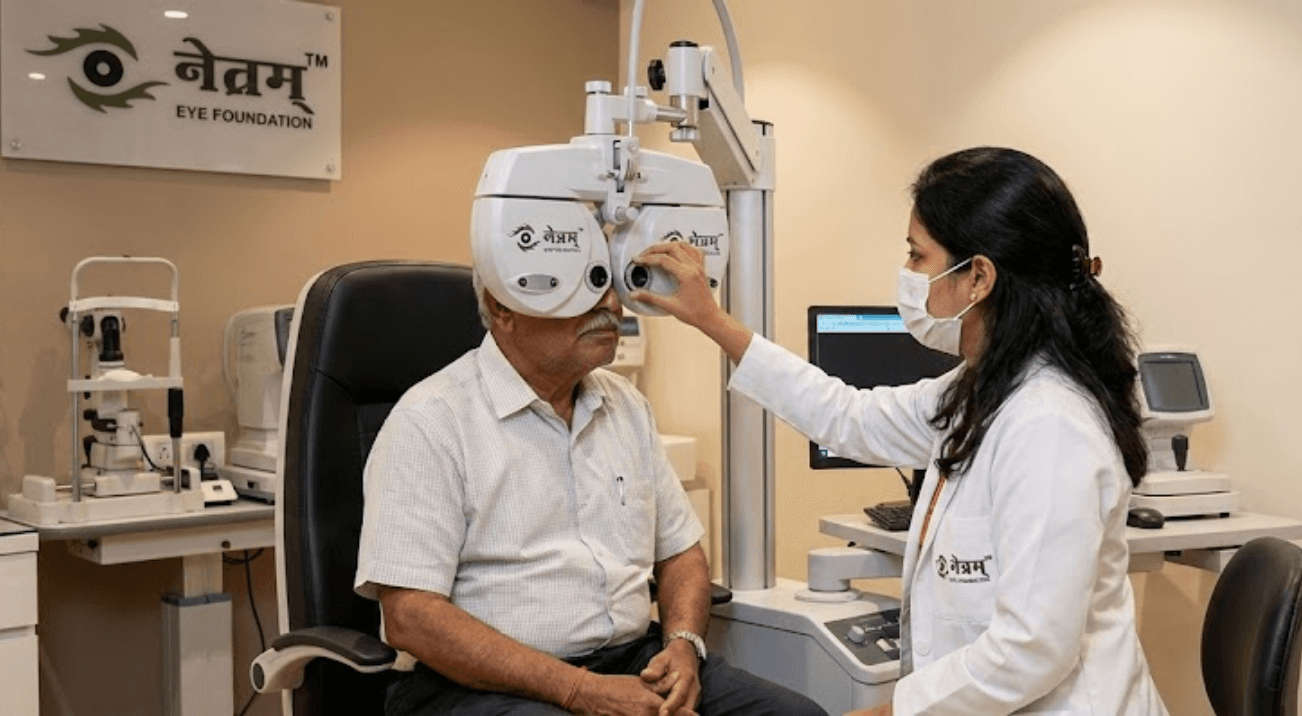
Every C3R candidate undergoes full Pentacam corneal tomography. We do not perform C3R without complete, current topographic documentation of progression.

Epi-Off Standard Protocol — Gold Standard Efficacy

We perform epithelium-off (Epi-off) C3R — the gold standard. Full riboflavin penetration into the stroma ensures maximum crosslinking depth (200–300 microns demarcation line).

Early Intervention Philosophy

We believe in treating keratoconus early — before cone progression causes irreversible vision loss. Young patients (14–25 years) with any documented progression are counselled for C3R promptly.

C3R + Contact Lens / Glasses Management

C3R stops progression — it does not reverse existing cone shape. Post-C3R vision management with RGP, scleral, or custom soft contact lenses is an essential part of integrated keratoconus care.

Transparent Pricing — Both Eyes Available

C3R is priced at ₹35,000 per eye. Cashless insurance and EMI options available. No hidden charges — every patient receives a complete cost breakdown before the procedure.

Diagnosed with Keratoconus? Act Before It Progresses.

Diagnosed with Keratoconus? Act Before It Progresses.

Schedule a free Pentacam evaluation and C3R consultation today.

Schedule Consultation

TREATMENT OVERVIEW

Understanding C3R — Corneal Collagen Crosslinking

What is C3R / Corneal Collagen Crosslinking?

C3R (Corneal Collagen Crosslinking with Riboflavin, also known as CXL) uses riboflavin (Vitamin B2) eye drops combined with controlled ultraviolet-A (UV-A) light to create new covalent bonds between corneal collagen fibres. This photochemical crosslinking reaction dramatically increases the mechanical strength and stiffness of the cornea — halting the progressive thinning and bulging that defines keratoconus. Over 20 years of global clinical data confirm C3R halts keratoconus progression in >90% of treated eyes at 10-year follow-up.

What C3R Does and Does Not Do

C3R stops keratoconus from getting worse — it does not reverse existing corneal shape or eliminate the need for glasses or contact lenses. In many cases, it also produces a modest flattening of the corneal cone. It has dramatically reduced the need for corneal transplantation worldwide since its introduction. A demarcation line visible on OCT at 200–300 microns depth confirms successful crosslinking depth.

When is C3R / CXL Recommended?

Progressive Keratoconus

The primary indication. Any documented progression on serial Pentacam scans — Kmax increase ≥1D, manifest cylinder increase ≥1D, or posterior elevation change. Fastest progression is in patients under 25.

C3R is indicated for progressive keratoconus only

Post-LASIK / Post-Refractive Ectasia

A rare complication where the cornea undergoes progressive ectasia after refractive surgery. C3R is the first-line treatment, using the same Epi-off protocol.

Effective for post-refractive ectasia

Pellucid Marginal Degeneration (PMD)

Peripheral corneal ectasia with inferior corneal thinning and irregular astigmatism. C3R can be performed for progressive PMD.

Treatment planning adjusted for peripheral location

Infectious Keratitis — PACK-CXL

Photoactivated Chromophore for Keratitis (PACK-CXL) is an emerging application for severe drug-resistant corneal ulcers. Growing evidence supports it as adjunct antimicrobial therapy.

Adjunct to antimicrobials in selected cases

Expected Visual Outcomes

C3R is not a vision correction procedure. Progression is halted in >90% of eyes at 10-year follow-up. Over 40% of eyes show modest flattening (0.5–2.0D reduction in Kmax) over 1–2 years. Approximately 40–50% of eyes gain 1–2 lines of best-corrected visual acuity at 3–12 months. Glasses or contact lens prescription may remain unchanged or slightly improve. Mild sub-epithelial corneal haze is normal for 3–6 months — a sign of stromal remodelling.

OUR APPROACH

Exactly What Happens at Netram Eye Foundation

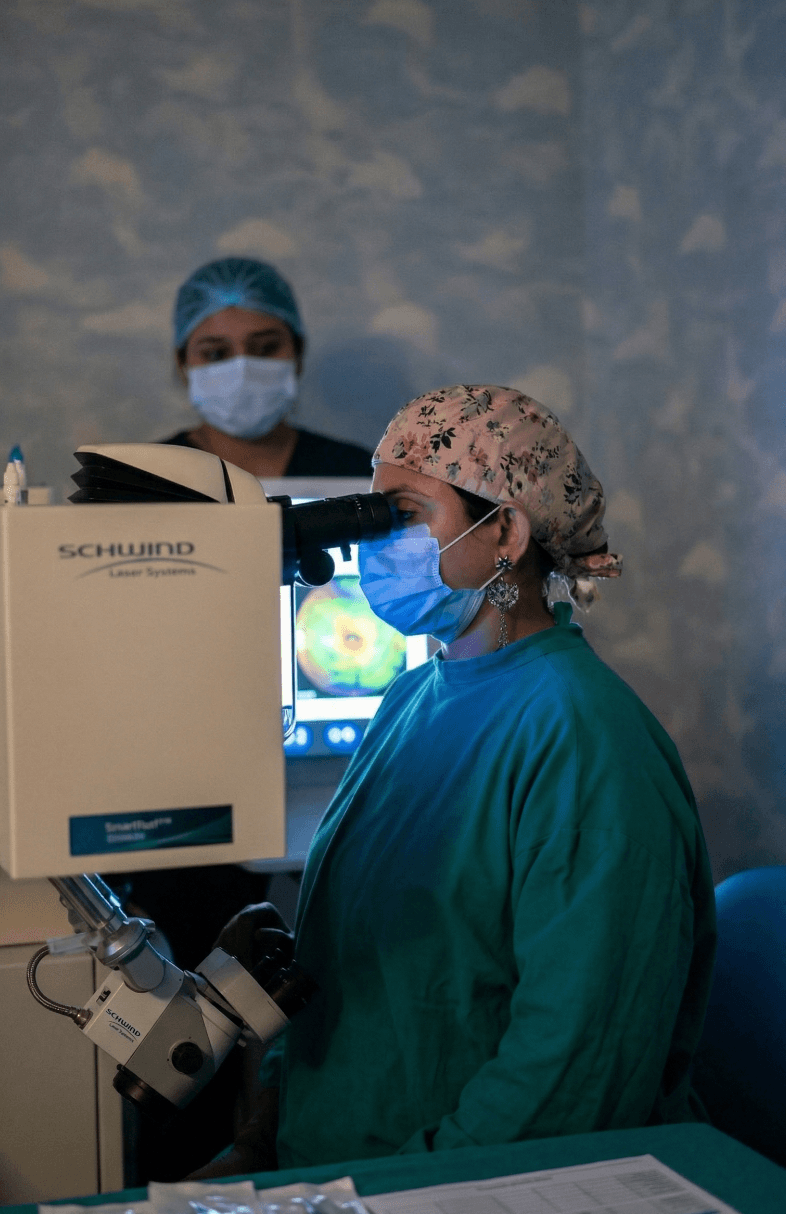
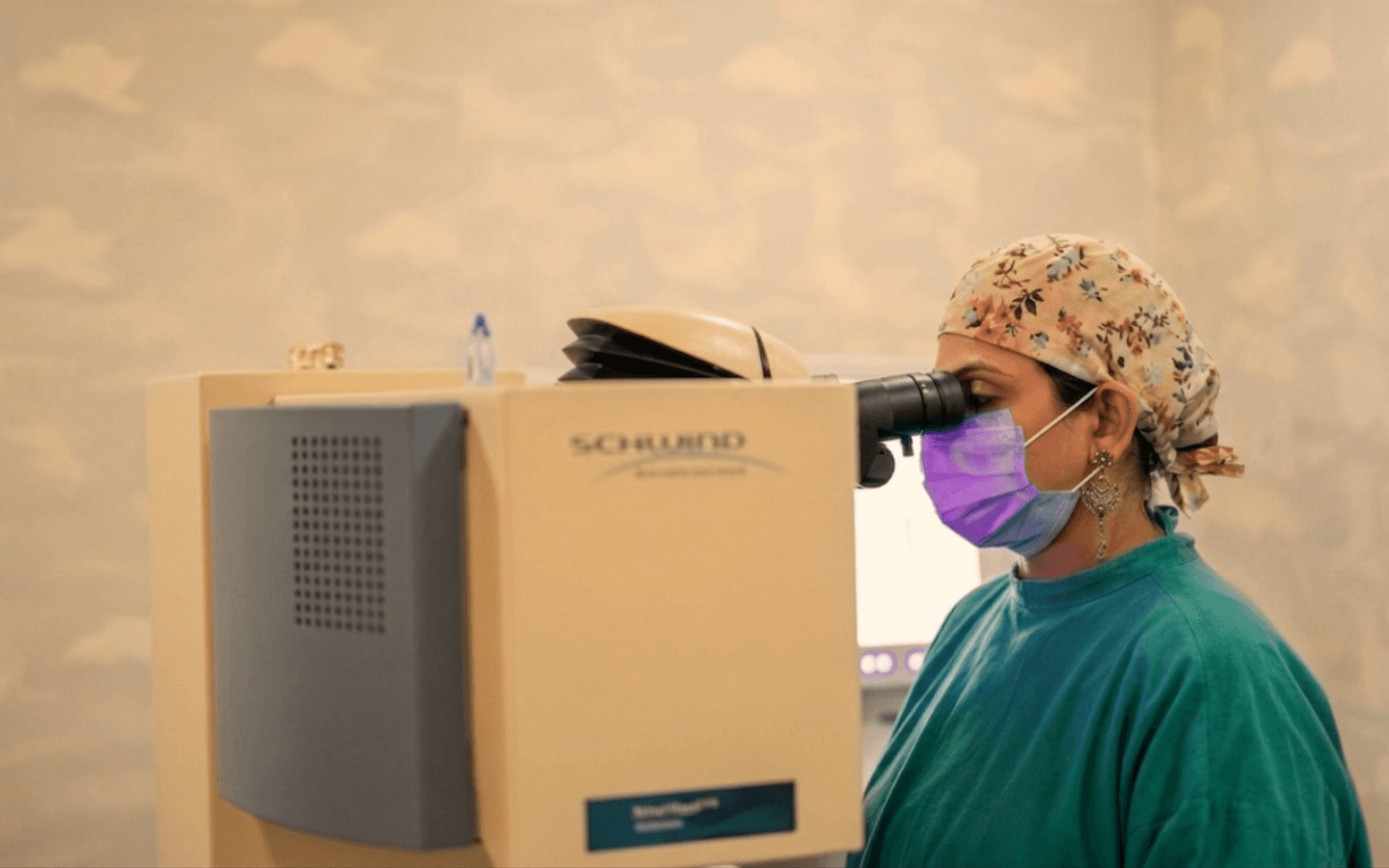
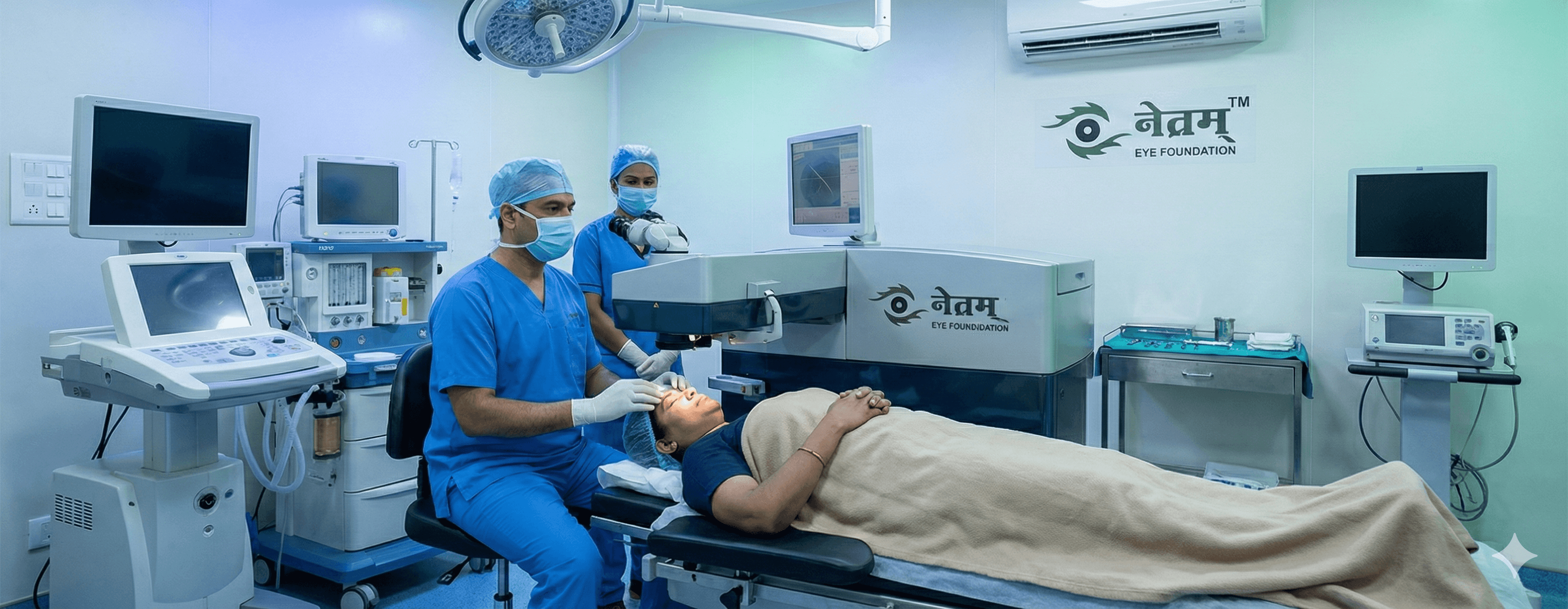
The procedure is performed under topical anaesthesia (eye drops) in our procedure room. Here is exactly what happens at Netram Eye Foundation:

  1. 1

    Topical anaesthetic drops (proparacaine) are instilled to numb the corneal surface. No injections.

  2. 2

    The corneal epithelium (surface layer) is gently removed over a 9 mm zone using a blunt spatula — this is the defining step of Epi-off C3R. It is mildly uncomfortable but not painful.

  3. 3

    Riboflavin (Vitamin B2) 0.1% solution is applied to the corneal surface every 2 minutes for 10–15 minutes — allowing it to saturate the stroma.

  4. 4

    Pachymetry (corneal thickness) is measured to confirm it is above 400 microns — the safety threshold to protect the endothelium.

  5. 5

    Accelerated UV-A irradiation (365 nm, 30 mW/cm²) is applied to the cornea for 4–5 minutes. Riboflavin drops continue during UV-A treatment. Total UV-A energy = 5.4 J/cm².

  6. 6

    UV-A treatment is completed. The corneal surface is rinsed. A soft bandage contact lens is placed to protect the de-epithelialised surface during healing.

  7. 7

    You rest for 30 minutes. Antibiotic and anti-inflammatory drops are instilled. You go home the same day.

Have Questions about C3R / CXL? We respond <10 min.

Have Questions about C3R / CXL?We respond <10 min.

Free Counselling
Expert Corneal Advice
Netram Eye Foundation profile

Netram Eye Foundation

TODAY

Hi there! Welcome to Netram Eye Foundation.

10:00 AM

Are you looking for C3R / CXL surgery cost or appointment?

10:00 AM

MEET YOUR SURGEON

Your Vision in the Hands of Excellence

Dr. Anchal Gupta

Dr. Anchal Gupta

Fellowship in Cornea & Refractive Surgery

Achievements & Highlights

  • Expert in Cataract, Refractive (LASIK) & Cornea Procedures.

  • Among the fastest surgeon in India.

  • Thousands of successful vision correction surgeries.

  • Winner of many prestigious awards.

  • Known for precision, empathy, and ethical care.

19+

Years
Of Experience

2.5L+

Successful Procedures

7+

Areas of Surgical Expertise

"A young patient with keratoconus sitting in front of me is someone whose entire visual future is at stake. C3R, done at the right time, can protect their natural cornea for life. That is not a small thing — and I treat it with the seriousness it deserves, every single time."

C3R PROTOCOLS — EVERYTHING YOU NEED TO KNOW

Complete Treatment Breakdown

There are several crosslinking protocols in current clinical use. Understanding the differences helps you have an informed conversation with your surgeon. At Netram, we perform Epi-off Accelerated C3R — the gold standard.

ProtocolHow It WorksCrosslinking DepthEfficacyRecoveryAt Netram
Epi-Off (Standard Dresden)Epithelium removed; riboflavin + 3 mW/cm² UVA for 30 min300 µm (demarcation line)Gold standard — strongest long-term data (10+ years)5–7 daysPerformed
Epi-Off AcceleratedEpithelium removed; riboflavin + 9–45 mW/cm² UVA for 4–9 min200–300 µmComparable to Dresden at 1–3 years. Faster procedure.5–7 daysOur Protocol
Epi-On (Transepithelial)Epithelium kept intact; modified riboflavin formula + UVA100–150 µm (shallower)Less consistent than Epi-off; FDA approved in USA (2025)1–2 daysInfo available
PACK-CXLEpi-off CXL for infectious keratitis; antimicrobial applicationVariesEmerging data — adjunct to antimicrobials5–7 daysSelected cases

Netram C3R — Complete Pricing Summary

ProcedureDetailsPrice at Netram
C3R — Single EyeAccelerated Epi-off CXL, Pentacam-guided, 45–60 min₹35,000 per eye
C3R — Both EyesSame-day or staged bilateral; separate instruments per eyeContact us for bilateral package
Pre-op Pentacam EvaluationCorneal tomography, progression documentation, eligibility assessmentIncluded in pre-op workup
Post-op Bandage Contact LensTherapeutic soft lens for epithelial healing (3–5 days)Included
6-Month Pentacam Follow-UpTopographic stability confirmation — critical outcome checkIncluded in package

Stages of Keratoconus — And When C3R Should Be Done

Keratoconus is classified into stages based on corneal curvature (Kmax), thickness, and visual acuity. The right time for C3R is when progression is documented — not at any fixed stage. Here is a guide to help you understand where you stand.

StageKmax (D)Corneal ThicknessTypical VisionC3R Indicated?Action
Early< 48DNormal (>500 µm)6/9 or better with glassesYes — if progressingC3R now if progression documented
Moderate48–55DMildly reduced (460–500 µm)6/12 to 6/18 with glassesYes — most casesC3R + RGP / scleral lens fitting
Advanced55–65DReduced (400–460 µm)6/24 or worse even with RGPYes — urgentC3R if ≥ 400 µm; monitor thickness carefully
Severe / End-Stage> 65D< 400 µm; scarring possibleVery poor BCVAC3R may not be safeCorneal transplant (DALK / PKP) discussion

What to Expect After Corneal Crosslinking — Realistic Outcomes

C3R is not a vision correction procedure. Setting the right expectations before surgery is the most important part of counselling. Here is an honest guide to outcomes.

OutcomeWhat Typically HappensTimeline
Progression halted>90% of eyes show no further Kmax increase at 10-year follow-upConfirmed at 6–12 months on Pentacam
Kmax reduction>40% of eyes show modest flattening (0.5–2.0D reduction in Kmax) over 1–2 years1–2 years post-C3R
BCVA improvement~40–50% of eyes gain 1–2 lines of best-corrected visual acuity3–12 months (as cornea stabilises)
Glasses/lens prescriptionMay remain unchanged or slightly improve. Does NOT eliminate need for glasses or contact lenses in most casesRecheck at 3 months
Demarcation lineVisible on OCT at 200–300 µm depth — confirms crosslinking depth. Fades over 6–12 months6 weeks post-C3R
Corneal hazeMild sub-epithelial haze is normal and expected for 3–6 months — a sign of stromal remodelling. Resolves fully.3–6 months

THE COMPLETE TREATMENT JOURNEY

Guiding You Through Every Stage

From your first Pentacam scan to your 12-month topographic stability check — we guide you through every step of the C3R journey with complete transparency.

PRE-OP step 1 of 4

First VisitStep 1

Keratoconus Evaluation

Complete Pentacam corneal tomography, slit lamp examination, pachymetry, refraction, and best-corrected visual acuity. Keratoconus confirmed and staged.

Progression CheckStep 2

Documenting Progression

C3R is indicated for progressive keratoconus. If you do not have a prior Pentacam showing change, we may ask you to return in 3–6 months for a comparison scan before proceeding.

1 Week PriorStep 3

Stop Contact Lenses

Discontinue soft lenses 5–7 days before surgery. Rigid (RGP) lenses: stop 3–4 weeks before. The cornea must be in its natural, undeformed state for accurate pre-op measurements.

Day PriorStep 4

Preparation

No eye makeup. Arrange a companion. Antibiotic drops started the day before as prescribed. Do not rub your eyes.

TESTIMONIALS

Real Patients, Life-Changing Results

Sonu Kashyap avatar

I’m very thankful to Dr. Anchal Gupta for my successful eye operation. She explained the full process clearly, built my confidence, and made me feel genuinely cared for throughout....

Sonu Kashyap

Eye Surgery Review

Prakash Chetri

Cataract Surgery

Shafiya Meditrip avatar

One month after LASIK, my vision is much clearer at 6/4, beyond expectations. Thank you to Dr. Anchal and the team for such a smooth and reassuring experience....

Shafiya Meditrip

LASIK Review

Ritika Kaushal

LASIK Surgery

Akshita Yadav avatar

I had ICL surgery at Netram and felt supported from consultation to follow-up. Dr. Anchal Gupta and Dr. Neha Sharma explained everything patiently and made the whole journey comfortable and reassuring....

Akshita Yadav

ICL Surgery Review

Subhankar

LASIK Surgery

ALL YOUR QUESTIONS ANSWERED

Frequently Asked Questions About C3R / CXL

What is C3R and is it the same as CXL?

Yes — C3R (Corneal Collagen Crosslinking with Riboflavin) and CXL (Corneal Crosslinking) are the same procedure. C3R is the name commonly used in India; CXL is used internationally. Both refer to the use of riboflavin (Vitamin B2) eye drops combined with UV-A light to create new covalent bonds between corneal collagen fibres, stiffening and strengthening the cornea to halt keratoconus progression.

Does C3R cure keratoconus?

No — C3R does not cure keratoconus or reverse the existing cone shape. Its sole purpose is to stop the disease from progressing further. Think of it as putting keratoconus on pause. The irregularity and astigmatism already present in your cornea will remain — though some modest improvement in corneal shape and vision is seen in approximately 40–50% of eyes over the following 1–2 years. Glasses, RGP lenses, or scleral lenses will still be needed for vision correction after C3R.

Will I still need glasses or contact lenses after C3R?

Yes — in most cases. C3R stabilises the cornea but does not reshape it. Your glasses or contact lens prescription may remain similar, improve slightly, or occasionally worsen transiently during healing (3–6 months). Once the cornea is stable at 3–6 months, your prescription can be finalised. RGP or scleral contact lenses are often the best optical solution for keratoconus — even after C3R — and our team will guide you on the best option for your vision.

How do I know if my keratoconus is progressing?

Progression is documented by serial Pentacam corneal tomography scans performed 6–12 months apart. Any of the following indicate progression: Kmax increase of ≥1.00D, manifest cylinder increase of ≥1.00D, spherical equivalent change of ≥0.50D, or increasing posterior corneal elevation on Pentacam. If you do not have a prior Pentacam for comparison, we may ask you to return in 3–6 months for a progression check before recommending C3R.

What is the minimum corneal thickness required for C3R?

The standard safety threshold is 400 microns corneal thickness after epithelial removal. Below this, the UVA may penetrate to the corneal endothelium (the inner cell layer) and cause irreversible endothelial damage. For thin corneas between 350–400 microns, hypotonic riboflavin (which causes corneal swelling) can be used to temporarily increase thickness above 400 microns before UV-A irradiation, extending the candidacy of C3R to thin corneas.

Is C3R painful?

The eye drop anaesthesia numbs the corneal surface effectively. The most uncomfortable moment is epithelial removal — patients describe it as mild scratching, not pain. During UV-A irradiation, the eye is numb and you simply look at a fixation light. After the procedure, when the anaesthetic wears off (2–3 hours), there is significant surface discomfort — like a foreign body sensation and photophobia — for 24–48 hours while the epithelium heals. Prescribed pain relief drops and oral analgesics manage this well.

What is the difference between Epi-off and Epi-on C3R?

Epi-off C3R removes the corneal epithelium before applying riboflavin, allowing full penetration into the stroma and producing a deep demarcation line (200–300 µm). It is the gold standard with the strongest 10-year efficacy data. Epi-on (transepithelial) C3R keeps the epithelium intact — reducing pain and recovery time but producing a shallower crosslinking depth (100–150 µm) and less consistent progression-halting results in published studies. At Netram, we perform Epi-off because we prioritise efficacy — C3R should work fully the first time.

Can both eyes be treated on the same day?

Yes — bilateral same-day C3R is safe and routinely performed at Netram. Both eyes are treated with separate instruments and riboflavin vials. The advantage is fewer procedure visits and hospital trips, which matters greatly for young working patients or those travelling from outside Delhi. The consideration is that during 3–5 days of epithelial healing, vision in both eyes will be reduced — patients are counselled to take leave from work or school and arrange assistance during this period.

When can I go back to work, school, or sport after C3R?

Most patients return to desk work and school within 5–7 days, once the bandage contact lens is removed and the epithelium has healed. Screen work and reading are comfortable again at 1–2 weeks. Contact sport, swimming, and dusty environments should be avoided for 4–6 weeks. Glasses or contact lenses may be worn once the epithelium is fully healed (Day 5 onwards for glasses; contact lenses after 4 weeks minimum and only with doctor clearance).

What is the cost of C3R at Netram Eye Foundation, Delhi?

C3R is priced at ₹35,000 per eye at Netram Eye Foundation, Greater Kailash II. Bilateral package pricing is available — please contact our team for the current both-eyes rate. The price includes pre-operative Pentacam evaluation, the C3R procedure, bandage contact lens, post-operative medications for the first week, and all scheduled follow-up visits up to 6 months. Cashless insurance and EMI facilities are available.

Still have questions? Our team is available on WhatsApp — we respond in under 10 minutes.

Schedule Consultation
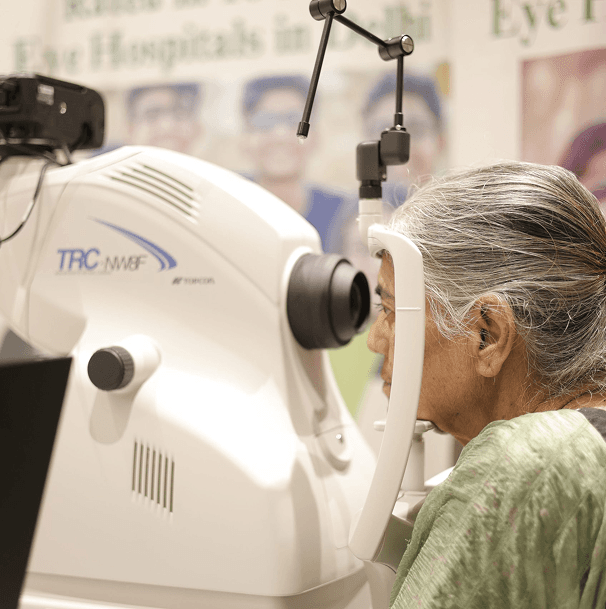
Patient receiving an eye examination

REQUEST AN APPOINTMENT

Experience World-Class Eye Care