Intravitreal Injections In Delhi

Intravitreal Injections In Delhi

Protecting Sight. Precisely. Painlessly.
First-Line Treatment for wet AMD, diabetic macular oedema, and retinal vein occlusion.

19+

Years of Excellence

10K+

Successful Surgeries

98.5%

Success Rate

4.9/5

(2k+ Reviews, Google)

WHY CHOOSE NETRAM

Advanced Retinal Care Rooted in Trust and Excellence

Strict Aseptic Protocol — Zero Compromise on Safety

Every injection uses sterile povidone-iodine preparation, sterile drape, lid speculum, and fresh gloves. We follow international aseptic standards — endophthalmitis is entirely preventable with the right protocol.

OCT-Guided Treatment — Every Visit, Every Injection

We do not inject without a current OCT scan. Optical coherence tomography of the macula guides every injection decision, preventing both under- and over-treatment.

Full Portfolio of Premium Anti-VEGF Agents

We offer all major intravitreal agents — Eylea, Zybev, Ozurdex, Vabysmo, Razumab, and Accentrix — so your treatment is chosen for your eye's specific needs.

Flexible Treat-and-Extend Regimens

Modern Treat-and-Extend (TAE) and Pro Re Nata (PRN) protocols reduce the number of injections and clinic visits without compromising outcomes.

Bilateral Injection Facility

For conditions affecting both eyes — such as bilateral DME or AMD — we offer same-day bilateral injections where clinically appropriate, reducing visit burden.

Cashless & Affordable — Full Range of Agents

From Razumab (₹25,000) to Vabysmo (₹85,000), we offer every price point. Cashless insurance facility available. Our team helps you navigate insurance approvals.

Concerned About Your Retinal Health?

Concerned About Your Retinal Health?

Schedule a free retinal evaluation with our specialist today.

Schedule Consultation

TREATMENT OVERVIEW

Understanding Intravitreal Injections

What is an Intravitreal Injection?

An intravitreal injection is a procedure in which a therapeutic drug is injected directly into the vitreous cavity — the gel-filled space at the back of the eye. This delivers the medication precisely where it is needed, at the retina and macula, while minimising systemic absorption and side effects.

Why inject into the eye?

The eye has a blood-retinal barrier that prevents most orally or intravenously administered drugs from reaching the retina in therapeutic concentrations. Intravitreal injection bypasses this barrier entirely, delivering high drug concentrations directly to the target tissue.

What drugs are injected?

Anti-VEGF agents (most common) block a protein called Vascular Endothelial Growth Factor that drives abnormal blood vessel growth and leakage in the retina. Corticosteroid implants (Ozurdex) reduce retinal inflammation and vascular permeability. Each drug has specific indications and dosing intervals.

How common?

Intravitreal injections are now the most frequently performed ophthalmic procedure worldwide — with over 20 million injections administered globally each year. They are safe, effective, and routinely performed in an outpatient clinic setting.

Conditions Treated with Intravitreal Injections

Wet Age-Related Macular Degeneration (nAMD)

Abnormal blood vessels grow beneath the macula and leak fluid, rapidly destroying central vision. The leading cause of blindness in adults over 60.

Anti-VEGF improves vision in ~33%, stabilises in ~90%

Diabetic Macular Oedema (DME)

Diabetes damages retinal blood vessels, leaking fluid into the macula and causing blurring of central vision. Leading cause of vision loss in working-age adults in India.

First-line treatment; >50% gain 10+ ETDRS letters

Retinal Vein Occlusion (BRVO / CRVO)

A blockage in a retinal vein causes macular oedema and haemorrhages. Presents as sudden painless blurring in one eye.

Anti-VEGF first-line; Ozurdex for CRVO

Myopic Choroidal Neovascularisation

In high myopia, thinning of Bruch's membrane leads to choroidal neovascularisation, causing central vision loss in younger patients.

Often requires fewer injections than AMD

Expected Treatment Outcomes

Anti-VEGF injections are now the most frequently performed ophthalmic procedure worldwide — over 20 million administered annually. They improve vision in approximately 1 in 3 patients and stabilise vision in 9 out of 10 patients with wet AMD. The risk of serious complications like endophthalmitis is less than 1 in 1000 per injection when strict aseptic technique is followed. With modern Treat-and-Extend protocols, many patients eventually reach injection intervals of 12–16 weeks.

OUR APPROACH

How Intravitreal Injections Are Performed at Netram

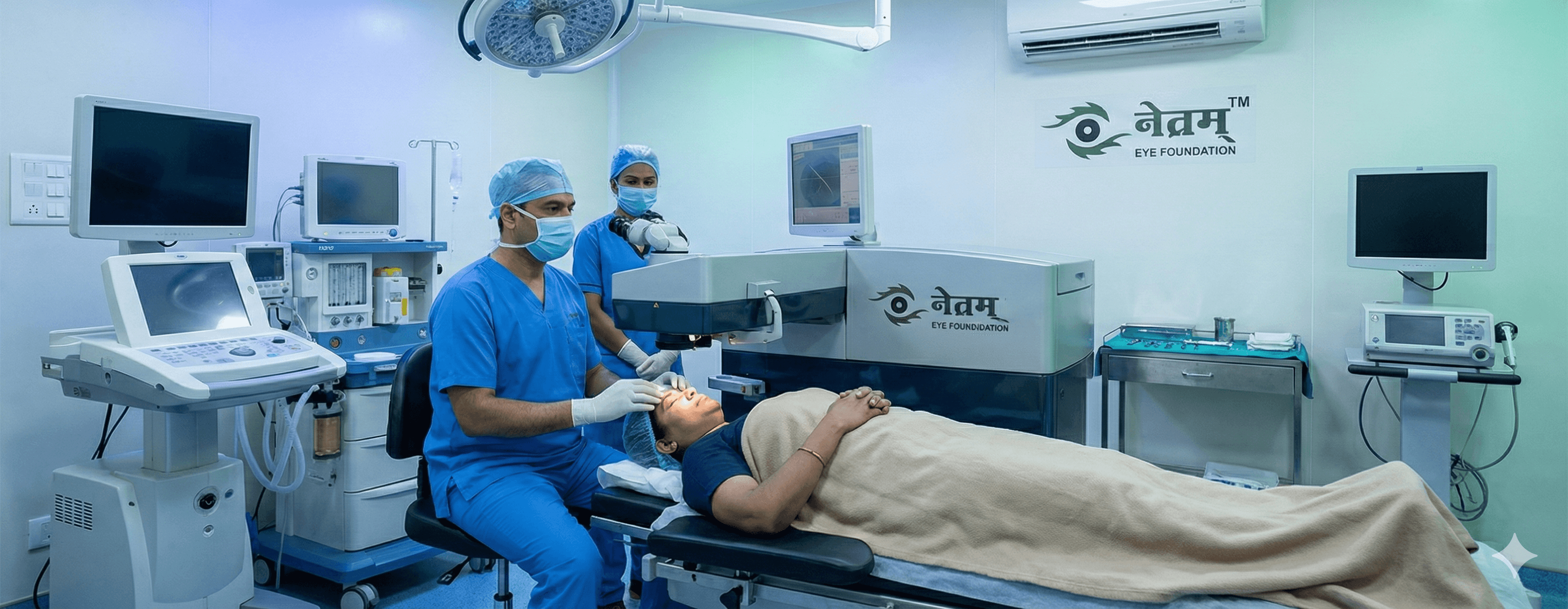
The procedure is performed in our minor procedure room under strict aseptic conditions. Here is exactly what happens at every injection visit at Netram Eye Foundation:

  1. 1

    You arrive and an OCT scan of your macula is performed. The treating doctor reviews the scan and confirms the injection is indicated today.

  2. 2

    Pupil-dilating drops are instilled if a dilated fundus examination is needed. Topical anaesthetic drops (proparacaine) are applied to numb the eye — no injections, no needles near the eye.

  3. 3

    The eye is cleaned with 5% povidone-iodine solution. A sterile drape is applied. A lid speculum is gently placed to keep the eyelids open.

  4. 4

    The injection site (4mm from the limbus in the pars plana) is measured with a sterile calliper and marked.

  5. 5

    Povidone-iodine is applied directly to the injection site. The anti-VEGF drug is drawn up in a sterile syringe with a 30-gauge needle.

  6. 6

    The needle is inserted through the sclera and the drug injected into the vitreous in one smooth, 2–3 second motion. You see a flash of light or darkening briefly — this is normal and expected.

  7. 7

    The needle is removed. The injection site is pressed gently. The eye is flushed with balanced salt solution. IOP is checked if needed. You rest for 10 minutes and go home.

Have Questions about Intravitreal Injections? We respond <10 min.

Have Questions about Intravitreal Injections?We respond <10 min.

Free Counselling
Expert Retinal Advice
Netram Eye Foundation profile

Netram Eye Foundation

TODAY

Hi there! Welcome to Netram Eye Foundation.

10:00 AM

Are you looking for intravitreal injection cost or appointment?

10:00 AM

MEET YOUR SPECIALIST

Your Vision in the Hands of Excellence

Dr. Sumit Gupta

Dr. Sumit Gupta

MS Ophthalmology | Fellowship in Vitreo-Retinal Surgery

Achievements & Highlights

  • Expert in vitreoretinal medicine, intravitreal therapy, cataract, LASIK, IPCL, cornea, and glaucoma surgery.

  • Manages high-volume intravitreal injection clinic — all agents available at every visit.

  • OCT-guided, protocol-based injection management — Treat-and-Extend for all eligible patients.

  • 2.5 lakh+ successful surgical and procedural outcomes over 19+ years.

  • Known for precision, compassionate long-term care, and ethical treatment recommendations.

19+

Years
Of Experience

2.5L+

Successful Procedures

7+

Areas of Surgical Expertise

"Intravitreal injections are not just a procedure — for many of our patients, they are what stands between them and blindness. We treat every injection with the same seriousness we would a surgery, because the outcome is just as important."

Netram Intravitreal Injection - Complete Pricing Summary

A side-by-side treatment matrix covering approval status, mechanism, indications, dosing cadence, key evidence, and current Netram pricing for all major intravitreal options.

DrugBrand / ManufacturerMechanismPrimary IndicationsStandard DosingKey Clinical DataPrice at Netram
Eylea
  • Aflibercept 2mg
  • Regeneron / Bayer
  • Approved and gold-standard anti-VEGF
  • VEGF-A + PlGF inhibitor
  • Decoy receptor mechanism
  • Wet AMD
  • Diabetic Macular Oedema
  • BRVO/CRVO macular oedema
  • Diabetic retinopathy in patients with DME
  • 3 monthly loading doses
  • Then Q8W
  • Treat-and-Extend up to Q12-16W in stable patients
  • VIEW 1 and 2: non-inferior to monthly ranibizumab in wet AMD
  • VIVID/VISTA: superior to laser for DME
  • Strong 10-year real-world durability data
₹62,000
Zybev
  • Bevacizumab Biosimilar 1.25mg
  • Hetero Biopharma
  • Off-label, cost-effective anti-VEGF biosimilar
  • VEGF-A inhibitor
  • Full-length monoclonal antibody
  • Wet AMD
  • DME
  • RVO-related macular oedema
  • Myopic CNV
  • Widely used off-label globally and in India
  • Monthly Q4W after loading
  • PRN option after loading phase
  • Treat-and-Extend protocols under study
  • CATT: non-inferior to ranibizumab for wet AMD
  • Most widely used anti-VEGF globally by volume
  • Comparable outcomes to branded bevacizumab
₹15,000
Ozurdex
  • Dexamethasone intravitreal implant 0.7mg
  • AbbVie / Allergan
  • Biodegradable corticosteroid implant
  • Sustained-release dexamethasone
  • Anti-inflammatory mechanism
  • BRVO/CRVO macular oedema
  • DME in refractory or steroid-responder cases
  • Posterior uveitis
  • Non-infectious uveitis
  • Single implant lasts 4-6 months
  • Repeat around 6 monthly if needed
  • Useful in anticoagulated patients
  • Monitor IOP and lens status
  • MEAD: significant VA improvement vs sham in DME
  • Highly effective in uveitic macular oedema
  • Reduces injection frequency vs monthly anti-VEGF
₹45,000
Vabysmo
  • Faricimab 6mg
  • Roche / Genentech
  • Latest-generation dual-pathway inhibitor
  • VEGF-A + Ang-2 dual inhibitor
  • Longest-duration anti-VEGF available
  • Neovascular wet AMD
  • Diabetic Macular Oedema
  • Approved by FDA and DCGI India
  • 4 monthly loading doses
  • Then personalised up to Q16W in AMD
  • TREX-DME: selected patients may reach Q24W
  • TENAYA/LUCERNE: non-inferior to Eylea Q8W in AMD
  • YOSEMITE/RHINE: non-inferior to Eylea Q8W in DME
  • Up to 50% of nAMD patients achieve Q16W in year 1
₹85,000
Razumab
  • Ranibizumab Biosimilar 0.5mg
  • Intas Pharmaceuticals
  • India's first anti-VEGF biosimilar
  • VEGF-A inhibitor
  • Fab fragment monoclonal antibody
  • Wet AMD
  • Diabetic Macular Oedema
  • BRVO/CRVO macular oedema
  • Myopic choroidal neovascularisation
  • 3 monthly Q4W loading doses
  • Then PRN or Treat-and-Extend by OCT activity
  • Can extend to Q12W in stable patients
  • Biosimilarity study showed PK comparable to Lucentis
  • Approved by CDSCO India
  • Real-world Indian data supports comparable outcomes
₹25,000
Accentrix
  • Ranibizumab 0.5mg
  • Novartis
  • Original anti-VEGF pioneer
  • VEGF-A inhibitor
  • Humanised Fab fragment with high retinal penetration
  • Wet AMD
  • Diabetic Macular Oedema
  • BRVO/CRVO macular oedema
  • Myopic choroidal neovascularisation
  • 3 monthly loading doses
  • Then PRN or Treat-and-Extend
  • Approved Q3M AMD dosing in PIER protocol
  • 0.3mg DME dose used in some protocols
  • MARINA and ANCHOR established ranibizumab in AMD
  • RESTORE and RISE/RIDE confirmed superiority to laser for DME
  • 15+ years of global safety and efficacy data
₹35,000

Which Intravitreal Drug is Right for Your Condition?

Choosing the correct drug depends on your diagnosis, disease activity, previous treatment response, systemic health, lens status, and budget. Here is a clinician-written guide to help you understand the decision.

ParameterEylea (Aflibercept)Vabysmo (Faricimab)Accentrix (Ranibizumab)Razumab (Biosimilar)Zybev (Bevacizumab)
MechanismVEGF-A + PlGFVEGF-A + Ang-2VEGF-A (Fab)VEGF-A (Fab)VEGF-A (full Ab)
Approved for nAMDYesYesYesYes (biosimilar)Off-label
Approved for DMEYesYesYesYes (biosimilar)Off-label
Approved for RVOYesNoYesYes (biosimilar)Off-label
Approved myopic CNVNoNoYesYes (biosimilar)Off-label
Max injection intervalQ16W (nAMD)Q16W (nAMD)Q3M (PRN/TAE)Q3M (PRN/TAE)Q4-8W typically
Best for dry eye / phakicYesYesYesYesYes
Uveitic oedemaNoNoNoNoOff-label
Price at Netram₹62,000₹85,000₹35,000₹25,000₹15,000
Best value choiceFor AMD non-responders to ranibizumabFor patients who want fewest injectionsFor myopic CNV, first-line AMDFor budget-conscious patientsFor lowest cost, proven efficacy

THE COMPLETE TREATMENT JOURNEY

Guiding You Through Every Visit

From your first OCT scan to your final injection of the loading phase — and every follow-up beyond — we guide you through intravitreal treatment with complete transparency.

PRE-INJECTION step 1 of 3

First VisitStep 1

OCT + Clinical Evaluation

Detailed history, dilated fundus examination, and OCT macula to assess disease type, location, and severity. Diagnosis confirmed and treatment plan explained.

CounsellingStep 2

Drug Selection & Treatment Discussion

Your doctor explains the condition, why injection is recommended, the choice of drug, expected number of injections, and realistic visual outcome. Informed consent obtained.

Pre-InjectionStep 3

Preparation Instructions

Avoid eye makeup on injection day. Antibiotic drops started 1–2 days before first injection. Arrange a companion if possible.

TESTIMONIALS

Real Patients, Life-Changing Results

Sonu Kashyap avatar

I’m very thankful to Dr. Anchal Gupta for my successful eye operation. She explained the full process clearly, built my confidence, and made me feel genuinely cared for throughout....

Sonu Kashyap

Eye Surgery Review

Prakash Chetri

Cataract Surgery

Shafiya Meditrip avatar

One month after LASIK, my vision is much clearer at 6/4, beyond expectations. Thank you to Dr. Anchal and the team for such a smooth and reassuring experience....

Shafiya Meditrip

LASIK Review

Ritika Kaushal

LASIK Surgery

Akshita Yadav avatar

I had ICL surgery at Netram and felt supported from consultation to follow-up. Dr. Anchal Gupta and Dr. Neha Sharma explained everything patiently and made the whole journey comfortable and reassuring....

Akshita Yadav

ICL Surgery Review

Subhankar

LASIK Surgery

ALL YOUR QUESTIONS ANSWERED

Frequently Asked Questions About Intravitreal Injections

What is an intravitreal injection and is it safe?

An intravitreal injection delivers medication directly into the vitreous cavity of the eye. It is one of the most commonly performed ophthalmic procedures worldwide — over 20 million are administered each year. The risk of serious complications like endophthalmitis is less than 1 in 1000 per injection when strict aseptic technique is followed. At Netram, we follow international aseptic protocols at every injection — no compromise.

Is the injection painful?

Most patients report feeling pressure, not pain. The eye is thoroughly numbed with topical anaesthetic drops (proparacaine) before the injection. The needle entry through the sclera takes 2–3 seconds. You may see a brief flash of light or momentary darkening — this is normal. Many patients are surprised by how comfortable the procedure is. Mild foreign body sensation and redness may persist for 1–2 days after.

How many injections will I need?

This depends entirely on your condition and your response to treatment. Wet AMD and DME are chronic conditions requiring long-term treatment — most patients need 3–5 loading injections followed by ongoing injections every 4–16 weeks depending on the drug and disease activity. We use Treat-and-Extend protocols to minimise the number of injections without compromising outcomes. Your OCT at every visit guides this decision objectively.

What is the difference between Eylea, Vabysmo, Razumab, and Zybev?

All four are anti-VEGF agents — they block the VEGF protein that drives abnormal blood vessel growth and leakage in the retina. Eylea (aflibercept) also blocks PlGF. Vabysmo (faricimab) additionally blocks Ang-2 — a second pathway — allowing the longest injection intervals (up to Q16W). Razumab and Accentrix are ranibizumab (biosimilar and branded respectively) — smaller molecules with good retinal penetration, approved for myopic CNV. Zybev is a bevacizumab biosimilar — the most affordable option. The choice depends on your diagnosis, prior treatment response, and budget. Dr. Anchal will recommend the right drug for your specific case.

What is Ozurdex and when is it used instead of anti-VEGF?

Ozurdex is a biodegradable dexamethasone implant (0.7mg) inserted into the vitreous — it slowly releases steroid over 4–6 months. It works through an anti-inflammatory rather than anti-VEGF mechanism, making it the preferred choice for uveitic macular oedema, CRVO-related oedema, and patients who have not responded adequately to anti-VEGF therapy. It is also useful in patients on warfarin where frequent injections carry a higher risk. One Ozurdex injection may last 4–6 months, reducing overall visit frequency.

Can I get injections in both eyes on the same day?

Yes — same-day bilateral injections are offered at Netram for conditions affecting both eyes, such as bilateral DME or AMD. International evidence shows bilateral same-day injections have a similar safety profile to unilateral injections when strict aseptic technique is used with separate instruments for each eye. This significantly reduces clinic visit burden, particularly for elderly patients or those travelling long distances.

What should I avoid after the injection?

Avoid rubbing the injected eye, dusty environments, swimming pools, and eye makeup for 48 hours. You may use artificial tears for mild surface irritation. There are generally no restrictions on reading, screens, or walking. Contact us immediately if you develop increasing pain, redness, sudden vision loss, or discharge — these may indicate endophthalmitis, which requires urgent treatment.

How long do intravitreal injections keep working?

Anti-VEGF injections work for the duration their drug concentration remains above therapeutic levels in the vitreous — typically 4–8 weeks for most agents, up to 16 weeks for Vabysmo in suitable patients. The effect wears off as the drug is cleared, which is why regular monitoring and re-injection are necessary for chronic conditions like AMD and DME. The goal of Treat-and-Extend protocols is to find each patient's personalised injection interval — the longest interval at which disease remains inactive.

What is the cost of intravitreal injections at Netram Eye Foundation?

Our current pricing per injection: Zybev (bevacizumab biosimilar) — ₹15,000. Razumab (ranibizumab biosimilar) — ₹25,000. Accentrix (ranibizumab branded) — ₹35,000. Ozurdex (dexamethasone implant) — ₹45,000. Eylea (aflibercept) — ₹62,000. Vabysmo (faricimab) — ₹85,000. Cashless insurance facility is available for eligible patients. Please contact our team to understand your insurance coverage before your first injection.

Will I need injections forever?

For wet AMD and DME, most patients require long-term — sometimes lifelong — treatment to maintain vision. The good news is that with modern Treat-and-Extend protocols, many patients eventually reach injection intervals of 12–16 weeks, significantly reducing the treatment burden over time. Some patients with retinal vein occlusion or myopic CNV may achieve disease inactivity after a limited number of injections and not require further treatment. Your doctor will be honest about the expected treatment duration for your specific condition.

Still have questions? Our team is available on WhatsApp — we respond in under 10 minutes.

Schedule Consultation
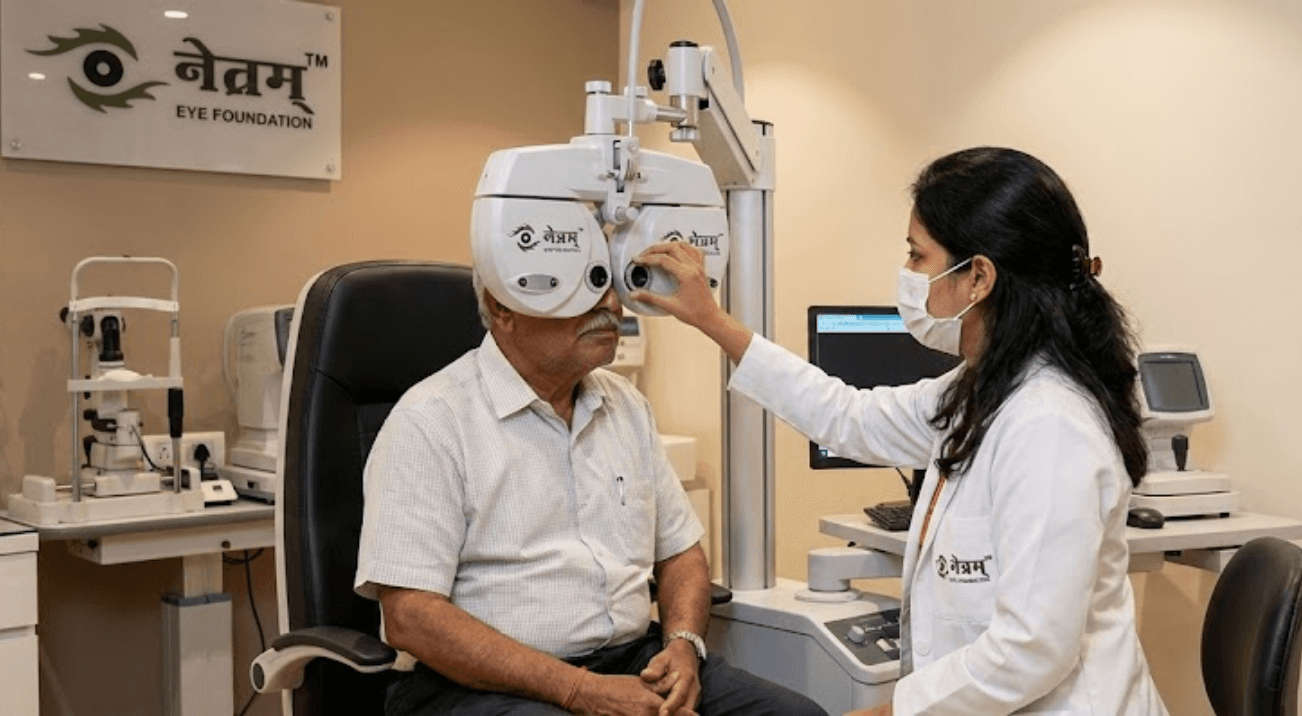
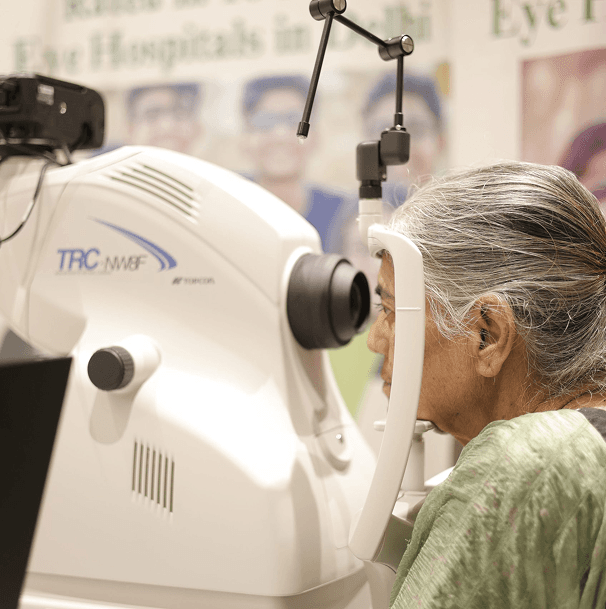
Patient receiving an eye examination

REQUEST AN APPOINTMENT

Experience World-Class Eye Care