Squint (Strabismus)

Squint (Strabismus)

UNDERSTANDING THE CONDITION

What Is Squint (Strabismus)?

Normal binocular single vision depends on the precise coordination of six extraocular muscles in each eye, all controlled by cranial nerves III, IV, and VI. When the brain correctly calibrates the motor commands to these muscles, both foveas (the point of sharpest vision in each retina) are simultaneously directed to the object of interest, allowing the two slightly different images to be fused into a single, three-dimensional percept. In strabismus, this neuromuscular coordination breaks down — due to muscle imbalance, innervational abnormality, or refractive error — causing one eye to deviate from the fixation target.

In children, the brain's response to the misalignment is to actively suppress the image from the deviating eye to avoid diplopia (double vision). This suppression, while preventing confusion, deprives the amblyopic eye's visual pathway of proper stimulation during the critical developmental period. If the suppression becomes established before 7–8 years of age and is not reversed by treatment, the visual acuity of the deviating eye becomes permanently reduced — a condition called strabismic amblyopia. This risk makes early detection and intervention by an ophthalmologist in Delhi critically important in all cases of paediatric squint.

Adults who develop squint de novo — typically from cranial nerve palsy, thyroid eye disease, orbital trauma, or decompensation of a previously controlled deviation — experience immediate double vision because the adult brain has lost the capacity for suppression. This creates significant visual disability requiring prompt evaluation and management.

Part of Eye Affected

Strabismus primarily affects the extraocular muscles and the neural control systems coordinating binocular vision. In refractive accommodative squint, the optics of the eye also play a role — uncorrected hyperopia drives excess convergence that misaligns the eyes. Comprehensive alignment and binocular vision assessment is performed at an eye hospital in Delhi to determine the type, degree, and cause of the deviation.

Nature of Condition

Squint is a binocular misalignment disorder with important developmental, functional, and cosmetic consequences. Key characteristics include:

  • Misalignment of one or both eyes in any direction
  • Risk of permanent amblyopia in children if untreated
  • Diplopia (double vision) in adults with newly acquired squint
  • Loss of binocular depth perception (stereopsis)
  • Highly treatable with spectacles, vision therapy, and surgery

CLINICAL PRESENTATION

Symptoms & Early Warning Signs

Typical Symptoms

Symptoms of squint vary by age and whether the deviation is constant or intermittent:

Visible Eye Misalignment

One eye turns inward (esotropia), outward (exotropia), upward (hypertropia), or downward (hypotropia) while the other maintains fixation. The deviation may be apparent at all times or only during specific activities such as distance viewing or fatigue.

Double Vision (Diplopia)

Adults with acquired squint experience binocular diplopia — seeing two images of the same object — which is often disabling. Children with long-standing squint rarely complain of diplopia due to cortical suppression of the deviating eye.

Poor Depth Perception

Strabismus disrupts binocular fusion and stereopsis, impairing the ability to judge distances accurately — affecting tasks such as catching a ball, descending stairs, or driving a vehicle.

Eye Strain and Fatigue

Intermittent squint is typically controlled by fusional vergence mechanisms, but the sustained effort required to maintain alignment causes significant ocular fatigue, particularly during reading or prolonged near tasks.

Closing One Eye in Bright Light

Children with intermittent exotropia characteristically close one eye in bright sunlight — a behaviour that reduces visual confusion from the deviating eye and is a classic early sign of intermittent divergent squint.

Abnormal Head Posture

Head tilting or turning is a compensatory mechanism to reduce diplopia or to bring the eyes into a position where binocular fusion is achievable — particularly common in vertical squint and paralytic strabismus.

Red Flag Symptoms

These features suggest serious underlying pathology or require urgent evaluation to prevent permanent visual loss:

Sudden Onset of Squint in an Adult

Immediate evaluation

Acutely acquired squint in an adult may indicate a cranial nerve palsy from intracranial aneurysm, raised intracranial pressure, or microvascular ischaemia — all requiring urgent neurological and ophthalmological assessment including neuroimaging.

Persistent Diplopia

Immediate evaluation

New binocular diplopia in any patient warrants urgent evaluation to exclude serious neurological, vascular, or orbital causes before attributing it to a benign decompensated phoria.

Poor Visual Response in a Young Child

Urgent assessment

A young child who fails to fix on faces, does not follow moving objects, or shows markedly asymmetric visual interest may have deprivation amblyopia or significant refractive error requiring immediate intervention within the critical developmental period.

Constant Eye Deviation in a Child Under 5

Within 1 week

Constant squint in a child should be evaluated within days to weeks of detection to assess amblyopia risk, initiate appropriate optical correction, and plan treatment before irreversible suppression becomes established.

Frequent Unexplained Eye Rubbing or Blinking

Within 1 week

Habitual eye rubbing or excessive blinking may reflect visual discomfort from an intermittent squint working to maintain fusion, or underlying refractive error — both requiring formal orthoptic and ophthalmic evaluation.

Persistent Abnormal Head Posture

Within 1 week

An established chin-up, chin-down, or head-tilt posture may represent compensation for a paralytic or vertical squint that requires diagnosis and management to prevent progressive neck musculoskeletal complications.

Self-assessment guide

Self-Assessment Guide

Ask yourself these questions to determine if a specialist evaluation is needed:

  • Does one eye appear to turn in, out, up, or down compared to the other, either constantly or intermittently?
  • Does your child close one eye in bright sunlight or have difficulty with tasks requiring distance judgment?
  • Are you or your child experiencing double vision, especially on looking in specific directions?
  • Has a squint appeared suddenly in an adult family member without obvious cause?
  • Does your child habitually tilt or turn their head to one side when looking at objects?

If you answered "yes" to any of these questions, a comprehensive eye alignment evaluation with a squint specialist in Delhi is strongly recommended to assess the cause, degree, and amblyopia risk, and to plan the most appropriate treatment.

TRIGGERS & ROOT CAUSES

Causes & Risk Factors

Primary Lifestyle Triggers

Several modifiable factors contribute to the development, progression, or delayed treatment of strabismus:

Delayed Vision Screening in Children

High

Without routine early childhood vision screening, significant refractive errors and early squint may remain undetected for years. This delay allows amblyopia and suppression to become entrenched before treatment can reverse them.

Uncorrected Hyperopia (Farsightedness)

High

Significant uncorrected hyperopia drives excessive accommodative effort to maintain near focus, generating excessive convergence that misaligns the eyes inward. Accommodative esotropia — the most common form of squint in children — is prevented and often cured by timely spectacle correction.

Poor Awareness of Eye Alignment Issues

High

Many parents believe an eye turn will self-resolve with age. This misconception leads to prolonged delay in specialist consultation, allowing avoidable amblyopia to develop during the critical developmental window.

Excessive Screen Use Without Breaks

Moderate

Sustained near screen work without structured visual breaks may cause decompensation of intermittent squint in susceptible individuals by fatiguing the fusional vergence system that maintains binocular alignment.

Delayed Treatment of Paediatric Eye Conditions

Moderate

Failure to promptly treat paediatric refractive errors, ptosis, or cataract allows visual deprivation that can precipitate secondary amblyopia and squint, compounding the original visual problem.

Infrequent Routine Eye Examinations

Low

Without regular eye examinations, newly developing or worsening squint in both children and adults may not be identified and referred for treatment within the timeframe that maximises treatment response.

Ocular & Environmental Factors

The direct ocular and neurological causes of strabismus include:

Refractive Errors

Uncorrected hyperopia is the most common cause of accommodative esotropia in children; anisometropia (unequal refractive error between the two eyes) disrupts fusion and may precipitate squint.

Extraocular Muscle Imbalance

Structural weakness, overaction, or fibrosis of the extraocular muscles directly causes persistent misalignment that cannot be compensated by neural adaptation.

Cranial Nerve Dysfunction

Palsy of the third, fourth, or sixth cranial nerves — from vascular, traumatic, or compressive causes — produces characteristic patterns of restricted eye movement and squint.

Impaired Visual Development

Any condition reducing visual input during early childhood — including significant refractive error, ptosis, or deprivation — disrupts the normal development of binocular fusion that maintains eye alignment.

Orbital and Ocular Trauma

Blow-out fractures of the orbital floor, muscle entrapment, direct extraocular muscle injury, or oedema following orbital surgery can cause acquired squint by restricting muscle function.

Underlying Medical Conditions

Several systemic and neurological conditions are associated with increased squint risk:

Amblyopia (Lazy Eye)

Amblyopia and squint are bidirectionally related — strabismus causes suppression leading to amblyopia, while reduced vision from any cause destabilises binocular fixation and may precipitate squint.

Cerebral Palsy and Neurological Conditions

Neuromotor disorders affecting the central visual pathways and ocular motor control centres produce high rates of strabismus, often of complex patterns requiring specialist management.

Down Syndrome

Children with Down syndrome have a substantially elevated prevalence of strabismus, refractive error, and amblyopia, requiring early and regular ophthalmological surveillance.

Thyroid Eye Disease

Inflammatory enlargement and fibrosis of the inferior and medial recti in Graves' orbitopathy cause restrictive strabismus with characteristic upward gaze limitation and vertical diplopia.

Prematurity

Premature infants have significantly higher rates of all forms of strabismus, refractive error, and amblyopia due to altered patterns of visual pathway development and associated neurological complications.

CLINICAL EVALUATION

How Is Squint Diagnosed?

Initial Consultation

Squint evaluation requires detailed orthoptic assessment and comprehensive eye examination. Your specialist will assess:

  • Best corrected visual acuity in each eye individually to screen for and quantify amblyopia
  • Cover and uncover tests with prisms to measure the type, direction, and magnitude of the deviation at distance and near
  • Cycloplegic refraction to identify the full refractive error, particularly the hyperopic component driving accommodative squint
  • Binocular vision testing including fusion grades, stereoacuity, and suppression assessment
  • Evaluation of extraocular muscle function, ductions, and versions to identify paralytic or restrictive components

Diagnostic Timeframe

Initial Consultation20–30 min
Comprehensive Eye Examination30–45 min
Advanced Testing (if required)20 min
Treatment PlanningSame day
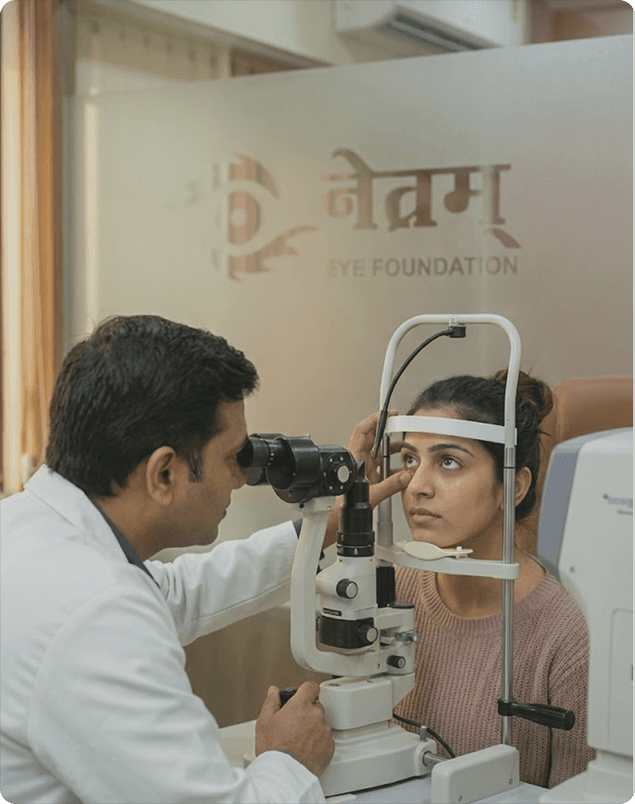
Doctor examining a patient at Netram Eye Foundation

MANAGEMENT & TREATMENT

Treatment Options for Squint

Self-Care & Lifestyle Modifications

Wear Prescribed Spectacles Consistently

Full-time spectacle wear is the first and most fundamental treatment step for accommodative squint. Consistent glasses use addresses the refractive root cause, reduces the angle of deviation, and protects against amblyopia development.

Follow the Patching and Vision Therapy Programme

Prescribed occlusion of the dominant eye — combined with stimulating visual activities — encourages the amblyopic eye to develop and maintain visual acuity as part of a structured amblyopia treatment plan.

Limit Screen Time and Take Visual Breaks

Reducing extended near screen work and implementing structured breaks reduces fusional vergence fatigue in children and adults with intermittent squint, preventing episodic decompensation.

Attend All Scheduled Eye Examinations

Regular orthoptic and ophthalmic reviews monitor amblyopia treatment response, prescription changes, and post-operative alignment stability — all critical to long-term treatment success.

Encourage Early Vision Screening in Children

Proactive screening at preschool age enables detection of refractive errors and early squint before amblyopia becomes established, maximising the response to non-surgical treatment.

Follow All Specialist Recommendations

Consistent adherence to the full treatment plan — including glasses, patching schedule, exercises, and surgical timing — significantly improves the probability of achieving and maintaining good visual and binocular outcomes.


Medical Treatments

Optical Correction (Spectacles)

Primary treatment for accommodative esotropia

Full hyperopic spectacle correction reduces or eliminates the accommodative convergence driving the esotropia in accommodative squint. In fully accommodative esotropia, glasses alone restore normal alignment without surgical intervention.

Amblyopia Treatment (Occlusion Therapy)

For strabismic amblyopia

Patching the dominant eye for prescribed daily periods within the critical developmental period drives visual development in the suppressed amblyopic eye and is an essential prerequisite before surgical alignment.

Botulinum Toxin (Botox) Injection

For selected small-angle or paralytic squint

Injection of botulinum toxin into an extraocular muscle temporarily weakens it, allowing the antagonist muscle to restore alignment. Used as a primary or adjunctive treatment in carefully selected cases.

Vision Therapy and Orthoptic Exercises

For intermittent squint and convergence insufficiency

Structured exercises improve fusional vergence amplitude and control, reducing the frequency of decompensation in intermittent divergent squint and convergence insufficiency.

Is Surgery Required?

SURGICAL INTERVENTION

Is Surgery Required?

Squint Surgery for Alignment Restoration

Surgical correction of strabismus — involving recession (weakening) or resection (strengthening) of one or more extraocular muscles — is indicated when the deviation is too large to be controlled with spectacles and vision therapy, when amblyopia has been treated to maximum achievable acuity, or when a cosmetically and functionally unacceptable angle of deviation persists despite optical management. Surgery is performed under general anaesthesia in children and under local or general anaesthesia in adults. The procedure is planned based on the measured angle of deviation and the specific muscles involved, and may require staged operations to achieve optimal alignment.

Post-operative alignment is monitored with regular orthoptic assessments, and glasses and amblyopia treatment are continued where required after surgery. The goal of squint surgery is not merely cosmetic — it aims to restore binocular single vision and depth perception where the visual system retains the potential for these. At Netram Eye Foundation in Delhi, specialist strabismus surgical expertise and comprehensive pre- and post-operative orthoptic care ensure the best achievable alignment and binocular visual outcomes for each patient.

ALL YOUR QUESTIONS ANSWERED

Frequently Asked Questions About Squint

What causes squint?

Squint arises when the neuromuscular control of eye alignment is disrupted. The most common cause in children is uncorrected hyperopia, which drives excess accommodative convergence producing accommodative esotropia. Other causes include structural extraocular muscle imbalance (comitant strabismus), cranial nerve palsies (paralytic strabismus), amblyopia from any cause, neurological conditions affecting the visual pathways, and thyroid eye disease in adults. In some cases, the underlying cause cannot be identified despite thorough investigation.

Can squint be corrected without surgery?

Yes, in many cases. Fully accommodative esotropia — driven entirely by uncorrected hyperopia — can be completely corrected with spectacles alone, without any surgical procedure. Intermittent squint may be managed with glasses, prisms, and orthoptic exercises. Amblyopia associated with squint is treated non-surgically with patching therapy. However, non-accommodative squint with a persistent large angle, and squint that does not respond adequately to optical and orthoptic management, requires surgical correction to restore acceptable alignment.

Is squint common in children?

Yes. Strabismus affects approximately 2–4% of children and is the most common paediatric ocular motility disorder. The most prevalent forms are accommodative esotropia (convergent squint driven by hyperopia, typically appearing between ages 1–4) and intermittent exotropia (divergent squint that manifests during fatigue or distance viewing). Early paediatric eye screening at 6 months, 3 years, and school entry enables timely detection and significantly improves treatment outcomes.

Can adults develop squint?

Yes. Adults can develop new strabismus from several causes: cranial nerve palsy (due to microvascular ischaemia, trauma, or intracranial pathology), thyroid eye disease causing restrictive muscle fibrosis, orbital trauma or surgery affecting muscle function, decompensation of a previously controlled childhood squint under stress or illness, or neurological conditions affecting ocular motor control. Adult-onset squint almost invariably produces diplopia and requires specialist evaluation to identify and treat the underlying cause.

Does squint affect vision?

Yes, in important ways. In children, untreated squint is a leading cause of amblyopia — the brain suppresses the deviating eye's input, depriving it of proper visual development and producing permanent reduced acuity if the suppression is established during the critical period before 7–8 years. In adults, acquired squint produces binocular diplopia that impairs functional vision and may prevent driving, reading, or working. Strabismus in both children and adults also eliminates or reduces stereopsis — the ability to perceive depth using both eyes — affecting spatial judgment and three-dimensional visual tasks.

Is squint surgery safe?

Squint surgery is a well-established, generally safe procedure. Complications are uncommon and typically minor — the most frequent outcome concern is under- or over-correction of the deviation, which may require a second operation to achieve ideal alignment. Serious complications such as infection, perforation of the eye, or permanent vision change are rare. Most patients resume normal activities within a few days of the procedure. Post-operative follow-up is important to monitor alignment stability, continue amblyopia treatment if needed, and plan re-operation if the initial result is unsatisfactory.

Still have questions? Our team is here to help.

Schedule Consultation
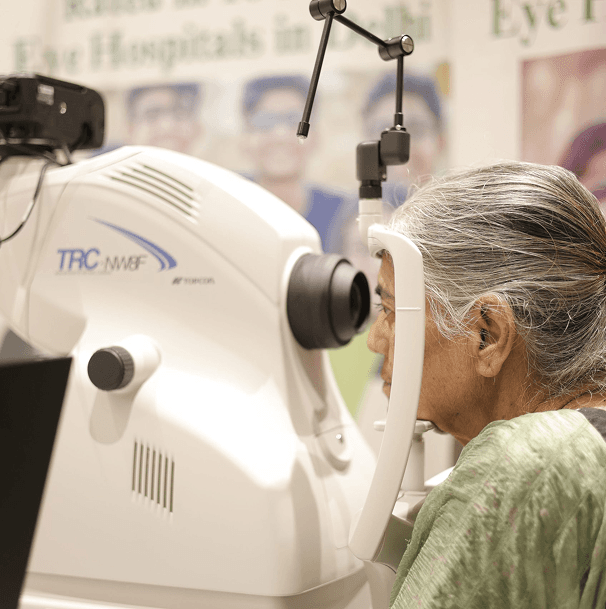
Patient receiving an eye examination

REQUEST AN APPOINTMENT

Experience World-Class Eye Care