Difficulty Reading Small Print
One of the earliest and most characteristic signs is difficulty reading small text in books, newspapers, menus, or smartphone screens — particularly in dim lighting.

■UNDERSTANDING THE CONDITION
Presbyopia is a refractive condition in which the eye gradually loses its ability to focus on nearby objects due to age-related changes in the lens and focusing muscles. The eye normally focuses by changing the shape of the natural crystalline lens through a process called accommodation. With aging, the lens becomes thicker, denser, and progressively less flexible, making it harder to adjust focus for close distances.
This condition usually becomes noticeable between 40 and 45 years of age and gradually progresses over time. Many individuals notice they need to hold reading materials farther away to see clearly — a characteristic early sign of presbyopia. As highlighted by specialists at an eye clinic in Delhi, this is a normal physiological process, not a disease, and can be effectively managed with appropriate vision correction.
Although presbyopia cannot be prevented, it can be effectively corrected with reading glasses, bifocal or multifocal spectacles, or contact lenses. For suitable candidates, refractive surgical options including lens replacement procedures can provide spectacle independence for both near and distant vision.
Presbyopia primarily affects the crystalline lens and the ciliary muscles that control it. As the lens loses elasticity with age, the ciliary muscle's ability to change its shape for near focusing diminishes. The result is a progressive inability to accommodate — to shift focus from distance to near objects — despite clear distance vision.
Presbyopia is a natural age-related change in the eye's focusing ability. Key characteristics include:
■CLINICAL PRESENTATION
Symptoms of presbyopia develop gradually and often become noticeable during activities requiring close visual focus:
Difficulty Reading Small Print
One of the earliest and most characteristic signs is difficulty reading small text in books, newspapers, menus, or smartphone screens — particularly in dim lighting.
Holding Reading Material Farther Away
Many individuals begin instinctively holding reading materials at arm's length to find a distance where near objects appear clearer.
Eye Strain During Near Work
Close tasks such as reading, sewing, or smartphone use may cause visual discomfort, heaviness, or fatigue around the eyes, particularly after sustained periods.
Frequent Headaches
Straining to focus on near objects can trigger headaches, particularly after prolonged reading, writing, or screen use sessions.
Blurred Vision at Close Distances
Near objects may appear blurred while distant objects remain clear — unlike myopia, where the reverse is true.
Increased Need for Brighter Lighting
Individuals with presbyopia often require stronger or more directed lighting to read comfortably, particularly in conditions where they previously managed without difficulty.
These symptoms require prompt evaluation to distinguish presbyopia from other ocular conditions:
Sudden Vision Changes
Immediate evaluationAny abrupt change in vision should be assessed promptly to rule out serious eye conditions beyond the expected gradual changes of presbyopia.
Double Vision
Same day evaluationOccasional double vision due to excessive focusing effort should be evaluated to rule out muscle imbalance or neurological causes.
Sudden Difficulty Reading (Rapid Onset)
Within 1 weekIf near vision suddenly becomes significantly worse rather than gradually changing, an eye examination is recommended to identify any additional cause.
Persistent Eye Strain Not Resolving
Within 1 weekContinuous eye fatigue during reading or screen use that does not improve with rest may indicate uncorrected presbyopia or an outdated prescription.
Severe Headaches During Near Work
Within 1 weekFrequent or severe headaches when performing close tasks may indicate significant focusing strain that requires optical correction.
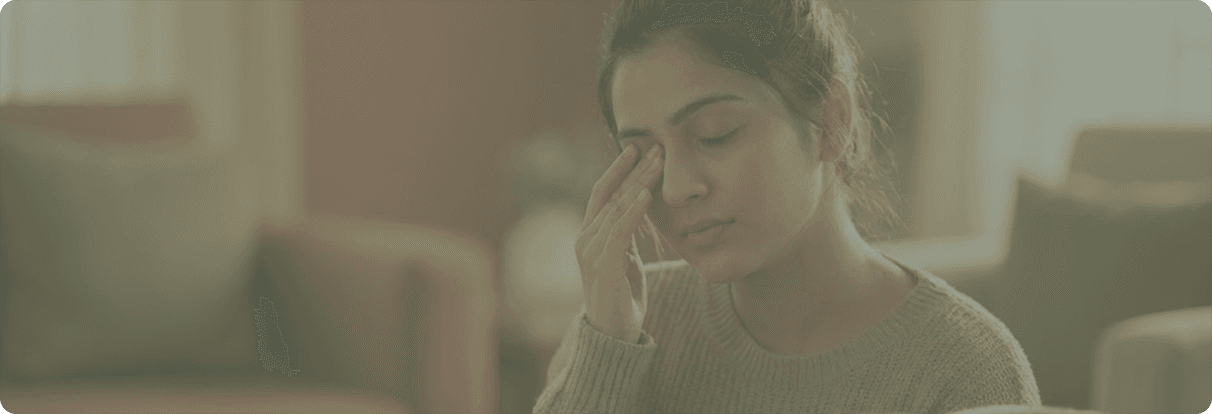
Ask yourself these questions to determine if medical evaluation is needed:
If you answered "yes" to any of these questions, schedule a comprehensive eye examination at an eye hospital in Delhi — presbyopia is easily corrected and does not have to interfere with your daily life.
■TRIGGERS & ROOT CAUSES
While presbyopia is an inevitable age-related process, certain lifestyle factors can make symptoms more noticeable or uncomfortable:
Prolonged Digital Device Use
ModerateFrequent use of smartphones, tablets, and computers requires sustained near focusing. As presbyopia develops, extended screen use increases visual fatigue and makes blurred near vision more noticeable.
Continuous Reading Without Breaks
ModerateLong periods of uninterrupted reading require constant focusing effort. Individuals with early presbyopia may experience increasing difficulty maintaining clear focus during extended reading sessions.
Poor Lighting Conditions
ModerateReading or working in dim lighting makes it harder for the eyes to maintain clear focus. As presbyopia progresses, inadequate lighting worsen strain and reduce reading comfort.
Intensive Near Work Occupations
ModerateJobs involving prolonged close visual tasks — such as writing, sewing, or detailed craft work — increase visual demand and highlight presbyopia symptoms earlier.
Extended Screen-Based Office Work
LowOffice work requiring continuous computer use can increase visual fatigue, especially as presbyopia develops and near focusing becomes progressively less effective.
Lack of Visual Breaks
LowFailing to take regular breaks during near tasks increases the cumulative strain on the eye's diminishing focusing mechanism and worsens discomfort.
Specific age-related ocular changes are responsible for presbyopia development:
Natural Aging of the Crystalline Lens
The primary cause is progressive age-related stiffening, thickening, and densification of the crystalline lens, which reduces its ability to change shape for near focusing.
Reduced Ciliary Muscle Effectiveness
The ciliary muscles that control lens shape become gradually less effective with age, contributing to the reduction in accommodative amplitude.
Increased Visual Demands from Modern Lifestyles
Contemporary work and leisure patterns involving extensive near device use make presbyopia symptoms more noticeable at an earlier stage.
Poor Environmental Lighting Conditions
Inadequate ambient lighting increases the visual effort required for near tasks, making symptoms more apparent in presbyopic individuals.
Occupational Near Visual Demands
Professions requiring continuous close visual concentration expose presbyopic eyes to greater strain and may accelerate the functional impact of the condition.
Certain conditions may cause presbyopia to present earlier or more severely:
Diabetes Mellitus
Fluctuating blood sugar levels can affect lens hydration and refractive power, causing variable near vision that may exacerbate or mask the onset of presbyopia.
Cardiovascular Disease
Vascular conditions affecting ocular blood supply may reduce accommodation and contribute to earlier or more pronounced presbyopia symptoms.
Previous Eye Surgery
Refractive procedures such as LASIK or cataract surgery alter the optical system and may affect how presbyopia presents and how it needs to be managed.
Systemic Medications
Certain medications including antihistamines and antidepressants have anticholinergic effects that can reduce accommodation and worsen near vision in presbyopic individuals.
■CLINICAL EVALUATION
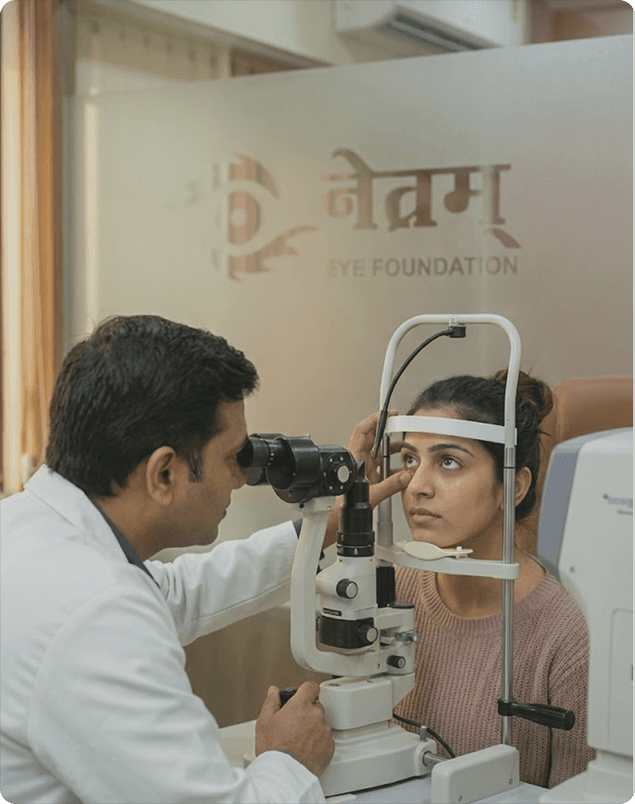
Presbyopia is diagnosed through a comprehensive eye examination with particular attention to near vision function:
■MANAGEMENT & TREATMENT
Use Appropriate Reading Glasses
Reading glasses with the correct prescription focus light properly onto the retina for near tasks, immediately restoring clear and comfortable near vision.
Follow the 20-20-20 Rule
Every 20 minutes of near work, look at an object 20 feet away for 20 seconds to relax the ciliary muscles and reduce accumulated eye strain.
Maintain Proper Reading Distance
Keep reading materials at a comfortable distance where they are clear — typically 40–50 cm — and avoid holding them too close or too far.
Ensure Adequate Lighting
Use bright, directed lighting for reading and close tasks. Good illumination significantly reduces visual fatigue in presbyopic individuals.
Limit Continuous Screen Use
Take regular breaks during prolonged reading or digital screen sessions to reduce visual fatigue and headaches associated with presbyopia.
Schedule Regular Eye Exams
Presbyopia progresses gradually, requiring regular prescription updates to ensure that reading glasses or multifocal lenses remain accurately corrected.
Reading Glasses
First-line solutionSingle-vision reading spectacles with plus lenses are the simplest and most cost-effective correction for presbyopia, restoring clear near vision for close tasks.
Bifocal or Progressive (Multifocal) Spectacles
For combined near and distance correctionBifocal lenses provide distinct near and distance zones; progressive lenses offer a gradual transition across all distances without a visible dividing line.
Multifocal or Monovision Contact Lenses
For contact lens wearersMultifocal contact lenses and monovision fitting strategies provide presbyopic correction without spectacles for suitable contact lens wearers.
Refractive Lens Exchange with Multifocal IOL
Surgical solution for spectacle independenceReplacement of the natural lens with a premium multifocal or extended depth-of-focus intraocular lens eliminates both presbyopia and any coexisting refractive error.

■SURGICAL INTERVENTION
Surgery is not required for presbyopia — reading glasses and multifocal lenses provide effective correction for the vast majority of patients. However, for individuals who desire spectacle independence, refractive lens exchange with premium multifocal or extended depth-of-focus intraocular lens implantation offers an effective surgical solution. Corneal laser procedures such as LASIK monovision can also reduce dependence on reading glasses by correcting one eye for near and one for distance. KAMRA inlay and other corneal inlay technologies are additional options in selected patients.
The decision to pursue surgical correction of presbyopia requires careful assessment of refractive status, corneal health, and lifestyle requirements. At Netram Eye Foundation in Delhi, a full range of presbyopia correction options — from updated spectacle prescriptions to advanced intraocular lens surgery — is available, allowing patients to choose the most appropriate solution for their visual needs and lifestyle.
■ALL YOUR QUESTIONS ANSWERED
Presbyopia is caused by the natural, age-related stiffening and thickening of the crystalline lens inside the eye. The lens normally changes shape to focus on objects at different distances — a process called accommodation. As people age, the lens gradually loses its elasticity and the surrounding ciliary muscles become less effective. This reduces the eye's ability to focus on nearby objects, making reading and close tasks progressively more difficult.
Presbyopia typically begins to become noticeable between the ages of 40 and 45. Most people first notice they need to hold reading material farther away, or that fine print is harder to read in dim light. The condition progresses gradually through the 40s and 50s and tends to stabilise in the early 60s when the natural lens has lost nearly all of its residual flexibility.
No. Presbyopia is a universal biological aging process that cannot be prevented. It will affect virtually everyone who lives long enough, regardless of prior refractive status. Even people with perfect distance vision throughout their lives will eventually develop presbyopia. Although the condition cannot be avoided, it can be very effectively corrected with appropriate optical or surgical solutions.
No. Although both conditions cause difficulty seeing nearby objects clearly, they have different causes. Hyperopia is a refractive error present from birth or childhood, caused by a shorter-than-normal eyeball or flatter cornea. Presbyopia is an age-related loss of the eye's focusing ability due to lens stiffening. A person can have hyperopia and presbyopia simultaneously, which typically makes near vision even more challenging.
Yes. Presbyopia is one of the very few universal conditions in medicine — it eventually affects virtually everyone as a natural consequence of aging. Even people with myopia (nearsightedness) develop presbyopia, though they may initially notice it differently. Severely myopic individuals may appear to manage near vision without glasses for longer, because removing their distance glasses allows them to use the eye's natural myopia for near tasks.
Yes. Several surgical approaches can address presbyopia. Refractive lens exchange with premium multifocal or extended depth-of-focus intraocular lenses replaces the aging lens with an artificial one that provides clear vision at multiple distances. Laser vision correction procedures can be used to create monovision — correcting one eye for distance and one for near. KAMRA and other corneal inlay procedures are also available in selected patients. Your ophthalmologist will advise on the most suitable option based on your eyes and lifestyle requirements.
Still have questions? Our team is here to help.
Schedule Consultation
REQUEST AN APPOINTMENT