Amblyopia (Lazy Eye)

Amblyopia (Lazy Eye)

UNDERSTANDING THE CONDITION

What Is Amblyopia (Lazy Eye)?

The term 'lazy eye' is somewhat misleading — the eye itself is rarely at fault. Amblyopia is primarily a problem of the developing visual brain. During the first 7–8 years of life, the visual cortex undergoes experience-dependent synaptic refinement that requires consistent, clear, and concordant input from both eyes. When one eye provides a degraded or misaligned image — due to refractive error, strabismus, or optical deprivation — the visual cortex preferentially strengthens synaptic connections serving the dominant eye at the expense of those serving the deprived eye. Over time, this imbalance produces a permanent suppression of the amblyopic eye's cortical representation, resulting in reduced visual acuity that cannot be corrected by spectacles alone.

Three principal mechanisms drive amblyopia. Refractive amblyopia occurs when significant refractive error — particularly high hyperopia, high myopia, or anisometropia (unequal refractive error between the two eyes) — causes one eye to consistently project a blurred image onto the retina. Strabismic amblyopia results from persistent misalignment of the eyes: to avoid diplopia, the brain suppresses the image from the deviating eye, which then does not develop normal visual acuity. Deprivation amblyopia, the least common but most severe form, occurs when the visual axis is physically obstructed during the critical period by conditions such as dense congenital cataract or ptosis. All three forms are evaluated by an eye specialist in Delhi during comprehensive paediatric assessment.

The reversibility of amblyopia is critically time-dependent. Treatment initiated within the first 3–4 years of life carries the greatest potential for full visual recovery. Beyond the critical period — approximately age 8 — cortical plasticity is substantially reduced, and treatment response becomes progressively less complete. This biological reality makes early detection through routine paediatric eye screening an absolute clinical priority.


Part of Eye Affected

Amblyopia affects the visual pathway — specifically the cortical representation of the amblyopic eye in the primary visual cortex — rather than the eye's optical or structural components. The retina and optic nerve of the amblyopic eye are typically structurally normal; the deficit lies in the brain's failure to develop normal cortical architecture for that eye, as assessed during comprehensive paediatric evaluation at an eye hospital in Delhi.

Nature of Condition

Amblyopia is a developmental visual cortex disorder with important lifelong visual consequences. Its defining characteristics include:

  • Reduced visual acuity in one or both eyes not correctable by spectacles alone
  • Cortical origin — the eye structure is typically normal
  • Develops only during the critical period of visual development
  • Associated with squint, refractive error, or visual deprivation
  • Highly treatable when detected early; increasingly resistant with advancing age

CLINICAL PRESENTATION

Symptoms & Early Warning Signs

Typical Symptoms

Amblyopia is characteristically difficult for children to self-report because the dominant eye compensates well. Parents and caregivers should watch for these behavioural indicators:

Reduced Vision in One Eye

The most fundamental sign is a difference in visual acuity between the two eyes that persists even with the best spectacle correction. Children rarely volunteer this complaint as the good eye compensates effectively for routine daily activities.

Squint (Eye Misalignment)

A visible inward or outward turn of one eye is frequently the presenting sign that prompts parents to seek evaluation — leading to the discovery of associated amblyopia in the deviating eye.

Poor Depth Perception

Children with unilateral amblyopia lack normal stereoscopic depth perception, making spatial tasks such as catching a ball, pouring liquids accurately, or navigating unfamiliar environments more challenging.

Frequent Closing of One Eye

A child who habitually closes or covers one eye — particularly in bright light or during near tasks — may be suppressing a blurred image from the amblyopic eye or compensating for diplopia from an associated squint.

Abnormal Head Posture

Tilting or turning the head to one side during visual tasks may indicate the child is adopting a position that maximises the use of the better-seeing eye or reduces diplopia from an associated strabismus.

Difficulty with Fine Visual Tasks

Struggles with reading fine print, recognising faces from a distance, or completing tasks requiring precise hand-eye coordination may reflect the reduced spatial resolution and contour integration deficits characteristic of amblyopic vision.

Red Flag Symptoms

These features require prompt paediatric eye assessment to prevent permanent vision loss:

Poor Visual Response or Failure to Fix and Follow

Immediate evaluation

An infant who does not fix on faces, does not follow a moving object, or shows markedly asymmetric visual attention when each eye is tested individually requires urgent evaluation for deprivation amblyopia, severe refractive error, or ocular pathology.

Constant Eye Deviation (Squint)

Urgent assessment

Constant squint in a child of any age indicates the brain is permanently suppressing one eye's input, placing the child at high risk of strabismic amblyopia. Urgent referral to a paediatric ophthalmologist is needed to initiate amblyopia treatment within the critical developmental period.

Marked Difference in Vision Between Eyes

Urgent assessment

Any large discrepancy in visual acuity between the two eyes on formal testing indicates significant amblyopia that requires treatment as promptly as possible while cortical plasticity allows meaningful recovery.

Habitual Covering or Closing of One Eye

Within 1 week

A child who consistently covers one eye during daily activities should be evaluated for the cause — which may be strabismic suppression, poor vision in the other eye, or an uncorrected refractive error that becomes apparent when using the preferred eye.

Delayed Visual Developmental Milestones

Immediate evaluation

Failure to achieve expected visual milestones — such as fixing on the mother's face at 4–6 weeks or tracking moving objects at 3 months — requires prompt assessment for deprivation amblyopia, neurological visual impairment, or serious ocular pathology.

Self-assessment guide

Self-Assessment Guide

Parents and caregivers should ask themselves these questions to determine if a paediatric eye evaluation is urgently needed:

  • Does your child appear to use one eye much more than the other, or consistently close or cover one eye?
  • Has a squint (eye turn) been noticed by you or others — even occasionally when the child is tired?
  • Does your child struggle with tasks requiring accurate distance judgement, such as catching a ball or navigating stairs?
  • Has your child not had a comprehensive eye examination including visual acuity testing for each eye individually?
  • Is there a family history of lazy eye, squint, or glasses needed for significant refractive error in early childhood?

If you answered "yes" to any of these questions, arrange a comprehensive paediatric eye examination with a children's eye specialist in Delhi without delay — early treatment is essential to prevent permanent vision loss.

TRIGGERS & ROOT CAUSES

Causes & Risk Factors

Primary Lifestyle Triggers

The following factors — primarily related to delayed detection and inadequate treatment — are the leading contributors to avoidable amblyopia in children:

Lack of Early Vision Screening

High

The majority of children with amblyopia do not have obvious symptoms that alert parents or general practitioners. Without structured paediatric vision screening at preschool age, refractive amblyopia in particular goes undetected until the critical period has passed and visual recovery is substantially limited.

Ignoring Early Signs of Squint

High

Many parents either do not notice an intermittent squint or are reassured that it will resolve naturally. This misapprehension leads to months or years of delay before specialist assessment, during which strabismic amblyopia becomes progressively more entrenched and difficult to reverse.

Uncorrected Refractive Errors in Children

High

Significant hyperopia, anisometropia, or high astigmatism that goes undetected and uncorrected during the critical developmental period causes refractive amblyopia in the blurred eye. Routine refraction under cycloplegia is the only reliable method of detection.

Delayed Treatment of Vision-Blocking Conditions

Moderate

Dense congenital cataract, severe ptosis, or corneal opacification that obstructs the visual axis must be treated urgently in infants and young children. Every week of delay causes irreversible cortical suppression of the deprived eye's visual representation.

Poor Awareness of Paediatric Eye Health

Moderate

Limited parental and societal awareness of the time-sensitive nature of amblyopia treatment leads to late presentations that significantly reduce the probability of achieving normal or near-normal visual acuity in the affected eye.

Infrequent Routine Paediatric Eye Checkups

Low

Without routine scheduled eye examinations during infancy and preschool years, even significant refractive errors and early squint may remain undetected until school age, when the opportunity for full visual recovery is substantially diminished.

Ocular & Environmental Factors

The direct ocular mechanisms causing abnormal visual development and amblyopia include:

Refractive Error (Anisometropia and High Ametropia)

When one eye has a significantly higher refractive error than the other, or when both eyes have uncorrected high refractive error, the visual cortex consistently receives blurred input — the fundamental driver of refractive amblyopia.

Strabismus

Persistent misalignment of the eyes causes the brain to suppress the image from the deviating eye to avoid diplopia, depriving the deviating eye's cortical representation of normal stimulation and producing strabismic amblyopia.

Visual Deprivation (Cataract, Ptosis, Corneal Opacity)

Physical obstruction of the visual axis — from dense cataract, complete ptosis, or central corneal opacity — prevents any formed image from reaching the retina, causing the most severe and rapidly developing form of amblyopia.

Extraocular Muscle Imbalance

Muscle imbalance causing strabismus creates the sustained misalignment and cortical suppression that underlies strabismic amblyopia, particularly when the deviation is constant rather than intermittent.

Prematurity and Perinatal Brain Injury

Premature infants have higher rates of refractive error, strabismus, and cortical visual impairment — all of which increase amblyopia risk and require dedicated neonatal ophthalmological follow-up protocols.

Underlying Medical Conditions

Specific conditions that directly cause or increase the risk of amblyopia include:

Congenital Cataract

A dense congenital cataract is a visual emergency: the resulting deprivation amblyopia develops within weeks and requires surgical treatment within the first 6–8 weeks of life to prevent irreversible vision loss.

Ptosis (Drooping Eyelid)

Severe congenital ptosis covering the pupil causes deprivation amblyopia and requires early surgical correction to restore the visual axis and allow normal cortical development.

Strabismus (Squint)

All forms of constant squint during early childhood produce strabismic amblyopia through cortical suppression of the deviating eye, making squint the most prevalent cause of amblyopia globally.

Neurological and Developmental Conditions

Conditions affecting the visual cortex or higher visual processing — including cerebral palsy, periventricular leukomalacia, and cortical visual impairment — may produce or exacerbate amblyopia through direct neural pathway disruption.

Genetic Predisposition

A family history of amblyopia, strabismus, or high refractive error significantly increases a child's risk and justifies earlier and more frequent vision screening examinations from infancy.

CLINICAL EVALUATION

How Is Amblyopia Diagnosed?

Initial Consultation

Amblyopia diagnosis requires age-appropriate visual acuity testing and comprehensive paediatric eye examination. Your specialist will assess:

  • Best corrected visual acuity in each eye individually using age-appropriate tests (preferential looking, Teller acuity cards in infants; picture or letter charts in older children)
  • Cycloplegic refraction using dilating drops to accurately determine the full refractive error of each eye without accommodative interference
  • Cover test and ocular alignment assessment to identify strabismic component, including measurement of deviation magnitude with prisms
  • Binocular vision and stereoacuity assessment to quantify the degree of binocular function impairment
  • Dilated fundal examination and anterior segment assessment to exclude structural ocular pathology contributing to vision reduction

Diagnostic Timeframe

Initial Consultation20–30 min
Comprehensive Eye Examination30–45 min
Advanced Testing (if required)20 min
Treatment PlanningSame day
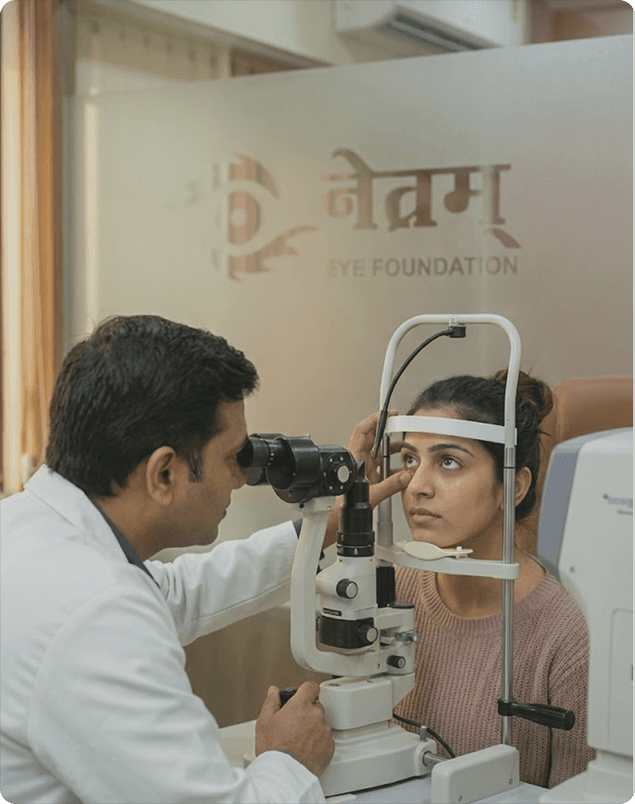
Doctor examining a patient at Netram Eye Foundation

MANAGEMENT & TREATMENT

Treatment Options for Amblyopia

Self-Care & Lifestyle Modifications

Wear Prescribed Spectacles Full-Time

Full-time spectacle wear providing the best corrective lens for each eye is the essential first treatment step. Optical correction alone may significantly improve visual acuity in refractive amblyopia if initiated early enough, even before patching begins.

Adhere to the Patching Schedule

Consistently covering the dominant eye for the prescribed daily hours — encouraging the amblyopic eye to work and develop — is the cornerstone of amblyopia treatment. Inconsistent patching substantially slows visual recovery.

Encourage Stimulating Near Visual Activities While Patching

During patching periods, engaging the amblyopic eye with near activities such as puzzles, colouring, building blocks, or age-appropriate reading actively drives cortical stimulation and accelerates visual recovery.

Maintain All Follow-Up Appointments

Regular 6–8 weekly review appointments allow visual acuity monitoring in both eyes, adjustment of the patching regimen to prevent occlusion amblyopia in the dominant eye, and timely identification of plateau in visual recovery.

Follow All Specialist Recommendations

Adhering rigorously to the complete prescribed treatment plan — including spectacle wear, patching hours, visual activities, and surgical timing recommendations — maximises the probability of achieving the best possible visual outcome.

Encourage Outdoor Activities

Outdoor play provides varied visual stimulation at multiple distances and in natural light conditions, supplementing structured patching therapy with additional broad visual experience that supports overall visual pathway development.


Medical Treatments

Optical Correction (Spectacles)

Foundation treatment for all forms of amblyopia

Accurate spectacle correction is the mandatory first step — removing the refractive disadvantage that drives amblyopia and providing the optimal optical input to both eyes before additional amblyopia treatments are applied.

Occlusion Therapy (Patching)

Primary active treatment for amblyopia

Daily patching of the dominant eye with an adhesive eye patch forces the visual system to use and develop the amblyopic eye. Prescribed hours per day are calibrated to the severity of amblyopia and the child's age, and adjusted based on treatment response.

Atropine Penalisation

Alternative to patching for moderate amblyopia

Weekly or daily instillation of atropine drops into the dominant eye blurs its near vision, effectively penalising it and forcing the amblyopic eye to take over near visual tasks. As effective as patching for moderate amblyopia with better compliance in some children.

Surgical Treatment of Associated Conditions

For deprivation amblyopia and strabismus

Surgical removal of a deprivation cause (congenital cataract, severe ptosis) is urgently required to permit any visual input to the eye. Squint surgery may be needed after amblyopia treatment to achieve sustainable eye alignment and binocular fusion.

Is Surgery Required?

SURGICAL INTERVENTION

Is Surgery Required?

Surgery for Associated Conditions, Not Amblyopia Itself

Amblyopia itself is treated non-surgically through optical correction, patching, and penalisation therapy. Surgery plays an important role when amblyopia is caused or maintained by a structural condition that must be eliminated first: dense congenital cataract must be extracted urgently to permit visual input; severe ptosis covering the pupil requires surgical correction to unblock the visual axis; corneal opacities impairing vision may require corneal procedures. In all these cases, surgery is the prerequisite that makes amblyopia therapy possible rather than a treatment for amblyopia itself.

Associated strabismus, if present and significant, typically requires surgical alignment once amblyopia has been treated to maximum achievable acuity — restoring the anatomical foundation for potential binocular single vision development. The decision regarding the timing, type, and necessity of squint surgery is made on an individual basis, considering the angle of deviation, the degree of residual amblyopia, and the binocular potential. At Netram Eye Foundation in Delhi, comprehensive paediatric eye care integrates amblyopia therapy, optical management, and when required, oculoplastic and strabismus surgical expertise to deliver the best achievable visual outcome for every child.

ALL YOUR QUESTIONS ANSWERED

Frequently Asked Questions About Amblyopia

What causes amblyopia?

Amblyopia is caused by any factor that provides consistently degraded or abnormal visual input to one eye during the critical period of visual development, preventing the visual cortex from building normal synaptic representations for that eye. The three principal mechanisms are: refractive amblyopia (caused by uncorrected significant refractive error, particularly anisometropia); strabismic amblyopia (caused by the brain suppressing the image from a chronically misaligned eye to avoid diplopia); and deprivation amblyopia (caused by a physical obstruction of the visual axis such as dense cataract or severe ptosis).

Can amblyopia be treated in children?

Yes, highly effectively when treatment is initiated early within the critical period of visual development. The treatment approach involves three stages: first, providing accurate optical correction to remove the refractive disadvantage; second, actively treating the amblyopic eye with patching or atropine penalisation to drive visual cortical development; and third, treating any associated structural cause such as cataract, ptosis, or strabismus. Most children treated before 5–6 years of age achieve significant visual improvement; those treated before 3 years may achieve near-normal vision.

Is amblyopia permanent if untreated?

Yes. Without treatment during the critical period, amblyopia becomes permanent. The visual cortex loses its plasticity after approximately 7–8 years of age — the point at which the window for effective amblyopia treatment closes substantially. A child whose amblyopia is not detected and treated within this window will carry permanently reduced visual acuity in the affected eye throughout adult life, with significant implications for occupational and driving vision requirements. This irreversibility is the most compelling reason for universal paediatric vision screening.

What is patching therapy and how does it work?

Patching therapy involves covering the dominant (better-seeing) eye with an adhesive patch for prescribed hours each day — typically 2–6 hours depending on amblyopia severity and the child's age. By blocking the dominant eye's input, patching forces the visual cortex to process information exclusively from the amblyopic eye, driving the strengthening of synaptic connections serving that eye. During patching periods, near visual activities — colouring, puzzles, reading, or specialised vision therapy apps — further stimulate the amblyopic visual pathway and accelerate recovery. Regular monitoring prevents over-patching causing occlusion amblyopia in the dominant eye.

Can adults develop amblyopia?

No. Amblyopia is a developmental condition that can only arise during the critical period of visual cortex plasticity in early childhood — typically birth to 7–8 years of age. An adult cannot develop amblyopia, as the visual cortex has long since lost the plasticity required for this form of experience-dependent modification. However, adults who had untreated childhood amblyopia carry the condition permanently. There is emerging research interest in enhancing adult cortical plasticity using perceptual learning and dichoptic training techniques, but established amblyopia treatment remains a paediatric specialty.

When should amblyopia treatment begin?

Treatment should begin as early as the condition is detected — the earlier the better. Treatment initiated in infancy (for deprivation amblyopia from congenital cataract) must begin within weeks to prevent severe cortical suppression. Refractive and strabismic amblyopia treated before age 3 carries the best prognosis for full recovery. Treatment between ages 3 and 6 still produces significant improvement in most children. After age 7–8, treatment response diminishes progressively with age, though some benefit is possible up to adolescence. There is no age at which amblyopia treatment should be dismissed without a therapeutic trial in a motivated child and family.

Still have questions? Our team is here to help.

Schedule Consultation
Patient receiving an eye examination

REQUEST AN APPOINTMENT

Experience World-Class Eye Care