Squint Surgery in Delhi

Squint Surgery in Delhi

Straightening Eyes. Restoring Alignment. For Life.
Complete Squint Surgical Spectrum — Paediatric to Adult, Simple to Complex.

3–5%

Indian Children Affected

50%+

Develop Amblyopia if Untreated

>95%

Alignment Improved with Surgery

4.9/5

(2k+ Reviews, Google)

WHY CHOOSE NETRAM

Advanced Squint Care Rooted in Trust and Excellence

Full Squint Surgical Spectrum

From horizontal squint corrections (esotropia and exotropia) to vertical deviations and complex oblique muscle surgeries — we offer the full range of recession, resection, and adjustable suture techniques at our Greater Kailash II centre.
Binocular Vision & Orthoptic Workup

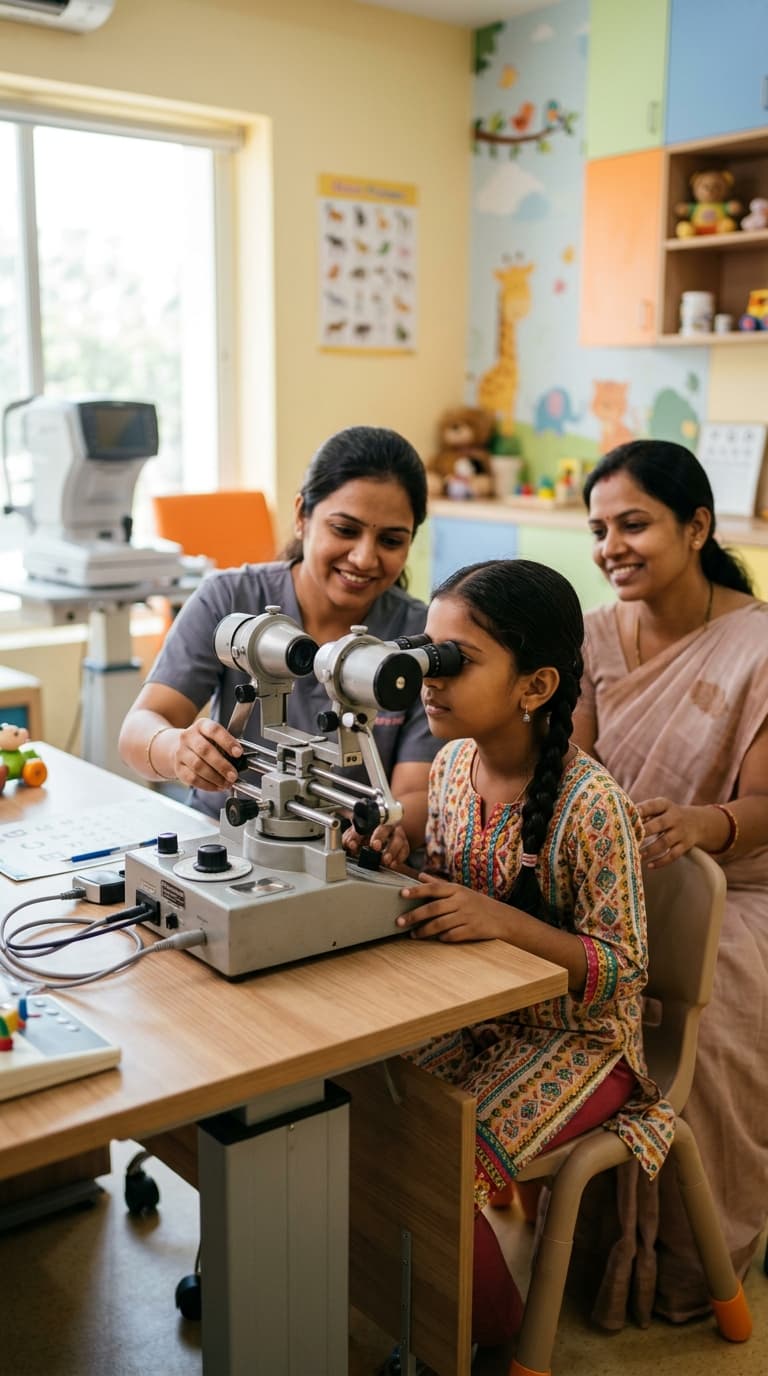
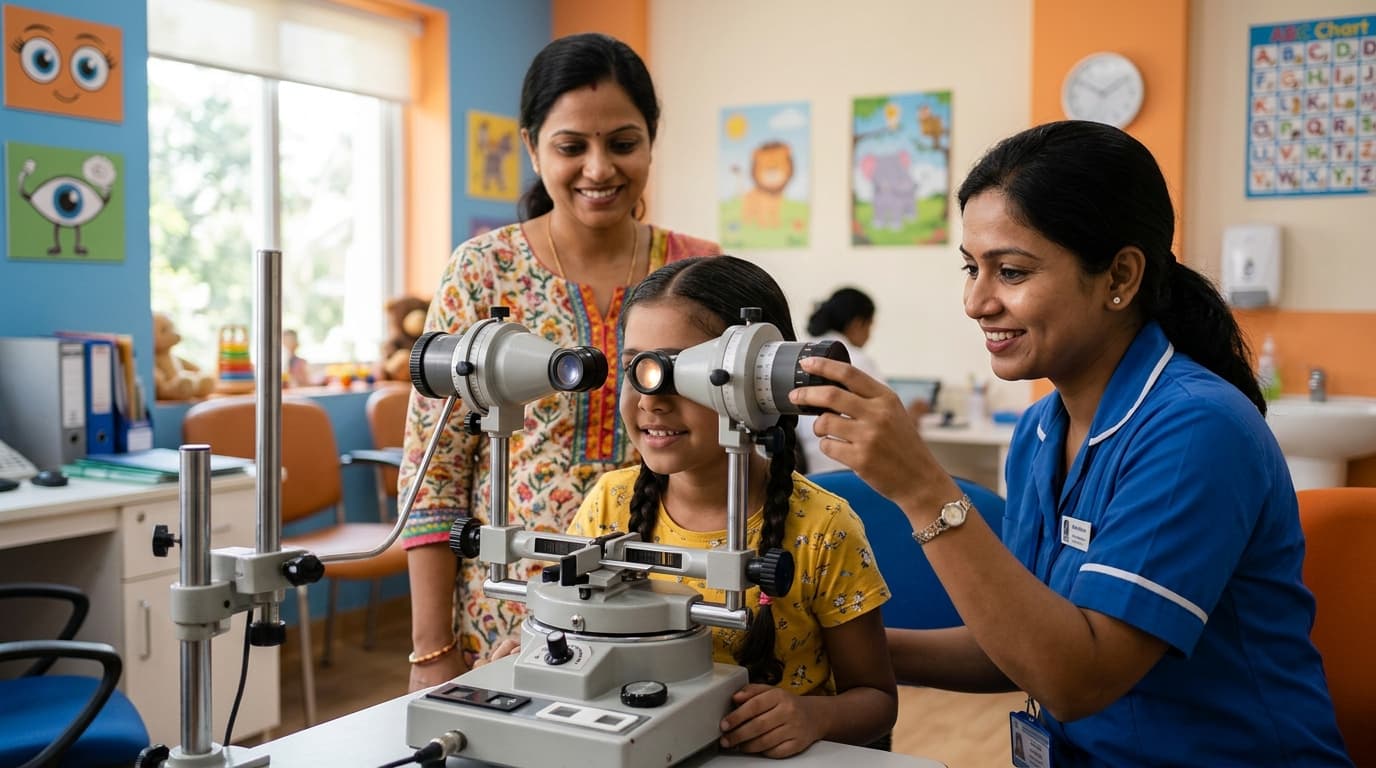
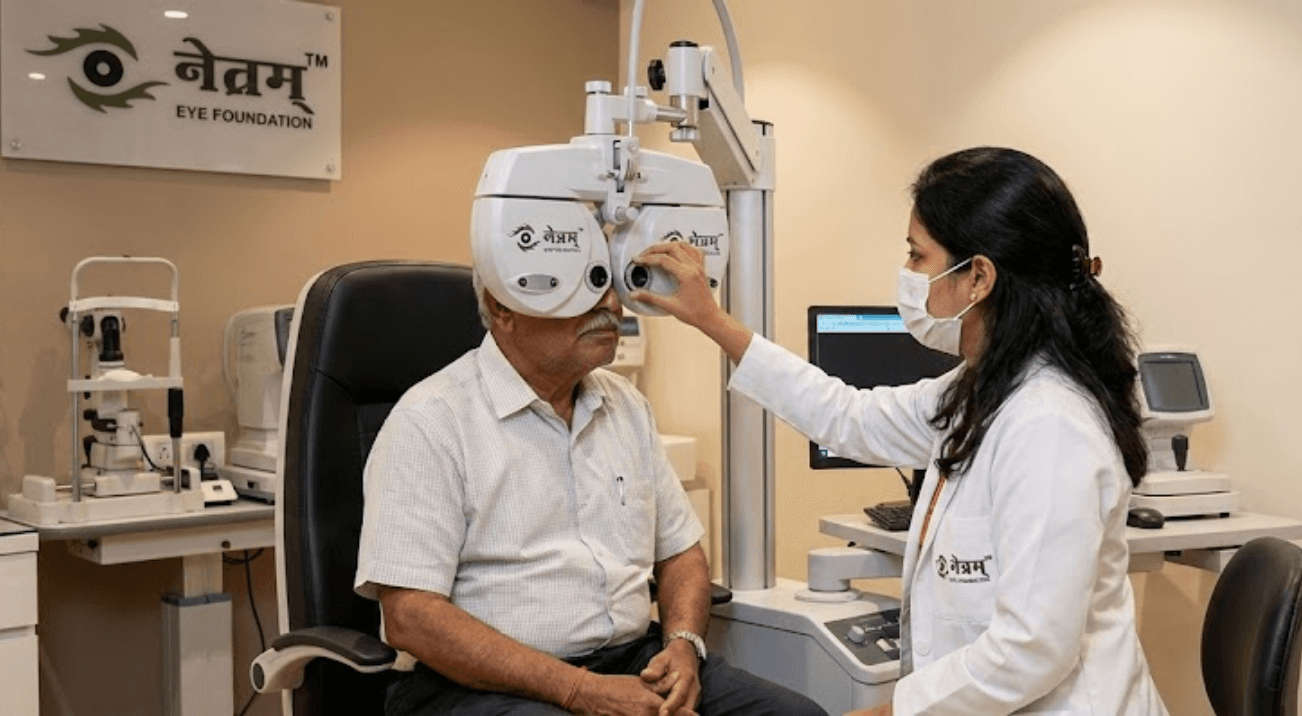
Every surgical plan at Netram begins with a thorough orthoptic assessment — cover-uncover testing, prism bar measurement, binocular vision evaluation, and stereoacuity testing. We do not operate based on appearance alone; we operate on objective measurements.

Adjustable Suture Technique — For Precision Outcomes

In appropriate adult patients, we use the adjustable suture technique — allowing fine-tuning of muscle position in the immediate post-operative period under topical anaesthesia. This significantly improves alignment accuracy and reduces the need for re-operation.

Amblyopia Management — Treating the Whole Child

In children, squint surgery is only one part of the treatment. We manage amblyopia with refractive correction (glasses), patching therapy, and penalisation — before and after surgery. We treat the visual system, not just the eye position.

General Anaesthesia Available for Children

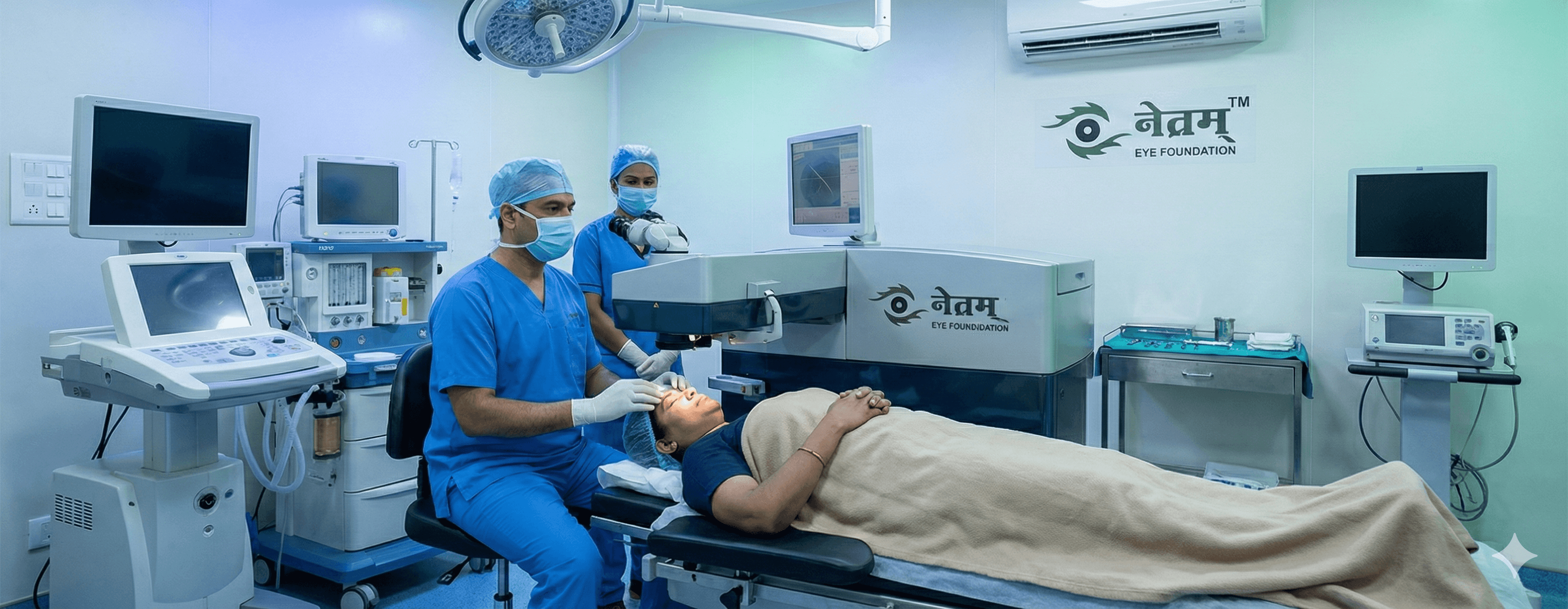
Paediatric squint surgery requires general anaesthesia — and we have the full infrastructure for safe, monitored paediatric GA cases at our Greater Kailash II centre. Parents are counselled thoroughly before the procedure.

Cashless Insurance & EMI Available

Squint surgery is covered under most health insurance policies in India. We are empanelled with major TPAs and government schemes. EMI options ensure that no family delays this sight-saving surgery for financial reasons.

Your Child's Eyes Cannot Wait. Neither Should You.

Your Child's Eyes Cannot Wait. Neither Should You.

Book a comprehensive orthoptic evaluation today.

Schedule Consultation

TREATMENT OVERVIEW

Understanding Squint and When Surgery is Needed

What is Squint (Strabismus)?

Squint, medically known as strabismus, is a condition in which both eyes do not point in the same direction simultaneously. One eye may turn inward (esotropia), outward (exotropia), upward (hypertropia), or downward (hypotropia). In India, squint affects approximately 3–5% of children — and a significant number of adults develop acquired squint due to neurological events, trauma, or thyroid eye disease.

Why Squint Causes Permanent Vision Loss in Children — and When Surgery is Needed

When the eyes are misaligned, the brain suppresses the image from the squinting eye to avoid double vision. Over time, the suppressed eye loses visual development — called amblyopia or lazy eye. If amblyopia is not treated before age 7–8 (the critical period), the vision loss becomes permanent and irreversible. Surgery is indicated when the deviation cannot be corrected with glasses or prisms alone, when amblyopia risk is high, when double vision is debilitating, or when the squint is cosmetically and psychologically significant. Surgery corrects alignment — glasses and patching therapy address visual development.

The Squint Treatment Ladder — Where Surgery Fits

Squint treatment follows a stepwise approach based on the type, angle, and visual impact of the deviation. Glasses are always tried first in children and may fully correct accommodative squint. Amblyopia is treated with refractive correction, patching, or penalisation to give the weaker eye the best chance of binocular development. Prisms can help neutralise small deviations or assess binocular potential in selected cases. Surgery becomes the definitive next step when these measures are insufficient or when the squint type requires primary surgical correction.

Squint Types We Treat

Esotropia (Convergent Squint) — Eye Turns Inward

The most common type of squint in India, where one or both eyes turn inward toward the nose. It can be constant or intermittent, accommodative (glasses-correctable) or non-accommodative (surgery required). Children rarely complain of double vision because the brain suppresses early. Surgery is recession of the medial rectus muscle(s), sometimes combined with lateral rectus resection for larger angles.

Exotropia (Divergent Squint) — Eye Turns Outward

One or both eyes deviate outward toward the ear, often intermittently in early stages when the child is tired, daydreaming, or looking into the distance. It is frequently underdiagnosed because the eye may straighten when the child focuses. Surgery involves recession of the lateral rectus muscle(s) and/or resection of the medial rectus, with timing important before constant deviation develops.

Vertical Squint (Hypertropia / Hypotropia)

One eye is higher (hypertropia) or lower (hypotropia) than the other, often associated with inferior oblique overaction, superior oblique palsy, or thyroid eye disease. It can cause compensatory head tilt and torticollis. Surgery may involve weakening or strengthening the vertical rectus muscles, inferior oblique weakening, or superior oblique tucking depending on the cause.

Paralytic Squint (Cranial Nerve Palsy)

This occurs when one or more extraocular muscles lose function due to third, fourth, or sixth cranial nerve palsy, caused by trauma, hypertension, diabetes, intracranial tumour, or aneurysm. The affected eye cannot move fully, causing sudden diplopia and compensatory head turn. The underlying cause is treated first, prisms may help temporarily, and surgery is usually planned after observation, with adjustable suture technique preferred for accuracy.

Thyroid Eye Disease (TED) / Restrictive Squint

Graves' orbitopathy causes inflammation and fibrosis of extraocular muscles, especially the inferior and medial recti, leading to restricted eye movement and vertical or horizontal diplopia. Surgery is performed in the stable inactive phase, after orbital decompression if required, and involves recession of the restricted tight muscle to restore movement and eliminate diplopia in primary and reading gaze.

Paediatric & Infantile Squint

This presents in the first year of life and is often associated with large angle deviation, cross-fixation, latent nystagmus, and inferior oblique overaction. Early surgery, ideally before age 2 years, gives the best chance of binocular vision development. Treatment commonly involves bilateral medial rectus recession under general anaesthesia with careful amblyopia management after surgery.

What Squint Surgery Achieves

Squint surgery repositions one or more of the extraocular muscles to correct the alignment of the eyes. In children, it improves or eliminates the stimulus for amblyopia. In adults, it eliminates double vision and restores binocular vision where possible. Surgery corrects the alignment — glasses and patching therapy address the visual development.

OUR APPROACH

Precision Squint Surgery — Our Surgical Approach

Every squint surgical plan at Netram is based on at least two separate measurement sessions — confirming angle stability before committing to a surgical dose.

  • Cycloplegic Refraction and Full Orthoptic Workup — cover-uncover testing, alternate prism cover test, versions and ductions, Maddox rod, and stereoacuity at every evaluation.

  • Parks' Tables and Kushner's Principles — surgical dose planned using standard recession-resection nomograms adjusted for squint type, fixation pattern, and binocular vision potential.

  • Adjustable Suture Technique — temporary slip-knot sutures allow fine-tuning of alignment on Day 1 under topical anaesthesia for adult patients with paralytic or restrictive squint.

  • Amblyopia Management Integration — patching therapy, penalisation, and refractive correction managed alongside and after surgery — treating the visual system, not just the eye position.

  • General Anaesthesia Infrastructure for Children — complete paediatric GA setup with dedicated anaesthesiologist; parents counselled thoroughly before every paediatric case.

  • Botulinum Toxin Injection — temporary chemical weakening for small angle deviations, diagnostic use, or patients unfit for incisional surgery.

Have Questions About Squint Surgery? We Respond in Under 10 Minutes.

Have Questions About Squint Surgery?We Respond in Under 10 Minutes.

Expert Advice
Paediatric Concerns Welcome
Netram Eye Foundation profile

Netram Eye Foundation

TODAY

Hi there! Welcome to Netram Eye Foundation.

10:00 AM

Concerned about your child's squint? Let us help.

10:00 AM

MEET YOUR SURGEON

Your Child's Vision in the Hands of Expertise

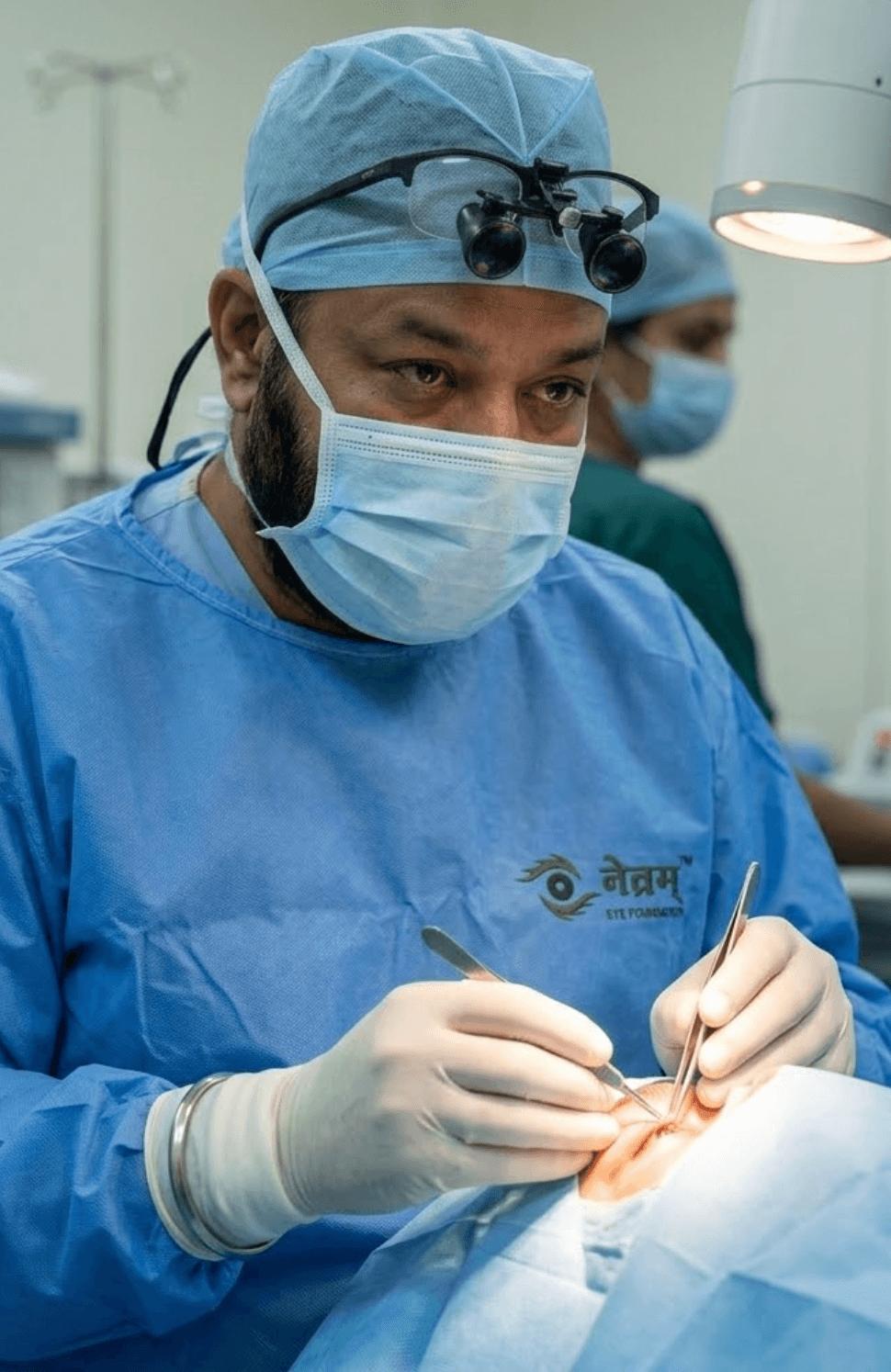
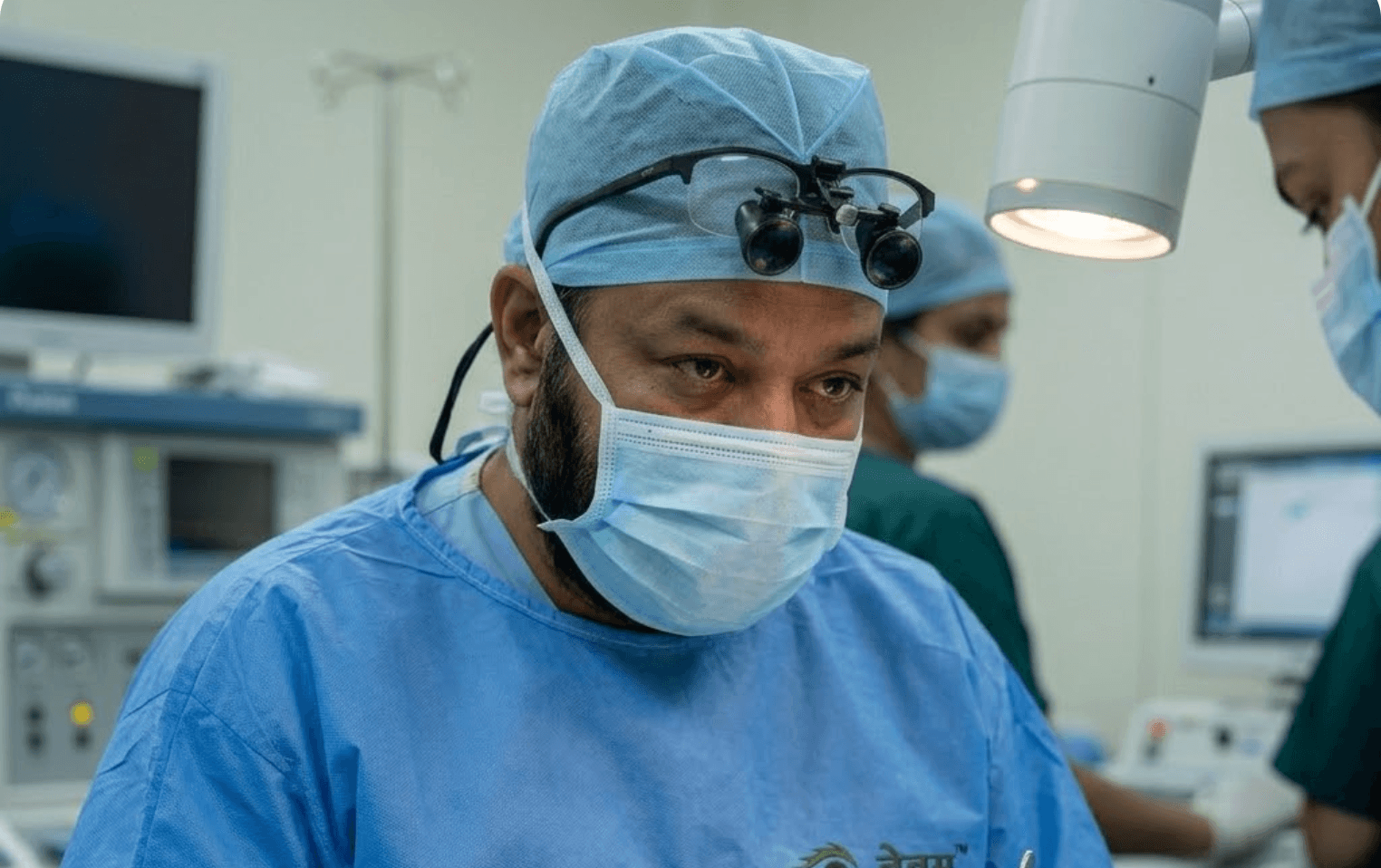
Dr. Hardeep Singh

Dr. Hardeep Singh

MS Ophthalmology | Fellowship in Paediatric Ophthalmology & Strabismus

Achievements & Highlights

  • Expert in recession-resection surgery, adjustable suture strabismus, oblique muscle surgery, paralytic squint, and paediatric squint under GA.

  • Comprehensive orthoptic workup — cycloplegic refraction, prism cover testing, binocular vision assessment, stereoacuity, and amblyopia management at every evaluation.

  • 2.5 lakh+ successful surgical procedures over 19+ years.

  • Expert also in paediatric cataract, paediatric glaucoma, amblyopia management, retinopathy of prematurity (ROP) screening, and refractive errors in children.

  • Known for consistent alignment outcomes, evidence-based surgical timing, and exceptionally clear communication with parents and families.

19+

Years
Of Experience

2.5L+

Successful Procedures

7+

Areas of Surgical Expertise

"Squint surgery is not just about making the eyes look straight. It is about giving a child's visual system the best possible chance to develop normally — to build binocular vision, to overcome amblyopia, and to see the world with two eyes working together. When I operate early and precisely, I am not just correcting alignment — I am protecting a lifetime of vision."

UNDERSTANDING YOUR OPTIONS

Squint Surgery Options — Complete Comparison

Each squint surgical technique has specific indications, advantages, and limitations. At Netram, the recommended procedure is selected after a thorough evaluation of your squint type, angle, age, visual status, and binocular potential.

ProcedureMechanismAlignment ImprovementRecoveryBest ForAt Netram
Medial Rectus Recession
Weakens the inward-pulling medial rectus by repositioning it posteriorly on the scleraCorrects 25–45 PD of esotropia1–2 weeksEsotropia — accommodative, infantile, non-accommodative✅ Gold Standard
Lateral Rectus Recession
Weakens the outward-pulling lateral rectus by repositioning it posteriorlyCorrects 20–40 PD of exotropia1–2 weeksExotropia — intermittent or constant✅ Available
Resection (Shortening)
Strengthens a muscle by shortening and re-attaching it — increases its pulling forceCombined with recession for larger angles1–2 weeksLarge angle deviations needing augmentation✅ Available
Adjustable Suture Technique
Recession/resection with temporary slip-knot — alignment fine-tuned next day under topical anaesthesiaHigher accuracy; reduces re-operation1–2 weeksAdults with paralytic squint, TED, re-operations✅ Available
Inferior Oblique Weakening
Myectomy or recession — reduces overaction causing V-pattern and hypertropiaEliminates oblique overaction and vertical incomitance1–2 weeksInferior oblique overaction, V-pattern exotropia, DVD✅ Available
Botulinum Toxin Injection
Temporary chemical weakening of a muscle to correct small angles or assess binocular potentialTemporary — 3–4 monthsImmediateSmall deviations, diagnostic use, patients unfit for surgery✅ Available

Squint Surgery — Our Complete Procedure & Price Guide

All procedures performed at our Greater Kailash II centre in New Delhi by Dr. Hardeep Singh. Transparent pricing — no hidden fees. Cashless insurance and EMI available.

ProcedureIndicationPrice at Netram
Recession-Resection (Standard)Esotropia, exotropia, vertical squint — all age groups₹30,000 per eye
Adjustable Suture SurgeryParalytic squint, TED, re-operations, adult complex strabismus₹35,000 per eye
Paediatric Squint Surgery (GA)All paediatric squint cases requiring general anaesthesia₹30,000 per eye + GA charges
Inferior Oblique WeakeningOblique overaction, V-pattern, DVDConsult our team
Botulinum Toxin InjectionSmall angle deviations, diagnostic, patients unfit for surgeryConsult our team
Amblyopia Therapy PackagePatching guidance, orthoptic exercises, visual acuity monitoringConsult our team

THE COMPLETE TREATMENT JOURNEY

Guiding You Through Every Stage

From your child's first cover test to their 6-month binocular vision review — with complete transparency at every step.

PRE-OP step 1 of 4

First VisitStep 1

Comprehensive Squint Evaluation

Visual acuity assessment, cycloplegic refraction, cover-uncover test, alternate prism cover test, ocular motility assessment, stereoacuity testing (Titmus fly, Lang), and fundus examination. Squint type, angle, and binocular status documented.

Serial ReviewStep 2

Confirming Surgical Dose

Surgery is planned after measurements on at least two separate visits — ideally 3–4 weeks apart — to confirm angle stability. Cycloplegic refraction repeated to rule out any spectacle-correctable component.

InvestigationsStep 3

Systemic Evaluation and Consent

Complete blood count, blood sugar. Paediatric fitness assessment for general anaesthesia. Informed consent obtained after detailed counselling about goals, limitations, and the possibility of requiring further surgery. Amblyopia patching continued until surgery day.

Day PriorStep 4

Preparation

For GA cases: nil by mouth for 4–6 hours prior to surgery. Arrange a companion. Comfortable, loose clothing for children. No eye makeup. For adults: continue glasses, no changes to routine medications unless instructed.

TESTIMONIALS

Real Patients, Life-Changing Results

Sonu Kashyap avatar

I’m very thankful to Dr. Anchal Gupta for my successful eye operation. She explained the full process clearly, built my confidence, and made me feel genuinely cared for throughout....

Sonu Kashyap

Eye Surgery Review

Prakash Chetri

Cataract Surgery

Shafiya Meditrip avatar

One month after LASIK, my vision is much clearer at 6/4, beyond expectations. Thank you to Dr. Anchal and the team for such a smooth and reassuring experience....

Shafiya Meditrip

LASIK Review

Ritika Kaushal

LASIK Surgery

Akshita Yadav avatar

I had ICL surgery at Netram and felt supported from consultation to follow-up. Dr. Anchal Gupta and Dr. Neha Sharma explained everything patiently and made the whole journey comfortable and reassuring....

Akshita Yadav

ICL Surgery Review

Subhankar

LASIK Surgery

ALL YOUR QUESTIONS ANSWERED

Frequently Asked Questions About Squint Surgery

What is squint surgery and is it safe?

Squint surgery (strabismus surgery) involves repositioning the extraocular muscles — the six muscles that control eye movement — to correct the alignment of the eyes. It is one of the most commonly performed ophthalmic surgeries in the world. In experienced hands, it is extremely safe. Serious complications such as infection or vision loss are exceedingly rare — under 0.1%. Redness, temporary overcorrection, and mild discomfort are common and temporary. At Netram, Dr. Hardeep Singh has performed this procedure thousands of times, and patient outcomes consistently reflect this experience.

What age is best for squint surgery in children?

The earlier, the better — within reason. For infantile esotropia (present before 6 months), surgery before 18–24 months of age gives the best chance of developing binocular vision. For other types, the guiding principle is: surgery during the critical period of visual development (before age 7–8 years) gives the visual system the best chance post-operatively. That said, children and even adults of any age benefit from surgical alignment — the goals are simply different. In older children and adults, the aim is alignment, elimination of diplopia, and improved quality of life rather than binocular vision development.

Will my child need glasses after squint surgery?

Glasses correct the refractive error (long-sightedness, short-sightedness, or astigmatism) that may be causing or contributing to the squint — surgery corrects the alignment. These are two different things. If your child's squint is fully or partially accommodative (driven by the focusing effort of hyperopia), glasses are essential both before and after surgery. Removing the glasses after successful surgery may cause the squint to return. Dr. Hardeep Singh will discuss your child's specific situation at the consultation.

Can squint surgery fail? What happens if the eyes are not perfectly straight?

No surgery guarantees perfect alignment in a single procedure. The success rate for acceptable alignment is over 85–90% after a single procedure at experienced centres. Some patients — particularly those with large angles, paralytic squint, or previous failed surgery — may require a second procedure to fine-tune alignment. This is not a failure; it is a recognised part of strabismus management and is discussed honestly before your surgery at Netram. The adjustable suture technique, where appropriate, reduces the need for re-operation significantly.

Is squint surgery painful?

Squint surgery itself is performed under anaesthesia — children are asleep under GA, and adults are comfortable under local anaesthesia. After surgery, most patients describe a mild aching or gritty sensation for 1–3 days — similar to having sand in the eye. This is easily managed with over-the-counter pain relief and antibiotic-steroid drops. The eye will be red for 1–3 weeks as the conjunctival incision heals. This is expected and not a cause for concern.

What is the cost of squint surgery at Netram Eye Foundation?

Standard recession-resection surgery is priced at ₹30,000 per eye. Adjustable suture surgery is ₹35,000 per eye, given the additional precision and post-operative adjustment session involved. Paediatric squint surgery under general anaesthesia is ₹30,000 per eye plus anaesthesia charges — consult our team for a complete package estimate. Squint surgery is covered under most health insurance policies in India. Our team assists with pre-authorisation and cashless claims.

How long does recovery from squint surgery take?

Most children are back to their normal routine — including school — within 3–5 days. Adults typically return to work within a week. The eye will be red and slightly uncomfortable for 1–3 weeks as the conjunctiva heals. Antibiotic and anti-inflammatory drops are used for 4–6 weeks. Avoid swimming, contact sports, and eye rubbing for 2–3 weeks. Final alignment assessment is done at 6–8 weeks — the muscle takes time to settle into its new position, and alignment may appear to fluctuate before stabilising.

Can adults with long-standing squint benefit from surgery?

Absolutely — and this is one of the most important messages in squint care. Adults with squint that has been present since childhood — who were told "it's too late" or "it's only cosmetic" — can achieve excellent alignment outcomes from surgery at any age. The benefits are very real: restored eye contact and social confidence, elimination of the psychological burden of a visible squint, and — in cases where some binocular potential remains — genuine improvement in depth perception. At Netram, we have operated on patients in their 40s, 50s, and 60s with excellent outcomes.

Is squint surgery covered by insurance in India?

Yes — squint surgery (strabismus correction) is covered under most health insurance policies and government schemes in India, including CGHS, ECHS, and most TPA-empanelled policies. Paediatric squint surgery under general anaesthesia is typically fully covered. At Netram, we are empanelled with major insurance providers and assist patients with pre-authorisation, cashless claims, and reimbursement documentation. Contact our front desk before your appointment to confirm your specific coverage.

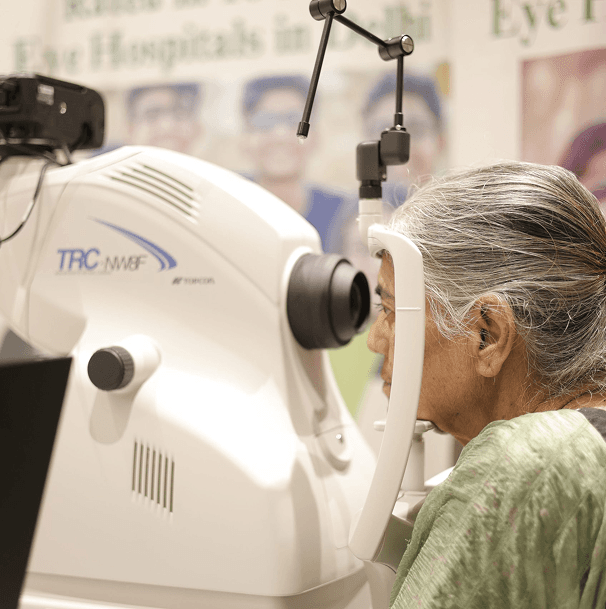
Patient receiving an eye examination

BOOK YOUR CONSULTATION

Your Child's Eyes Cannot Wait. Neither Should You.