
Vitreoretinal Surgery In Delhi

Vitreoretinal Surgery In Delhi

Saving Sight. One Retina at a Time.
Advanced 23/25-Gauge Microincision Vitrectomy Surgery.

19+

Years of Excellence

10K+

Successful Surgeries

98.5%

Success Rate

4.9/5

(2k+ Reviews, Google)

WHY CHOOSE NETRAM

Advanced Vitreoretinal Care Rooted in Trust and Excellence

Microincision Vitrectomy Surgery (MIVS — 23/25 Gauge)

Small-gauge transconjunctival sutureless vitrectomy — incisions self-seal with no stitches, faster recovery, less inflammation, and superior patient comfort compared to conventional 20-gauge vitrectomy.
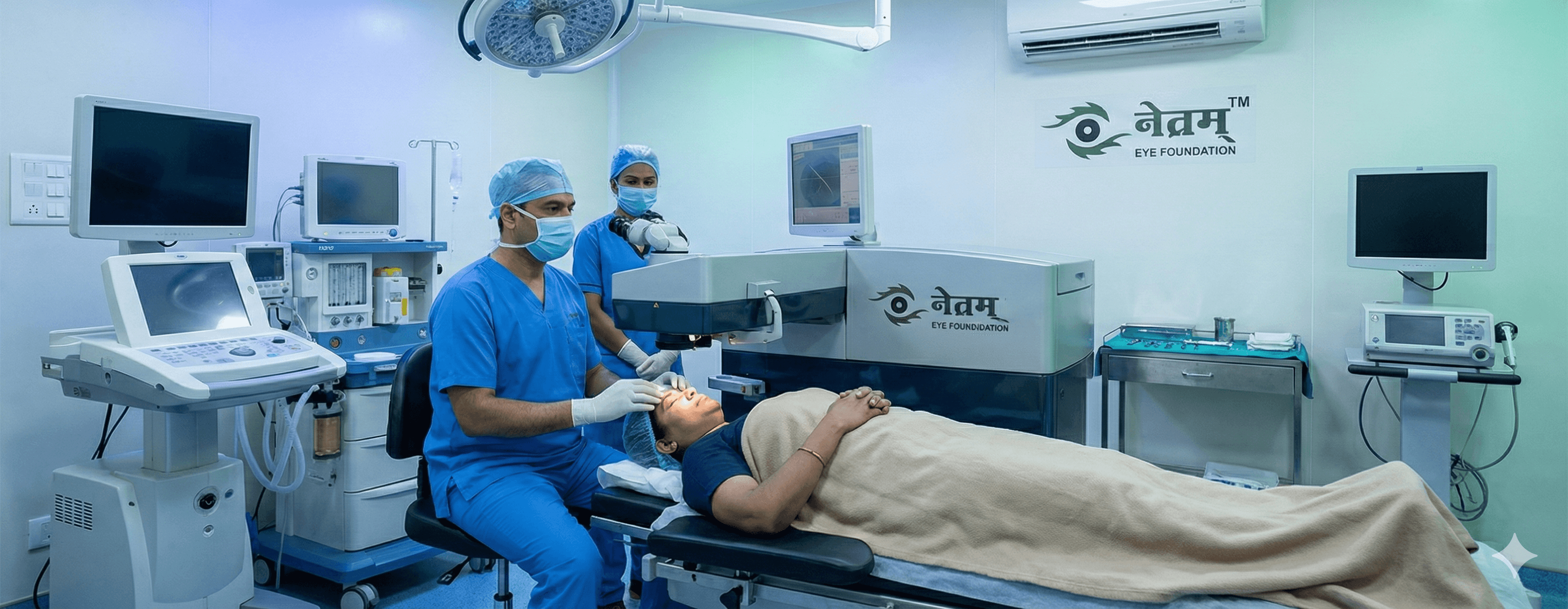

Retinal Emergency Response

Retinal detachment is a surgical emergency. Our team prioritises urgent cases — prompt evaluation and timely surgery are the most important factors in preserving your vision.

Precision Membrane Surgery

Epiretinal membrane (ERM) and internal limiting membrane (ILM) peeling under high-magnification viewing systems for optimal macular outcomes.

Scleral Buckle + PPV — Combined When Needed

For complex retinal detachments with wide breaks, PVR, or inferior detachments, we offer scleral buckle surgery, PPV, or a combined approach.

Cashless & EMI Facilities

Empanelled with major insurance TPAs. Vitreoretinal surgery is covered under many policies. EMI options available to ensure no patient delays sight-saving treatment.

Comprehensive Post-Surgical Follow-Up

All surgical packages include structured follow-up visits — Day 1, Week 1, Month 1, and beyond — with OCT imaging to track retinal healing and visual recovery.

Experiencing Flashes, Floaters, or a Curtain Over Your Vision?

Experiencing Flashes, Floaters, or a Curtain Over Your Vision?

This may be a retinal emergency. Contact us immediately.

Contact Us Now

TREATMENT OVERVIEW

Understanding Vitrectomy (PPV) Surgery

What is Pars Plana Vitrectomy (PPV)?

Pars Plana Vitrectomy (PPV) is a microsurgical procedure performed to treat diseases of the vitreous (the gel filling the eye) and retina (the light-sensitive layer at the back of the eye). The procedure derives its name from the entry point — the pars plana, a safe zone 3–4 mm behind the corneal edge — through which fine instruments are introduced into the eye.

What is removed?

The vitreous gel is removed and replaced with a balanced salt solution, gas bubble (SF6 or C3F8), or silicone oil depending on the condition being treated.

What is treated?

Once the vitreous is cleared, the surgeon can reattach the retina, peel scar tissue, seal breaks with laser, drain subretinal fluid, or address macular conditions — with direct, unobstructed access to the posterior segment.

How do we perform the surgery at Netram?

We perform 23-gauge and 25-gauge microincision vitrectomy surgery (MIVS) — a sutureless, transconjunctival technique offering faster healing, less post-operative inflammation, and superior patient comfort compared to older 20-gauge systems.

Conditions Treated with Vitrectomy Surgery

Retinal Detachment — Surgical Emergency

A retinal detachment occurs when the neurosensory retina separates from the underlying retinal pigment epithelium (RPE). Without urgent surgical repair, it causes permanent, irreversible vision loss — including blindness. Sudden onset of floaters, flashes of light, or a dark curtain/shadow spreading across vision is a surgical emergency — seek care the same day. PPV with vitreous removal, membrane dissection, laser retinopexy around tears, and gas or silicone oil tamponade is performed.

Epiretinal Membrane (ERM) / Macular Pucker

A thin layer of scar tissue (fibrocellular membrane) grows on the inner surface of the macula — the central region of the retina responsible for sharp central vision. It causes the retina to wrinkle or pucker, distorting and blurring central vision. PPV with careful membrane peeling (ERM peel) using fine microforceps under high-magnification viewing is performed. Most patients experience significant improvement in visual acuity and reduction of distortion.

Macular Hole

A full-thickness defect in the fovea (the very centre of the macula), causing a central blind spot and severely distorted vision. PPV with ILM peeling (the standard of care) followed by gas tamponade (C3F8 or SF6) is performed. The patient must maintain face-down positioning post-operatively for 5–7 days. Closure rates exceed 90% after a single surgery with modern ILM peeling technique.

Vitreous Haemorrhage

Bleeding into the vitreous gel causes sudden, painless vision loss — from mild blurring and floaters to complete loss of red reflex and vision. Dense, non-clearing haemorrhage, or haemorrhage with suspected underlying retinal detachment, requires PPV to clear the blood, identify and treat the cause, and restore vision. Core vitrectomy to remove blood, identification of the bleeding source, endolaser photocoagulation to treat ischaemic retina, and repair of any associated retinal detachment is performed.

Diabetic Vitreoretinopathy (Tractional Retinal Detachment, TRD)

In advanced proliferative diabetic retinopathy (PDR), abnormal new blood vessels (neovascularisation) grow fibrous membranes that contract and pull the retina away from the eye wall — causing tractional retinal detachment with severe vision loss. Complex PPV with meticulous membrane segmentation and delamination is performed. Earlier surgery before macular involvement gives the best visual outcomes.

Endophthalmitis (Infection Inside the Eye)

A severe, vision-threatening infection inside the eye — most commonly following cataract surgery, penetrating injury, or as a complication of intravitreal injections. It presents with sudden pain, redness, and vision loss. Urgent PPV to remove infected vitreous, combined with intravitreal antibiotic injection, is performed. This is a surgical emergency requiring same-day or next-day intervention.

Ocular Trauma with Posterior Segment Involvement

Blunt or penetrating eye trauma can cause vitreous haemorrhage, retinal detachment, foreign body retention, or lens dislocation requiring vitreoretinal surgical intervention. Emergency PPV for foreign body removal, haemorrhage clearance, retinal repair, and restoration of ocular integrity is performed.

Expected Visual Outcomes

Modern 23/25-gauge vitrectomy achieves retinal reattachment in over 90% of cases. Major complications (infection, re-detachment) occur in less than 1% of cases. PPV is a day-care procedure — most patients go home the same day. Vision improvement takes 4–8 weeks depending on the indication. Macular hole closure rates exceed 90% after a single surgery with ILM peeling technique.

OUR APPROACH

How Pars Plana Vitrectomy Works - Step by Step

The procedure is performed under local (peribulbar) or general anaesthesia depending on the case. Here is a general overview of what happens in the operating theatre:

  1. 1

    Anaesthesia is administered (local peribulbar block or general anaesthesia as appropriate).

  2. 2

    Three tiny trocar-cannula ports are placed in the pars plana - one for the infusion line, one for the light source, and one for the cutting or working instrument.

  3. 3

    The vitreous gel is removed systematically using the vitreous cutter (up to 10,000 cuts/minute). Triamcinolone may be used to stain and visualise residual vitreous.

  4. 4

    The specific retinal procedure is performed - retinal reattachment with laser and tamponade, membrane peeling, drainage of subretinal fluid, endolaser photocoagulation, or removal of foreign bodies as needed.

  5. 5

    The eye is filled with balanced salt solution, gas (SF6 / C3F8), or silicone oil depending on the condition. Gas and oil act as internal tamponades to press the retina into place during healing.

  6. 6

    The micro-incisions self-seal without sutures. An antibiotic subconjunctival injection is given. The eye is patched.

  7. 7

    You recover in the ward for 1-2 hours and go home the same day in most cases.

Have Questions about Vitreoretinal Surgery? We respond <10 min.

Have Questions about Vitreoretinal Surgery?We respond <10 min.

Free Counselling
Expert Advice
Netram Eye Foundation profile

Netram Eye Foundation

TODAY

Hi there! Welcome to Netram Eye Foundation.

10:00 AM

Are you looking for vitreoretinal surgery cost or appointment?

10:00 AM

MEET YOUR SPECIALIST

Your Vision in the Hands of Excellence

Dr. Sumit Gupta

Dr. Sumit Gupta

MS Ophthalmology | Fellowship in Vitreo-Retinal Surgery

Achievements & Highlights

  • Expert in vitreoretinal medicine, intravitreal therapy, cataract, LASIK, IPCL, cornea, and glaucoma surgery.

  • Manages high-volume intravitreal injection clinic — all agents available at every visit.

  • OCT-guided, protocol-based injection management — Treat-and-Extend for all eligible patients.

  • 2.5 lakh+ successful surgical and procedural outcomes over 19+ years.

  • Known for precision, compassionate long-term care, and ethical treatment recommendations.

19+

Years
Of Experience

2.5L+

Successful Procedures

7+

Areas of Surgical Expertise

"Intravitreal injections are not just a procedure — for many of our patients, they are what stands between them and blindness. We treat every injection with the same seriousness we would a surgery, because the outcome is just as important."

Netram Vitreoretinal Surgery — Complete Pricing Summary

ProcedureIndicationPrice at Netram
Pars Plana Vitrectomy (PPV)Macular hole, vitreous haemorrhage, ERM, diabetic TRD, endophthalmitis, trauma₹75,000 per eye
Retinal Detachment — Scleral Buckle BandRhegmatogenous retinal detachment — primary / uncomplicated₹60,000 per eye
Membrane Peel (ERM + ILM Peel)Macular pucker / epiretinal membrane with visual distortion₹37,000 add-on (extra over PPV)
ILM Peel (Internal Limiting Membrane)Macular hole (standard of care), refractory diabetic macular oedema₹37,000 add-on (extra over PPV)
Combined PPV + Scleral BuckleComplex RD with PVR, giant tears, or inferior / posterior breaksConsult for combined pricing
Silicone Oil RemovalSecondary procedure after oil tamponade once retina is stableConsult our team

Gas, Air & Silicone Oil — Understanding Post-Op Tamponade

After vitrectomy, the eye is filled with a substance to hold the retina in place during healing. Here is a plain-language guide to the options your surgeon may use.

TamponadeHow It WorksDurationPositioning RequiredBest For
BSS (Saline)Eye filled with balanced salt solution immediatelyPermanentNoneERM / ILM peel without detachment
SF6 Gas (20%)Expanding gas bubble provides internal support4–6 weeksFace-down (macular hole cases)Macular holes, smaller RDs
C3F8 Gas (14%)Longer-lasting expanding gas tamponade8–10 weeksFace-down (macular hole cases)Large macular holes, complex RDs
Silicone Oil (1000 cSt)Permanent inert oil — removed in a second surgery3–6 months then removedVaries by caseComplex / giant-tear RD, PVR, inferior RD

THE COMPLETE TREATMENT JOURNEY

Guiding You Through Every Stage

From emergency evaluation to final OCT check — we guide you through every step of the vitreoretinal surgery journey with complete transparency.

PRE-OP step 1 of 4

Urgent / Same DayStep 1

Retinal Detachment Evaluation

If you report sudden flashes, floaters, or a curtain over your vision — we prioritise you for same-day evaluation. Retinal detachment is a surgical emergency. Do not delay.

1–3 Days PriorStep 2

Pre-Op Investigations

Complete blood count, blood sugar, blood pressure, ECG for patients above 40. Informed consent and anaesthesia review if general anaesthesia is planned.

Day PriorStep 3

Preparation

Stop blood thinners as advised. Do not eat or drink for 6 hours before if general anaesthesia is planned. Arrange companion and transport.

Day of SurgeryStep 4

Eye Preparation

Pupil dilation drops instilled 1 hour before surgery. Eye cleaned with dilute povidone-iodine. Anaesthesia administered. Surgical checklist completed.

TESTIMONIALS

Real Patients, Life-Changing Results

Sonu Kashyap avatar

I’m very thankful to Dr. Anchal Gupta for my successful eye operation. She explained the full process clearly, built my confidence, and made me feel genuinely cared for throughout....

Sonu Kashyap

Eye Surgery Review

Prakash Chetri

Cataract Surgery

Shafiya Meditrip avatar

One month after LASIK, my vision is much clearer at 6/4, beyond expectations. Thank you to Dr. Anchal and the team for such a smooth and reassuring experience....

Shafiya Meditrip

LASIK Review

Ritika Kaushal

LASIK Surgery

Akshita Yadav avatar

I had ICL surgery at Netram and felt supported from consultation to follow-up. Dr. Anchal Gupta and Dr. Neha Sharma explained everything patiently and made the whole journey comfortable and reassuring....

Akshita Yadav

ICL Surgery Review

Subhankar

LASIK Surgery

ALL YOUR QUESTIONS ANSWERED

Frequently Asked Questions About Vitrectomy Surgery

What is vitrectomy surgery and is it safe?

Pars Plana Vitrectomy (PPV) is a microsurgical procedure to access and treat the vitreous gel and retina inside the eye. It is one of the most studied and performed posterior segment surgical procedures in ophthalmology. At Netram, we use 23/25-gauge microincision systems — sutureless, self-sealing, and associated with faster recovery and fewer complications than older techniques. Major complications (infection, retinal detachment) occur in less than 1% of cases.

Is retinal detachment an emergency?

Yes — retinal detachment is a surgical emergency. Every hour without treatment increases the chance of permanent vision loss, especially once the macula (central vision) detaches. If you experience sudden floaters, flashes of light, or a dark shadow / curtain moving across your vision — call us immediately or go to an emergency eye facility the same day. Do not wait for a scheduled appointment.

How long does vitrectomy surgery take?

Procedure time ranges from 45 minutes for straightforward macular cases to 90+ minutes for complex retinal detachments with proliferative vitreoretinopathy. It is a day-care procedure in most cases — you go home the same day after 1–2 hours of post-operative monitoring.

Will I need to lie face-down after vitrectomy?

Face-down (prone) positioning is required only for macular hole surgery — typically 5–7 days post-operatively. This allows the gas bubble to press against the macular hole and facilitate closure. For retinal detachment and most other vitrectomy indications, strict face-down positioning is not required, though specific head position instructions may be given based on where the retinal break is located.

What is the difference between Membrane Peel and ILM Peel?

Epiretinal Membrane (ERM) peel removes a layer of scar tissue that has grown on the retinal surface — it is performed for macular pucker causing distortion or vision loss. ILM peel removes the innermost layer of the retina itself — it is the standard of care for macular hole surgery and is often added during ERM peel to reduce recurrence. Both are done as part of a vitrectomy and are priced as add-ons of ₹37,000 over the base PPV cost at Netram.

What is the difference between PPV and Scleral Buckle for retinal detachment?

Scleral buckle surgery places a silicone band around the outside of the eye to indent the wall, closing retinal breaks from the outside. PPV removes the vitreous from inside and allows direct repair of the retina. Both are effective for retinal detachment. The choice depends on the type, location, and complexity of the detachment, the age and lens status of the patient, and the surgeon's assessment. Some complex cases benefit from a combined PPV + buckle approach.

What tamponade will be used in my eye?

The choice of tamponade — saline, SF6 gas, C3F8 gas, or silicone oil — depends entirely on your clinical condition. Gas is used for macular holes and most retinal detachments. Silicone oil is reserved for complex, high-risk detachments (inferior detachments, giant tears, proliferative vitreoretinopathy, single-eyed patients). Silicone oil must be removed in a second procedure after the retina has stabilised, typically 3–6 months later. Your surgeon will explain the choice and its implications before surgery.

Can I fly after vitrectomy with a gas bubble?

No — you must NOT fly or travel to high altitudes while a gas bubble is present in your eye. The reduced atmospheric pressure at altitude causes the gas to expand, which can cause a dangerous spike in intraocular pressure and potentially damage the optic nerve. Always inform your surgeon if you need to travel. Your Netram surgical certificate should be carried and shown to airline staff if needed. Most gas bubbles dissolve within 4–8 weeks.

Will I develop a cataract after vitrectomy?

Cataract development is a known and common consequence of PPV, particularly in patients over 50. The disruption of normal vitreous-lens interactions and exposure to intraocular gas accelerates nuclear sclerosis. Most patients require cataract surgery 6–18 months after vitrectomy. At Netram, we discuss this with every patient before surgery and plan for combined or staged cataract management as appropriate.

What is the cost of vitrectomy surgery at Netram Eye Foundation?

Our current pricing: PPV (Pars Plana Vitrectomy) — ₹75,000 per eye. Retinal Detachment Scleral Buckle Band — ₹60,000 per eye. Membrane Peel (ERM / ILM) — ₹37,000 add-on over PPV cost. ILM Peel — ₹37,000 add-on over PPV cost. Cashless insurance claims and EMI options are available. Please contact our team for complex or combined procedure pricing and a personalised treatment plan.

Still have questions? Our team is available on WhatsApp — we respond in under 10 minutes.

Schedule Consultation
Patient receiving an eye examination

REQUEST AN APPOINTMENT

Experience World-Class Eye Care