Eyelid Tumors

Eyelid Tumors

UNDERSTANDING THE CONDITION

What Are Eyelid Tumors?

Eyelid tumors encompass a broad spectrum of abnormal tissue growths arising from the various cellular components of the eyelid, including the epidermis, dermis, pilosebaceous units, sweat glands, meibomian glands, and vascular structures. They are broadly classified as benign or malignant, a distinction that fundamentally determines the urgency and type of treatment required.

Benign eyelid lesions — which include sebaceous cysts, viral papillomas, molluscum contagiosum, dermoid cysts, and capillary haemangiomas — are typically slow-growing, well-demarcated, and non-invasive. Malignant eyelid tumors include basal cell carcinoma (the most common, representing over 90% of all eyelid malignancies), squamous cell carcinoma, and sebaceous gland carcinoma — the latter being a particularly aggressive tumor that can masquerade as a recurrent chalazion or chronic blepharitis, making clinical vigilance essential as emphasised by oculoplastic surgeons in Delhi.

The eyelid's unique anatomy — its involvement in blinking, tear distribution, and ocular surface protection — means that any tumor affecting its structure or function requires careful surgical planning to achieve complete removal while preserving eyelid mechanics and cosmetic appearance.

Part of Eye Affected

Eyelid tumors arise from the eyelid's skin layers, glandular structures (meibomian glands, glands of Zeis and Moll), hair follicles, or deeper supporting tissues. As they grow, they may disrupt eyelid margin architecture, alter tear film distribution, cause lash loss, or — in malignant cases — invade the orbit. Comprehensive assessment at an eye hospital in Delhi determines the tumor's extent and guides surgical planning.

Nature of Condition

Eyelid tumors range from harmless cysts to potentially life-threatening malignancies. Their distinguishing characteristics include:

  • May arise from skin, glands, or deeper eyelid structures
  • Benign lesions grow slowly and do not invade surrounding tissues
  • Malignant tumors may ulcerate, bleed, and invade adjacent structures
  • Sebaceous gland carcinoma can mimic benign conditions, causing diagnostic delay
  • Early biopsy and accurate pathological diagnosis guide treatment strategy

CLINICAL PRESENTATION

Symptoms & Early Warning Signs

Typical Symptoms

Eyelid tumors present with a range of features depending on whether they are benign or malignant. The following are common presenting characteristics:

Lump or Swelling on the Eyelid

A visible or palpable lump on the upper or lower eyelid is the most common presenting sign. Benign lesions are typically smooth, well-defined, and mobile; malignant lesions may feel firmer, have irregular edges, or be fixed to deeper tissues.

Change in Eyelid Appearance

Thickening, discoloration, surface irregularity, or a pearlescent or pigmented border around a lesion are important clinical features that help distinguish benign from potentially malignant growths.

Non-Healing Eyelid Lesion

A lesion that persists for more than 3–4 weeks without any sign of resolution, particularly one that forms and re-forms repeatedly in the same location, should be evaluated to exclude malignancy.

Mild Irritation or Foreign Body Sensation

Tumors at or near the eyelid margin may physically contact the corneal surface, causing chronic irritation, tearing, or a persistent sensation of something in the eye.

Loss of Eyelashes (Madarosis)

Localised eyelash loss around a lesion — particularly in association with a thickened, indurated eyelid margin — is a concerning feature that may indicate malignant infiltration of the lash follicles.

Bleeding or Crusting

Spontaneous bleeding, ulceration, or crusting of an eyelid lesion — particularly without prior trauma — raises concern for malignancy and requires urgent biopsy and histopathological evaluation.

Red Flag Symptoms

These features indicate potential malignancy or complications requiring prompt specialist assessment:

Rapidly Growing Eyelid Lesion

Immediate evaluation

Any eyelid lesion demonstrating rapid growth over days to weeks may represent a malignant tumor and requires urgent specialist assessment and, if indicated, incisional biopsy for histopathological diagnosis.

Non-Healing Ulcerated Lesion

Same day evaluation

An eyelid ulcer that fails to heal after 3–4 weeks, particularly with raised or rolled edges, is a classic presentation of basal cell carcinoma and warrants immediate specialist evaluation to plan surgical excision.

Irregular Borders or Pigmentation Changes

Urgent assessment

Lesions with irregular, poorly defined borders, variegated pigmentation, or satellite nodules should be assessed urgently to exclude melanoma or other cutaneous malignancies with potential for metastasis.

Spontaneous Bleeding from Lesion

Within 1 week

Unprovoked bleeding from an eyelid lesion may indicate abnormal tumour vascularity, a feature associated with malignant or pre-malignant growth that requires histopathological characterisation.

Eyelash Loss Around the Lesion

Within 1 week

Madarosis — localised lash loss — is a clinically significant sign that may indicate sebaceous gland carcinoma, a tumor notorious for its ability to masquerade as benign eyelid conditions for extended periods.

Self-assessment guide

Self-Assessment Guide

Ask yourself these questions to determine if a specialist evaluation is needed:

  • Do you have a lump, bump, or lesion on your eyelid that has been present for more than 4 weeks without resolving?
  • Is the lesion growing, changing in shape, or developing irregular borders or colour variation?
  • Has the lesion ulcerated, bled spontaneously, or formed a crust without any known trauma?
  • Have you noticed localised loss of eyelashes around the lesion?
  • Do you have a history of prolonged sun exposure, previous skin cancer, or immunosuppression that may increase your risk?

If you answered "yes" to any of these questions, an evaluation by an oculoplastic specialist in Delhi is strongly recommended for accurate diagnosis and timely management.

TRIGGERS & ROOT CAUSES

Causes & Risk Factors

Primary Lifestyle Triggers

The following lifestyle and behavioural factors significantly influence the risk of eyelid tumor development:

Chronic Sun Exposure Without Eye Protection

High

Ultraviolet radiation from prolonged sun exposure is the single strongest environmental risk factor for eyelid malignancies, particularly basal cell and squamous cell carcinoma. The thin eyelid skin is highly sensitive to cumulative UV damage over time.

Not Wearing Protective Eyewear Outdoors

High

Failure to wear UV-blocking sunglasses or hats with a brim during outdoor activities allows direct UV irradiation of the periorbital skin. Wraparound UV-protective eyewear significantly reduces eyelid skin UV exposure.

Ignoring Persistent Eyelid Lesions

High

Many individuals postpone evaluation of small or initially painless eyelid lesions, assuming they are benign. Delayed assessment of malignant lesions allows local invasion and potentially metastatic spread, reducing treatment options and prognosis.

Poor Awareness of Warning Signs

Moderate

Lack of awareness regarding the features distinguishing benign from malignant eyelid lesions leads to delayed consultation. Subtle features such as pearlescent borders, rolled edges, and madarosis are poorly recognised by non-medical individuals.

Delayed Medical Consultation

Moderate

Waiting too long before seeking specialist evaluation for a new or changing eyelid lesion allows progressive tumour growth, increasing the complexity of surgical excision and reconstruction required.

Chronic Eyelid Skin Irritation

Low

Repeated inflammation, chemical irritation, or radiation exposure to the eyelid skin may predispose to dysplastic tissue changes over time, increasing the risk of squamous cell carcinoma development.

Ocular & Environmental Factors

Several environmental and biological factors directly contribute to eyelid tumor development:

Ultraviolet Radiation Exposure

Cumulative UV-B radiation from the sun causes direct DNA damage to eyelid skin keratinocytes, driving the mutations responsible for the majority of malignant eyelid tumors.

Advancing Age

The risk of eyelid malignancy increases progressively with age as cumulative UV damage accumulates and cellular DNA repair mechanisms become less efficient.

Fair Skin Phototype

Individuals with fair skin (Fitzpatrick types I and II) produce less melanin to absorb UV radiation, leaving eyelid skin more susceptible to UV-induced DNA damage and malignant transformation.

Occupational Outdoor Exposure

Farmers, construction workers, and others with prolonged daily outdoor occupational sun exposure accumulate higher lifetime UV doses and face elevated eyelid tumor risk.

Chronic Eyelid Inflammation

Long-standing inflammatory conditions affecting the eyelid — including chronic blepharitis and rosacea — create a pro-inflammatory microenvironment that may promote dysplastic tissue changes.

Underlying Medical Conditions

These conditions significantly increase the risk of eyelid tumor formation:

Previous Skin Cancer History

A personal history of any previous cutaneous malignancy, including eyelid or facial skin cancer, substantially increases the risk of new or recurrent eyelid tumors.

Immunosuppression

Transplant recipients on immunosuppressive drugs, individuals with HIV/AIDS, and patients on long-term systemic steroids have markedly increased rates of skin malignancy including eyelid cancers.

Chronic Eyelid and Skin Conditions

Conditions such as sebaceous gland disorders, actinic keratosis, and dysplastic skin lesions represent precancerous states that may progress to malignancy if not monitored and treated.

Genetic Predisposition

Inherited conditions such as xeroderma pigmentosum, Gorlin syndrome (basal cell naevus syndrome), and muir-torre syndrome substantially increase eyelid tumor risk from early age.

Prior Radiation Exposure

Therapeutic radiation to the head, neck, or periorbital region — including historical radiation for benign conditions — significantly elevates long-term risk of secondary malignancies in the irradiated field.

CLINICAL EVALUATION

How Are Eyelid Tumors Diagnosed?

Initial Consultation

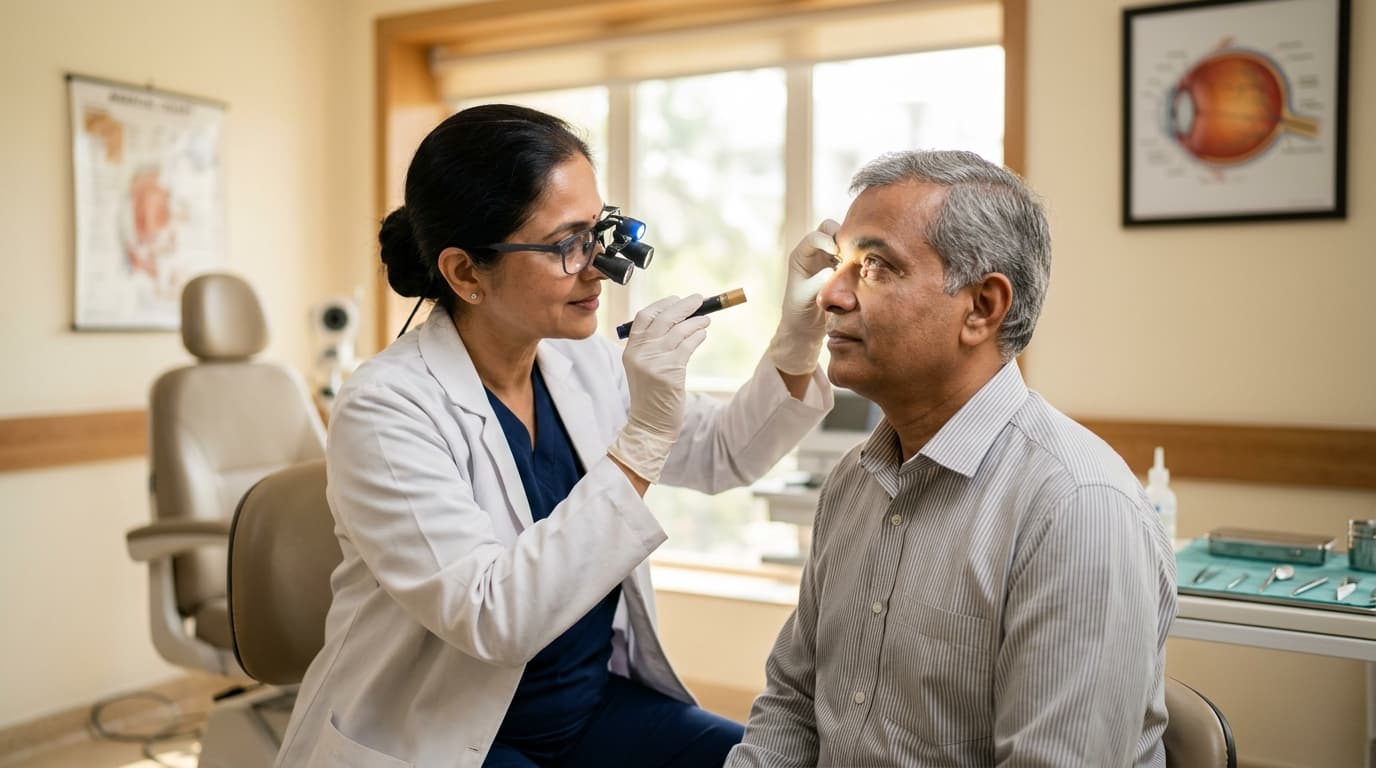
Eyelid tumor evaluation requires a detailed examination and, when indicated, tissue biopsy. Your specialist will assess:

  • Detailed clinical history including lesion duration, rate of change, bleeding, and any constitutional symptoms
  • External and slit-lamp examination of the lesion including its size, borders, surface characteristics, and relationship to eyelid margin
  • Dermatoscopic evaluation of surface architecture to identify features suggestive of benign or malignant pathology
  • Incisional or excisional biopsy with histopathological examination to obtain a definitive tissue diagnosis when malignancy is suspected
  • Orbital imaging with CT or MRI when deep invasion, orbital extension, or lymph node involvement needs to be assessed

Diagnostic Timeframe

Initial Consultation20–30 min
Comprehensive Eye Examination30–45 min
Advanced Testing (if required)20 min
Treatment PlanningSame day
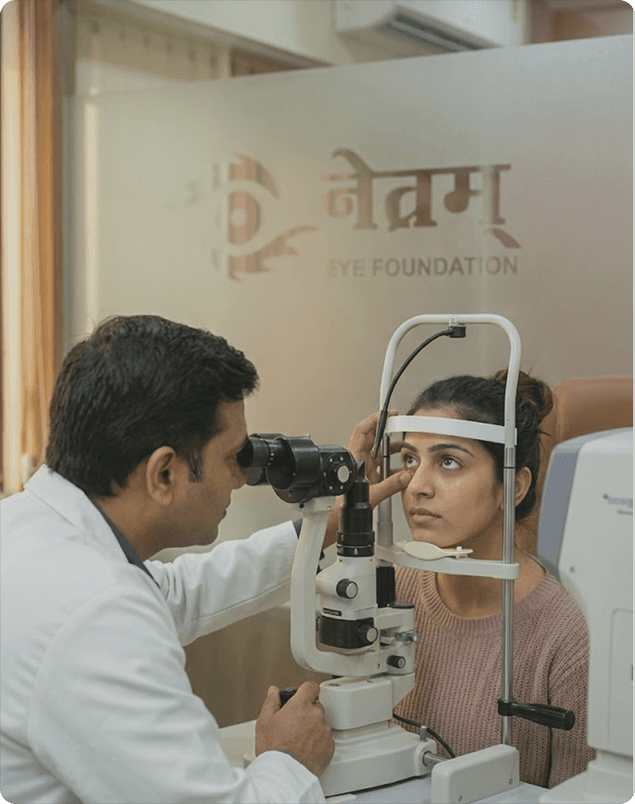
Doctor examining a patient at Netram Eye Foundation

MANAGEMENT & TREATMENT

Treatment Options for Eyelid Tumors

Self-Care & Lifestyle Modifications

Protect Eyes from Sun Exposure

Wearing UV-blocking wraparound sunglasses and broad-brimmed hats during outdoor activities is the most important lifestyle measure to reduce UV-related eyelid skin damage and future tumor risk.

Monitor Eyelid Skin Regularly

Regular self-examination of the eyelid skin in good lighting helps detect new or changing lesions early, before they have an opportunity to grow or invade adjacent structures.

Maintain Good Eyelid Hygiene

Keeping eyelid margins clean and well-maintained supports skin health and reduces chronic inflammatory stimulation that may contribute to dysplastic tissue changes over time.

Do Not Attempt Self-Treatment

Never attempt to squeeze, cut, or otherwise remove an eyelid lesion at home. Incomplete removal of a malignant tumor leaves residual disease that may spread; only specialist surgical excision with clear histological margins is appropriate.

Seek Early Medical Advice for Any New Lesion

Any new or changing eyelid lesion should be evaluated by an oculoplastic specialist rather than observed indefinitely. Early specialist assessment ensures timely diagnosis and the simplest possible surgical management.

Follow Specialist Recommendations

Adherence to recommended follow-up intervals after treatment is essential to detect early recurrence and ensure that surgical margins were clear — particularly important for basal cell and sebaceous gland carcinoma.


Medical Treatments

Topical Imiquimod Therapy

For selected superficial basal cell carcinoma

Imiquimod cream stimulates local immune responses to destroy superficial basal cell carcinoma cells. Used only in carefully selected low-risk, superficial lesions distant from the eyelid margin under specialist supervision.

Surgical Excision with Histological Margin Control

Primary treatment for malignant eyelid tumors

Complete surgical removal of the tumor with tissue submitted for immediate margin assessment (frozen section or Mohs micrographic surgery) ensures eradication of malignant cells while conserving the maximum amount of normal eyelid tissue for reconstruction.

Adjuvant Radiotherapy

Post-surgical or for inoperable cases

External beam radiotherapy may be recommended as adjunctive treatment after surgical excision of high-risk malignant eyelid tumors, or as primary treatment when surgery would result in unacceptable functional deficit.

Systemic Targeted or Immunotherapy

For locally advanced or metastatic malignancy

Hedgehog pathway inhibitors (for advanced basal cell carcinoma) and immunotherapy agents are increasingly used for eyelid malignancies that cannot be adequately controlled with surgery or radiotherapy alone.

Is Surgery Required?

SURGICAL INTERVENTION

Is Surgery Required?

Surgery Is the Primary Treatment for Most Eyelid Tumors

Surgical excision is the cornerstone of treatment for both benign and malignant eyelid tumors. For benign lesions, excision is performed when the lesion is symptomatic, cosmetically bothersome, or when the clinical diagnosis is uncertain and tissue diagnosis is required. For malignant tumors, complete surgical excision with confirmed clear histological margins is essential to prevent local recurrence and orbital invasion. Margin-controlled surgery — including Mohs micrographic technique for appropriate cases — maximises the probability of complete tumour removal while conserving functional eyelid tissue.

Following tumour excision, eyelid reconstruction is carefully planned to restore normal eyelid contour, margin position, and mechanical function. The reconstruction technique depends on the size and location of the defect created after excision, ranging from direct closure to more complex flap and graft reconstructions. At Netram Eye Foundation in Delhi, oculoplastic surgical expertise ensures precise tumor removal, histopathologically confirmed clear margins, and skilled eyelid reconstruction to achieve the best possible functional and aesthetic outcomes for every patient.

ALL YOUR QUESTIONS ANSWERED

Frequently Asked Questions About Eyelid Tumors

Are eyelid tumors common?

Eyelid tumors are relatively common. The eyelid is one of the most frequent sites for cutaneous malignancy due to its significant sun exposure, representing approximately 5–10% of all skin cancers. The most common eyelid malignancy is basal cell carcinoma, which predominantly affects the lower eyelid and medial canthus. However, the majority of eyelid lesions encountered in clinical practice are benign — including cysts, papillomas, and chalazion-like lesions — and can be distinguished from malignant lesions through careful clinical examination and, when needed, histopathological analysis.

Can eyelid tumors be cancerous?

Yes. While the majority of eyelid lesions are benign, malignant eyelid tumors do occur and require timely diagnosis and treatment. Basal cell carcinoma is the most common malignant eyelid tumor, accounting for over 90% of eyelid malignancies. Squamous cell carcinoma and sebaceous gland carcinoma are less common but more aggressive tumors. Sebaceous gland carcinoma is particularly deceptive because it can mimic benign conditions such as chalazion or chronic blepharitis for months to years, leading to diagnostic delay. Any recurrent, treatment-resistant, or atypically appearing eyelid lesion should have histopathological analysis.

How are eyelid tumors treated?

Treatment depends entirely on whether the tumor is benign or malignant. Small, clearly benign lesions such as cysts may be removed electively under local anaesthesia for cosmetic or symptomatic reasons. Malignant tumors require complete surgical excision with histological margin confirmation to prevent recurrence, followed by appropriate eyelid reconstruction. In selected cases, adjuvant radiotherapy or systemic therapy may be recommended. The primary goal in malignant tumors is complete removal with clear margins; in all cases, preservation of normal eyelid function and an acceptable cosmetic outcome are important secondary objectives.

Is biopsy necessary?

Biopsy is indicated when the clinical diagnosis is uncertain, when malignancy cannot be reliably excluded on examination alone, or when the lesion has features that raise concern — such as ulceration, rapid growth, irregular borders, or eyelash loss. For clearly benign lesions with classic clinical appearances, excisional biopsy (removing the entire lesion as both diagnosis and treatment) may be preferred. All tissue removed from the eyelid, regardless of how benign it appears clinically, should routinely be submitted for histopathological examination to exclude unexpected pathology.

Can eyelid tumors recur after treatment?

Benign lesions have low recurrence rates after complete excision. Malignant tumors carry varying recurrence risks depending on the tumor type, histological subtype, adequacy of surgical margins, and subsequent surveillance. Basal cell carcinoma with clear histological margins has a recurrence rate of less than 2% at 5 years, but incompletely excised or morphoeic subtypes have substantially higher rates. Sebaceous gland carcinoma has a significant local recurrence risk, often presenting as a diffusely infiltrating tumor with skip lesions. Regular post-treatment follow-up is essential for all malignant eyelid tumors.

Is early treatment important?

Early treatment is critically important for malignant eyelid tumors. When detected and excised at an early stage, the surgical defect is smaller, reconstruction is simpler, and the functional and cosmetic outcomes are superior. As malignant tumors grow, they invade progressively deeper structures — including the tarsal plate, orbital septum, and orbit — making complete excision more complex and increasing the risk of orbital exenteration in advanced cases. Sebaceous gland carcinoma in particular may develop pagetoid spread within the conjunctiva, requiring very extensive resection if diagnosis is delayed. Early evaluation of any suspicious eyelid lesion is therefore a clinical imperative.

Still have questions? Our team is here to help.

Schedule Consultation
Patient receiving an eye examination

REQUEST AN APPOINTMENT

Experience World-Class Eye Care