Blurred or Unclear Vision
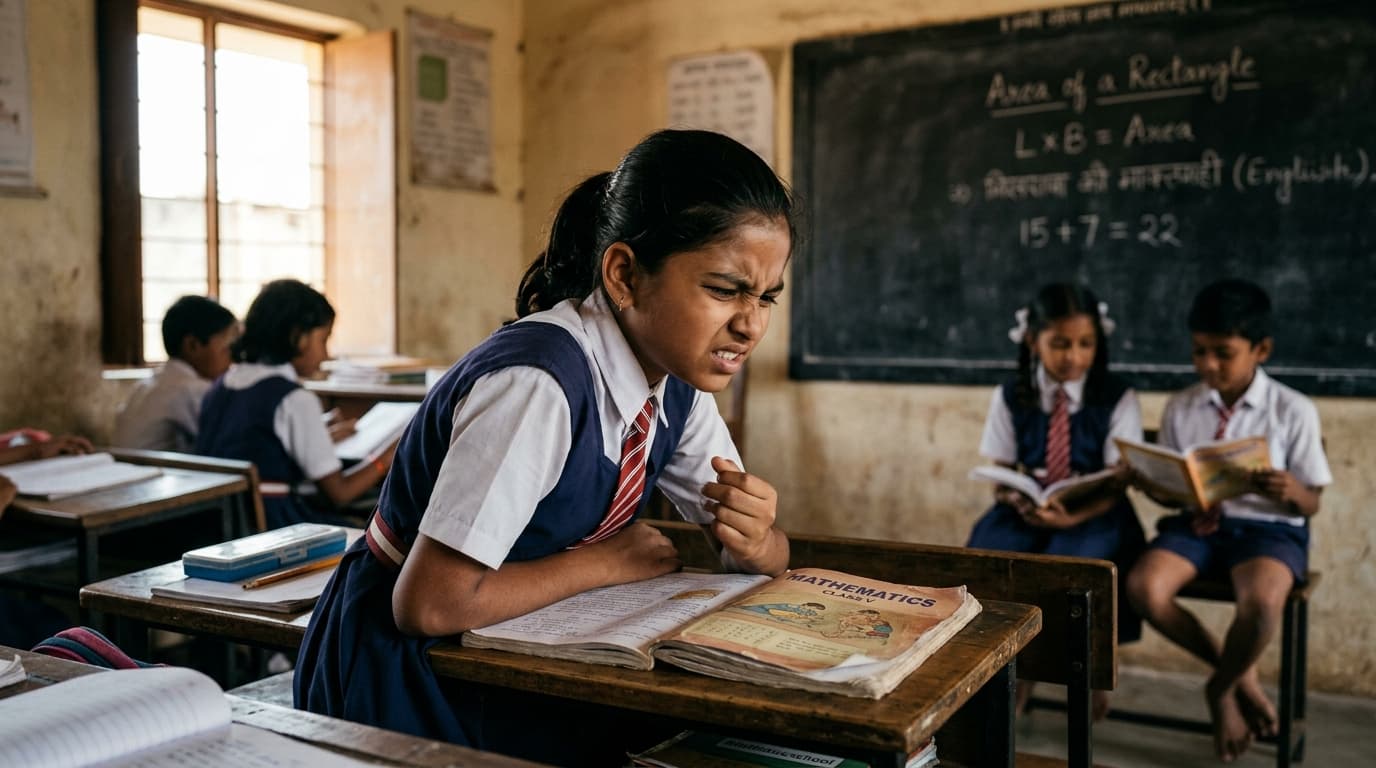
Difficulty seeing the classroom board clearly from a normal distance is a hallmark of myopia; difficulty reading at near with headaches may suggest hyperopia. Parents may notice a child holding books very close or very far.
■UNDERSTANDING THE CONDITION
The eye functions like a camera, requiring precise focussing of incoming light onto the photosensitive retina at the back of the eye. In refractive errors, the corneal curvature, the axial length of the eye, or the refractive power of the lens prevents light rays from converging sharply on the retina — instead focussing in front of it (myopia), behind it (hyperopia), or irregularly across it (astigmatism).
In children, clear and well-focused retinal images are not merely a comfort issue — they are a biological necessity for normal visual pathway development. The visual cortex requires consistent, clear input during the critical period of development (from birth to approximately 7–8 years) to establish normal vision. An uncorrected refractive error during this window can lead to amblyopia (lazy eye), a condition in which the brain suppresses the blurred eye's input, causing permanently reduced vision that is difficult to reverse after the critical period ends. This risk makes early detection by an eye specialist in Delhi critically important.
Myopia, the most prevalent form in school-age children, causes difficulty seeing distant objects and tends to worsen progressively throughout childhood. Hyperopia affects near vision and, when significant, may cause convergent squint. Astigmatism causes blurring and distortion at all distances due to irregular corneal or lens curvature.
Refractive errors arise from the optical components of the eye: primarily the cornea, which provides about two-thirds of the eye's focussing power, the crystalline lens, and the overall axial length of the eyeball. When these structures are not optimally matched, light does not focus sharply on the retina, producing blurred vision that is evaluated during comprehensive examinations at an eye hospital in Delhi.
Refractive error is an optical focusing disorder rather than a disease of the eye's structural health. Its key characteristics include:
■CLINICAL PRESENTATION
Children often cannot articulate vision problems. Parents and teachers should watch for these behavioural indicators of refractive error:
Blurred or Unclear Vision
Difficulty seeing the classroom board clearly from a normal distance is a hallmark of myopia; difficulty reading at near with headaches may suggest hyperopia. Parents may notice a child holding books very close or very far.
Habitual Squinting
Narrowing the eyelid aperture reduces scattered light and temporarily sharpens focus. A child who consistently squints while watching television or during outdoor activities likely has a significant uncorrected refractive error.
Frequent Eye Rubbing
Eye rubbing driven by eye strain from sustained focussing effort, particularly in hyperopic children, is a common early sign that vision is placing abnormal demand on the child's accommodative system.
Sitting Very Close to Screens or Books
Moving unusually close to printed text or screens to see more clearly is a compensatory behaviour characteristic of myopia in children who are too young to self-report blurred distance vision.
Head Tilting or Turning
Tilting or turning the head while looking at objects may reflect an attempt to use a clearer retinal zone in astigmatism, or may suggest associated amblyopia or ocular muscle imbalance.
Poor Academic Performance
Difficulty reading, copying from the board, or maintaining concentration during class may all stem from uncorrected refractive error causing visual fatigue, reduced speed of visual processing, and inability to sustain near tasks.
These features suggest significant refractive error, associated amblyopia, or other important ocular conditions requiring prompt paediatric eye evaluation:
Significant Difficulty Recognising Objects
Immediate evaluationFailure to recognise faces, objects, or other children at normal distances may indicate high myopia, significant amblyopia, or another serious vision condition requiring urgent specialist review.
Visible Inward or Outward Squint
Urgent assessmentAn eye turning inward (esotropia) or outward (exotropia) may be caused by uncorrected significant hyperopia driving excess convergence effort, or by amblyopia suppressing the deviating eye's input.
Persistent Eye Strain and Headaches
Within 1 weekFrontal or brow headaches after close visual tasks, particularly in the afternoon, suggest accommodative effort from uncorrected hyperopia or astigmatism and warrant a dilated refraction assessment.
Frequent Headaches After Near Tasks
Within 1 weekRecurring headaches specifically triggered by reading, writing, or screen use suggest that the visual system is under significant strain from an undetected refractive error requiring correction.
Avoiding Reading, Writing, or Visual Tasks
Within 1 weekConsistent avoidance of age-appropriate visual activities in a child may reflect discomfort or difficulty associated with refractive error, requiring thorough paediatric eye assessment.
Ask yourself these questions to determine if a paediatric eye evaluation is needed for your child:
If you answered "yes" to any of these questions, schedule a comprehensive paediatric eye evaluation with a children's eye specialist in Delhi to screen for refractive error and protect your child's visual development.
■TRIGGERS & ROOT CAUSES
While genetic factors underlie refractive error susceptibility, the following lifestyle factors significantly influence its development and progression in children:
Excessive Screen Time Without Breaks
HighProlonged use of tablets, smartphones, and computers sustains continuous near-focussing demand on the developing eye. Reduced blinking leads to ocular surface strain, and extended near work is strongly associated with myopia onset and progression in children.
Insufficient Outdoor Activity
HighReduced time outdoors is one of the most consistently identified risk factors for childhood myopia. Bright natural light stimulates retinal dopamine release, which inhibits excessive axial eye growth. Children spending less than 1–2 hours outdoors daily face substantially elevated myopia risk.
Prolonged Sustained Near Work
HighContinuous reading, writing, and study without adequate breaks sustains accommodative demand on the crystalline lens and ciliary muscle. Over time, this sustained effort may contribute to progressive myopia in genetically susceptible children.
Not Following the 20-20-20 Rule
ModerateFailure to take regular visual breaks during screen use and near activities prevents the ciliary muscle from relaxing between periods of focussing effort, increasing cumulative eye strain and potentially accelerating myopia progression.
Poor Lighting During Study
ModerateReading or studying in inadequate or excessively directional lighting increases visual discomfort and causes the child to adopt suboptimal viewing postures and distances, contributing to eye strain during extended near work.
Absence of Regular Eye Examinations
LowWithout routine comprehensive eye exams, even significant refractive errors may go undetected for extended periods, allowing vision to deteriorate, academic performance to suffer, and the risk of amblyopia to increase in younger children.
Specific ocular developmental and environmental factors contribute to refractive error in children:
Genetic Predisposition
Children with one myopic parent have two to three times the risk of developing myopia; children with two myopic parents face a five-fold increased risk, reflecting strong heritability of axial eye length and corneal curvature.
Axial Eye Length Growth
Excessive elongation of the eyeball as it grows during childhood is the primary mechanism of progressive myopia; the longer the eye grows, the further the focal point falls in front of the retina.
High Near-Work Academic Demands
Educational environments requiring intensive reading, writing, and close visual tasks from an early age correlate with higher myopia prevalence in populations with academically demanding school systems.
Indoor Lifestyle Patterns
Children raised in predominantly indoor environments with limited outdoor exposure receive insufficient bright-light retinal stimulation, reducing the natural inhibitory signal against excessive eye elongation.
Digital Device Dependency
Age-related increases in smartphone and tablet use, with devices typically held closer to the eyes than books, intensify the near-work burden on the developing visual system.
Certain conditions in children increase the likelihood or severity of refractive error:
Amblyopia (Lazy Eye)
Uncorrected refractive error — particularly significant differences between the two eyes (anisometropia) — is a major cause of amblyopia, in which the visual cortex suppresses the input from the blurred eye.
Strabismus (Squint)
Significant uncorrected hyperopia causes excessive convergence effort that can precipitate accommodative esotropia, while amblyopia from refractive error may cause the affected eye to deviate outward.
Prematurity
Premature infants have higher rates of myopia and astigmatism due to altered patterns of early eye development and the effects of neonatal intensive care on the developing visual system.
Developmental and Genetic Conditions
Conditions such as Down syndrome, Marfan syndrome, and connective tissue disorders are associated with higher rates of significant refractive errors and lens-related focussing abnormalities.
Neurological Conditions
Certain neurological disorders affecting visual processing may influence how refractive errors are experienced and may require modification of standard refractive correction strategies.
■CLINICAL EVALUATION
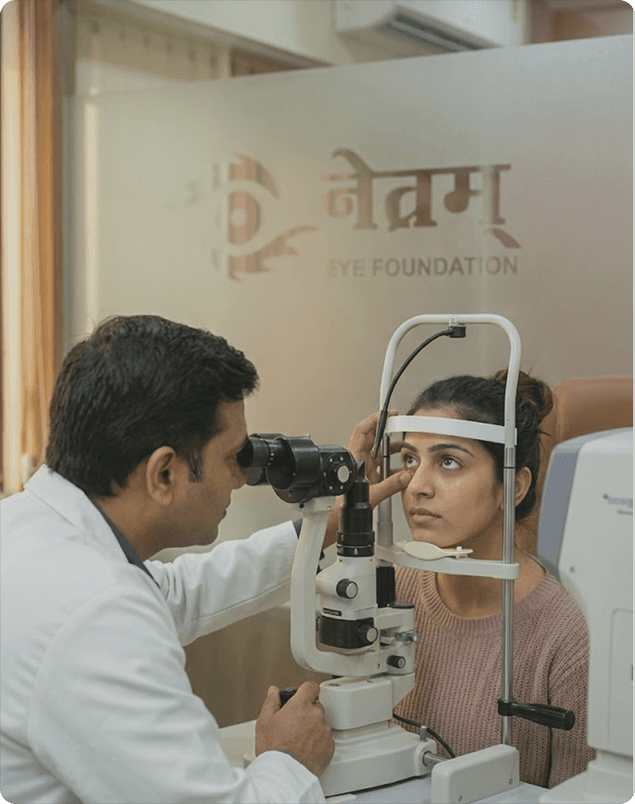
Refractive error in children requires a comprehensive paediatric eye examination. Your specialist will assess:
■MANAGEMENT & TREATMENT
Wear Prescribed Glasses Consistently
Full-time spectacle wear as prescribed is essential. Corrective lenses provide clear retinal images, support normal visual development, and reduce the risk of amblyopia progression in younger children.
Follow the 20-20-20 Rule
Every 20 minutes of near or screen work, the child should look at something 20 feet away for at least 20 seconds. This relaxes the ciliary muscle and helps reduce progressive eye strain.
Increase Daily Outdoor Time
Aiming for at least 1.5–2 hours of outdoor activity daily provides bright natural light exposure shown to reduce the rate of myopia progression in school-age children.
Limit Recreational Screen Time
Restricting daily recreational screen use to age-appropriate limits reduces sustained near-work burden on the developing visual system and supports healthy eye development.
Maintain Adequate Study Lighting
Ensuring well-distributed, comfortable lighting during reading and study reduces eye strain and helps the child maintain good posture and an appropriate reading distance.
Attend Regular Eye Reviews
Comprehensive eye examinations every 6–12 months during childhood allow timely detection of prescription changes, monitoring of myopia progression, and reassessment of amblyopia treatment response.
Single Vision Spectacle Lenses
Primary treatment for all refractive error typesAppropriately prescribed spectacles with single vision lenses provide full optical correction, support normal visual development, reduce amblyopia risk, and are the first-line treatment for most refractive errors in children.
Myopia Control Interventions
For progressive myopia in childrenLow-dose atropine eye drops, orthokeratology contact lenses, or defocus-incorporating spectacle lenses are evidence-based strategies to slow the rate of myopia progression and reduce the risk of high myopia in later life.
Amblyopia Treatment (Occlusion Therapy)
For associated lazy eyePatching the stronger eye for prescribed periods encourages the amblyopic eye to develop and improve, most effectively when initiated within the critical period of visual development before 7–8 years of age.
Contact Lenses
For selected older children and adolescentsSoft contact lenses may be considered in older children and teenagers when spectacle use is impractical, provided adequate hygiene awareness and responsible lens care routines can be established.

■SURGICAL INTERVENTION
Refractive laser surgery (LASIK, PRK) and other refractive surgical procedures are not recommended for children and adolescents because the eye continues to grow and the refractive error changes throughout this period. Performing surgery on a still-developing optical system risks over- or under-correction within months, negating any benefit. In children, spectacles and contact lenses remain the safe, reversible, and highly effective standard of care for managing all forms of refractive error.
Refractive surgery becomes an option for consideration only in young adults aged 18 and above whose prescription has been stable for at least two years, after thorough corneal assessment and specialist counselling. In rare cases of very high refractive error in older adolescents where spectacles are impractical, implantable collamer lenses (ICL) may be considered under specialist guidance. At Netram Eye Foundation in Delhi, all paediatric refractive decisions are guided by evidence-based protocols to ensure the best visual outcomes at every stage of a child's development.
■ALL YOUR QUESTIONS ANSWERED
Refractive errors arise from a mismatch between the optical power of the eye and its axial length. Myopia develops when the eye grows too long, causing distant images to focus in front of the retina. Hyperopia occurs when the eye is too short or insufficiently powerful, causing images to focus behind the retina. Astigmatism results from uneven curvature of the cornea or lens. Genetic inheritance plays a significant role, particularly in myopia, but environmental factors — especially reduced outdoor time and increased near work — are strongly implicated in the current global rise in myopia prevalence among school-age children.
Yes, refractive error is highly correctable in children with appropriately prescribed spectacles. Glasses provide clear retinal images, immediately improving functional vision and reducing the risk of amblyopia. Contact lenses are an option for older children who are mature enough to manage lens care responsibly. Spectacles are the safest and most practical primary correction and should be worn as prescribed — typically full time — to support normal visual development. Refractive surgery is not appropriate for children while the eye is still developing.
Most refractive errors change progressively during childhood. Myopia typically worsens from around 6–7 years of age through to late adolescence, often stabilising in the late teens to early twenties. Hyperopia in young children may improve naturally as the eye grows toward its intended size. Astigmatism often remains relatively stable but should be monitored. Regular eye examinations every 6–12 months during childhood ensure that spectacle prescriptions are updated as the refractive status changes, maintaining optimal correction throughout the developmental years.
Yes. Extensive screen use is associated with increased myopia risk and progression in children. Multiple mechanisms are thought to be involved: sustained near work maintains the eye in a close-focus posture for extended periods, reduced blink rate leads to ocular surface discomfort, and indoor screen use displaces time that could be spent outdoors with its protective effect against myopia. The combination of long daily screen time, high near-work academic demands, and minimal outdoor activity creates the most adverse environmental profile for myopia development.
Early treatment is critically important in children. If a significant refractive error is left uncorrected during the critical period of visual development — approximately birth to 7–8 years — the brain may develop a permanent preference for the clearer-seeing eye, suppressing the input from the blurred eye. This leads to amblyopia (lazy eye), a condition that becomes progressively more difficult to treat as the child gets older and that cannot be reversed in adults. Correcting the refractive error early, before amblyopia becomes entrenched, dramatically improves the prognosis for achieving normal visual acuity.
The first comprehensive eye examination is ideally conducted between 6 months and 1 year of age to screen for congenital conditions, and again at 3–4 years and 5–6 years before school entry. School-age children with a known refractive error should be reviewed every 6–12 months, as myopia in particular often progresses rapidly during these years. Children with a family history of myopia, those showing behavioural signs of visual difficulty, or those with known amblyopia risk factors warrant more frequent monitoring as guided by their paediatric ophthalmologist.
Still have questions? Our team is here to help.
Schedule Consultation
REQUEST AN APPOINTMENT