Blurred Vision in the Morning
Many patients first notice blurred vision after waking up. During sleep, reduced tear evaporation allows fluid to accumulate in the cornea, causing morning oedema and blurring.

■UNDERSTANDING THE CONDITION
Fuchs' dystrophy is a degenerative disorder of the corneal endothelium — the thin inner layer of cells responsible for maintaining corneal clarity. These cells pump excess fluid out of the cornea to keep it transparent. In individuals with Fuchs' dystrophy, endothelial cells gradually decline in number and function.
As the cells deteriorate, the cornea begins to accumulate fluid, leading to swelling (oedema) and loss of transparency. Over time, the cornea may develop tiny abnormal excrescences called guttae — deposits that form on the inner corneal surface and contribute to light scattering and glare. These changes interfere with the cornea's optical function and cause visual disturbances that are characteristically worse in the morning, as evaluated at a corneal specialist in Delhi.
Although the condition progresses slowly and may remain mild for many years, advanced stages may significantly affect vision and daily activities, ultimately requiring specialised corneal treatment. The condition is often hereditary, and family members of affected individuals should undergo periodic corneal screening.
Fuchs' dystrophy primarily affects the corneal endothelium — the innermost single-cell layer of the cornea responsible for maintaining proper fluid balance and corneal transparency. Loss of endothelial cell density causes progressive corneal oedema, reducing optical clarity and causing the characteristic visual symptoms.
Fuchs' dystrophy is a progressive degenerative corneal disorder. Key characteristics include:
■CLINICAL PRESENTATION
Symptoms of Fuchs' dystrophy often develop slowly and may initially appear mild, with characteristic morning worsening:
Blurred Vision in the Morning
Many patients first notice blurred vision after waking up. During sleep, reduced tear evaporation allows fluid to accumulate in the cornea, causing morning oedema and blurring.
Vision That Gradually Improves During the Day
As the day progresses, open eyelids allow tear evaporation that temporarily draws fluid from the swollen cornea, improving clarity — a characteristic pattern of Fuchs' dystrophy.
Increased Sensitivity to Light
Individuals may experience increased sensitivity to bright light or glare due to the light-scattering effect of the oedematous cornea and guttae deposits.
Glare and Halos Around Lights
Patients may notice halos or a starburst effect around lights, particularly during night driving, due to corneal swelling and irregular light transmission.
Reduced Visual Clarity Throughout the Day
As the disease progresses, daytime vision may also become affected and no longer fully clears, reflecting increasing endothelial cell loss.
Eye Discomfort or Gritty Sensation
Some individuals experience mild eye irritation, a foreign body sensation, or discomfort as the corneal surface becomes increasingly irregular.
These symptoms suggest significant disease progression and require prompt specialist evaluation:
Sudden Severe Vision Decline
Immediate evaluationA rapid decline in visual clarity may indicate acute corneal decompensation with severe oedema requiring urgent assessment and treatment.
Painful Corneal Blisters (Bullous Keratopathy)
Immediate evaluationIn advanced stages, fluid-filled blisters may form on the corneal surface, causing severe pain and requiring urgent management to protect the cornea.
Increasing Corneal Cloudiness
Same day evaluationVisible and progressive cloudiness of the cornea indicates advanced endothelial decompensation and the likely need for surgical intervention.
Persistent Blurred Vision Not Clearing
Within 1 weekBlurred vision that no longer improves during the day suggests that corneal oedema is now persistent rather than episodic, indicating worsening endothelial function.
Severe Light Sensitivity
Within 1 weekExtreme glare and photophobia that interferes with daily activities may indicate significant corneal oedema requiring specialist management.

Ask yourself these questions to determine if medical evaluation is needed:
If you answered "yes" to any of these questions, schedule a comprehensive corneal evaluation with an eye care specialist in Delhi to assess for Fuchs' dystrophy.
■TRIGGERS & ROOT CAUSES
Fuchs' dystrophy is primarily driven by genetic and age-related factors, but certain behaviours affect symptom awareness and timely diagnosis:
Delayed Eye Examinations
HighEarly symptoms of Fuchs' dystrophy may be subtle. Without routine corneal examinations, gradual changes in the endothelium may go unnoticed until vision becomes significantly affected.
Ignoring Characteristic Morning Blurring
HighMany individuals assume their blurred morning vision is related to refractive error or aging. Ignoring this characteristic pattern may delay diagnosis and the initiation of monitoring or treatment.
Excessive Screen Use and Eye Fatigue
ModerateProlonged digital screen use may contribute to reduced blink rate, eye dryness, and fatigue, making corneal discomfort more noticeable in individuals with endothelial dysfunction.
Poor Awareness of Corneal Diseases
ModerateBecause the condition develops gradually, many people are unaware that persistent morning blurring or halos may indicate an underlying progressive corneal disorder.
Delayed Treatment of Eye Conditions
LowUntreated corneal infections, trauma, or inflammation may worsen corneal health and accelerate decompensation in individuals with pre-existing endothelial weakness.
Lack of Preventive Eye Care
LowRoutine eye examinations allow detection of early guttae formation and endothelial cell count changes before significant visual symptoms develop.
Specific ocular factors contribute to the development and progression of Fuchs' dystrophy:
Genetic Predisposition
Fuchs' dystrophy often runs in families and is frequently inherited in an autosomal dominant pattern. Mutations in genes such as TCF4 have been identified as causative.
Age-Related Corneal Changes
The condition commonly becomes symptomatic after the age of 40, with progressive age-related decline in endothelial cell density contributing to corneal decompensation.
Previous Eye Surgery
Cataract surgery and other intraocular procedures cause additional endothelial cell loss, which can precipitate or accelerate decompensation in eyes with pre-existing Fuchs' dystrophy.
Environmental Irritants
Dust, smoke, and pollutants may increase eye irritation and place additional stress on already compromised corneal surface in affected individuals.
Chronic Eye Stress and Dryness
Dry eye conditions and repeated ocular surface stress may worsen symptoms and accelerate the clinical presentation of endothelial dysfunction.
Certain conditions can accelerate or complicate Fuchs' dystrophy:
Genetic Corneal Disorders
Inherited corneal diseases involving dystrophic changes to corneal layers may predispose individuals to accelerated endothelial decompensation.
Previous Corneal Trauma or Infection
Injury or infections affecting the cornea reduce the baseline endothelial cell reserve, making decompensation more likely at an earlier stage.
Diabetes
Diabetic corneal neuropathy and metabolic changes may affect endothelial cell health and wound healing, potentially accelerating Fuchs' progression.
Cataract Surgery History
Patients with Fuchs' dystrophy who undergo cataract surgery are at risk of accelerated endothelial cell loss from surgical trauma, sometimes precipitating early corneal decompensation.
■CLINICAL EVALUATION
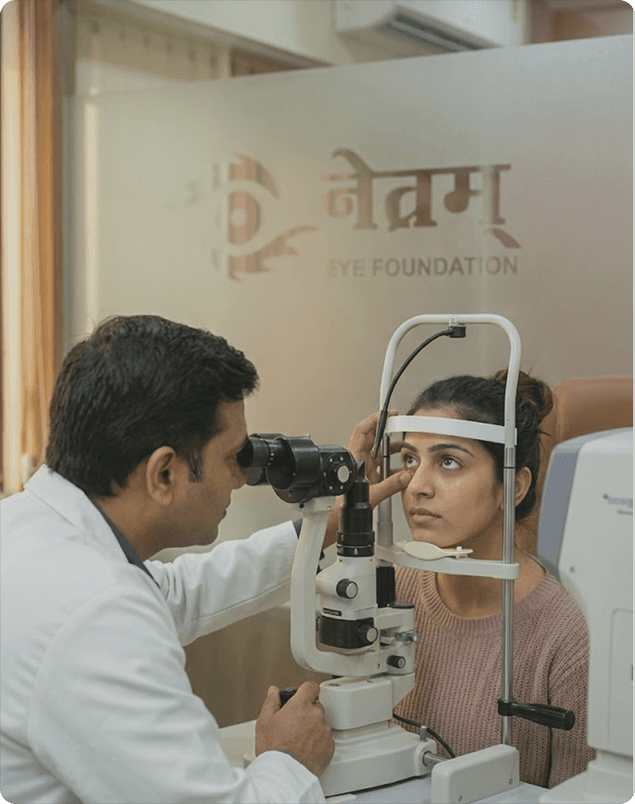
Fuchs' dystrophy is diagnosed through specialised corneal examination and imaging tests:
■MANAGEMENT & TREATMENT
Use a Hair Dryer to Reduce Morning Oedema
Gently directing a hair dryer at arm's length toward open eyes in the morning may help evaporate corneal fluid and improve morning vision temporarily.
Use Prescribed Hypertonic Saline Eye Drops
Hypertonic saline drops (5% sodium chloride) draw excess fluid out of the cornea by osmosis and may reduce corneal swelling and improve vision.
Protect Eyes from Environmental Irritants
Avoid exposure to dust, smoke, and pollutants which may increase corneal surface irritation and worsen discomfort in eyes with endothelial dysfunction.
Attend Regular Corneal Examinations
Routine monitoring with slit-lamp examination, pachymetry, and specular microscopy helps track disease progression and determine optimal treatment timing.
Monitor Diurnal Vision Patterns
Noting whether morning blurring improves during the day helps track disease progression and informs the ophthalmologist about the rate of endothelial decompensation.
Follow All Specialist Treatment Advice
Adhering to prescribed treatment plans, attending follow-up appointments, and reporting any new symptoms helps ensure appropriate and timely management.
Hypertonic Saline Eye Drops and Ointments
For mild to moderate corneal oedemaTopical hypertonic saline preparations draw fluid from the cornea by osmosis, temporarily reducing swelling and improving vision in early and moderate disease stages.
Descemet Membrane Endothelial Keratoplasty (DMEK)
Gold standard surgical treatmentTransplantation of only the Descemet membrane and endothelial cell layer from a donor, replacing the diseased cells with healthy endothelium. Offers the fastest recovery and best optical outcomes.
Descemet Stripping Automated Endothelial Keratoplasty (DSAEK)
Established surgical optionTransplantation of the posterior corneal layers including the endothelium and a thin stromal disc. Effective and widely used, with good visual outcomes.
Penetrating Keratoplasty (Full-Thickness Transplant)
For advanced cases with stromal diseaseFull-thickness corneal transplantation is reserved for cases with advanced stromal involvement or where lamellar options are not suitable.

■SURGICAL INTERVENTION
Surgery is not required in early or mild Fuchs' dystrophy — many patients are managed conservatively with hypertonic saline drops and regular monitoring for years. When corneal oedema becomes persistent and significantly affects vision and quality of life, endothelial keratoplasty (DMEK or DSAEK) is recommended. These modern lamellar transplant procedures selectively replace only the diseased endothelial layer with healthy donor cells, offering faster recovery, better visual outcomes, and lower rejection rates compared to traditional full-thickness corneal transplantation.
Cataract surgery, if needed, may be combined with endothelial transplantation in a single procedure to address both conditions simultaneously. Surgical timing is important — operating before the cornea develops significant stromal scarring generally leads to better visual outcomes. At Netram Eye Foundation in Delhi, advanced corneal surgery expertise and state-of-the-art imaging allow precise patient selection and optimal surgical planning for Fuchs' dystrophy.
■ALL YOUR QUESTIONS ANSWERED
Fuchs' dystrophy is caused by genetic and age-related degeneration of the corneal endothelial cells. In many patients, mutations in genes such as TCF4 are responsible for accelerated endothelial cell loss and abnormal production of Descemet membrane material (guttae). The condition often runs in families with an autosomal dominant inheritance pattern. Women are affected more commonly and more severely than men, though the reason for this gender difference is not fully understood.
Yes, Fuchs' dystrophy often runs in families. It is frequently inherited in an autosomal dominant pattern, meaning a child of an affected parent has approximately a 50% chance of inheriting the genetic predisposition. However, the severity and age of onset can vary considerably between family members. Relatives of affected individuals, particularly those over 40, should undergo periodic corneal screening to enable early detection and appropriate monitoring.
The characteristic morning blurring in Fuchs' dystrophy occurs because during sleep, the eyelids are closed and tear evaporation is reduced. This allows more fluid to accumulate in the already compromised cornea overnight, increasing corneal oedema and reducing transparency. Upon waking, with eyes open and tears evaporating normally, the cornea partially dehydrates and vision may improve. In early stages this improvement is nearly complete; as the disease advances, the clearing becomes less effective.
Yes, advanced Fuchs' dystrophy can cause permanent visual impairment if the corneal oedema becomes severe enough to cause irreversible stromal scarring. In advanced stages, painful fluid-filled blisters (bullae) may form on the corneal surface, causing pain and significantly reducing visual function. However, modern surgical treatments — particularly endothelial keratoplasty — can restore excellent vision in most patients before permanent damage occurs.
Yes. Treatment ranges from conservative management with hypertonic saline eye drops in early stages to advanced surgical treatment in later stages. Modern endothelial keratoplasty procedures — particularly DMEK (Descemet Membrane Endothelial Keratoplasty) — have revolutionised the treatment of Fuchs' dystrophy, offering excellent visual outcomes with faster recovery and lower rejection rates than traditional full-thickness corneal transplants.
Yes. Endothelial keratoplasty surgery can significantly improve or restore vision in patients with Fuchs' dystrophy. DMEK, the most refined technique, involves transplanting only the thin Descemet membrane and endothelial cell layer, allowing rapid visual recovery — often achieving excellent vision within 4–6 weeks. Success rates are high, and graft rejection rates are lower than with older transplant techniques. The best visual outcomes are achieved when surgery is performed before extensive corneal scarring has developed.
Still have questions? Our team is here to help.
Schedule Consultation
REQUEST AN APPOINTMENT