Corneal Tattooing — Keratopigmentation

Corneal Tattooing — Keratopigmentation

Restore Confidence. Reclaim Your Appearance.
Proven therapeutic procedure for corneal opacities, scars, leukomas, and iris abnormalities. Performed exclusively for therapeutic cosmetic indications.

150+

Years of Procedure History

>90%

Patient Satisfaction Rate

₹7,000

Both Eyes — Transparent Pricing

3rd Gen

Biocompatible Mineral Pigments

WHY CHOOSE NETRAM

Advanced Corneal Care Rooted in Trust and Excellence

Personalised Colour Matching — Natural-Looking Results

Our corneal tattooing uses carefully selected, biocompatible micronised mineral pigments matched to the colour of your fellow eye. The goal is a natural, harmonious appearance — not a procedure that draws attention to itself.
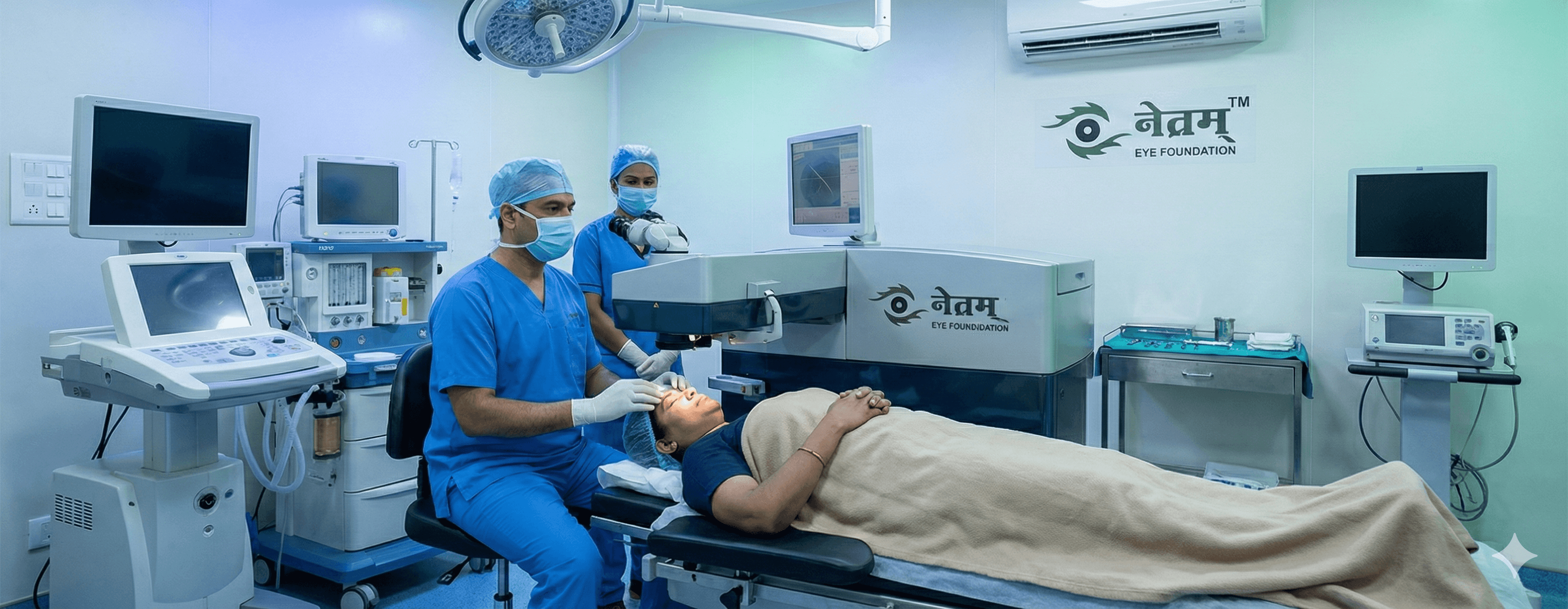
Fellowship-Trained Corneal Surgeon — Not a Technician

Every corneal tattoo at Netram is performed directly by Dr. Anchal Gupta — a fellowship-trained corneal and refractive surgeon with 19+ years of experience. This is delicate, precision work on the most sensitive tissue in the body. It should never be delegated.

Thorough Pre-Operative Counselling

Corneal tattooing is an elective cosmetic procedure. We believe every patient must have a completely realistic understanding of what the procedure can and cannot achieve, the longevity of results, and the possibility of touch-up sessions before making a decision. No pressure. No rushed consultations.

Therapeutic & Cosmetic Applications — Both Served

We perform corneal tattooing for both therapeutic and cosmetic indications — covering opaque leukomas on blind eyes, masking scars, reducing debilitating glare from iris defects, and improving the appearance of disfigured or phthisical eyes.

We Do NOT Perform Purely Cosmetic Eye Colour Change on Healthy Eyes

Purely cosmetic keratopigmentation on healthy eyes to change eye colour carries significant risks. At Netram, we follow established international guidance and perform corneal tattooing exclusively for therapeutic cosmetic indications — where there is genuine clinical need.

Most Affordable Therapeutic Keratopigmentation in Delhi

Corneal tattooing at Netram is priced at ₹7,000 for both eyes — making this life-changing cosmetic restoration accessible to patients across all socioeconomic backgrounds.

Restore Your Confidence Today

Restore Your Confidence Today

Book a consultation with Dr. Anchal Gupta. Honest assessment. No pressure. Complete pre-operative counselling included.

Book Consultation

TREATMENT OVERVIEW

Understanding Corneal Tattooing — Keratopigmentation

What is Corneal Tattooing (Keratopigmentation)?

Corneal tattooing — formally called keratopigmentation (KTP) — is the application of biocompatible pigment to the corneal tissue to alter its cosmetic appearance. The procedure has been performed in ophthalmology for over 150 years, with modern techniques using micronised mineral pigments and precise surgical delivery systems producing natural-looking, long-lasting, and safe results.

What it treats

Corneal opacities (leukomas) from trauma, infection, or surgery; disfiguring white or discoloured corneas in blind or low-vision eyes; iris abnormalities causing glare or cosmetic distress; phthisis bulbi; corneal scars; and band keratopathy with cosmetic impact.

Who it is for

Primarily patients with a disfigured eye — white scarred cornea, total or subtotal leukoma, corneal opacity from old keratitis or trauma — where the cosmetic appearance causes social distress, loss of confidence, or self-consciousness. Also for patients with iris defects causing debilitating glare.

History

The first description of corneal tattooing was by Galen of Pergamum in 150 AD. Modern corneal tattooing was formalised by Louis de Wecker in 1869. Today's procedures use third-generation micronised mineral pigments with proven biocompatibility, colour stability, and safety records.

Conditions Treated with Keratopigmentation

Corneal Leukoma / Total Corneal Opacity

A leukoma is a dense white opacity of the cornea — the result of full-thickness corneal scarring from severe infection (bacterial keratitis, fungal keratitis, herpetic keratitis), chemical burns, trauma, or failed corneal grafts. The eye appears white or milky and is cosmetically prominent. Keratopigmentation covers the white opacity with a pigment that matches the colour of the fellow iris — restoring a natural, harmonious appearance. The eye is still blind — but it no longer looks disfigured.

Partial Corneal Opacity / Corneal Scar

A partial or subtotal corneal opacity is a visible white or grey scar from previous infection, trauma, ulcer, or surgery. The eye may still have some useful vision. In eyes with residual vision, keratopigmentation requires very careful pre-operative assessment and a detailed discussion of risks and benefits, and is typically reserved for patients where the cosmetic distress is significant and other options like tinted contact lenses or corneal grafts are not viable.

Iris Abnormalities — Glare Reduction & Cosmesis

Traumatic iridodialysis, large iridectomies, aniridia, or essential iris atrophy can leave the pupillary zone inadequately covered — causing debilitating glare, photophobia, and diplopia, in addition to obvious cosmetic disfigurement. Applying pigment over the affected corneal zone creates an artificial iris aperture — reducing glare and photophobia while restoring a cosmetically normal-looking eye. Clinical studies show marked reduction in photophobia and diplopia with high patient satisfaction and stable functional improvement at multi-year follow-up.

Phthisis Bulbi

Phthisis bulbi is a shrunken, disorganised, non-functional eye — the end-stage of various severe ocular conditions. The eye is typically white, sunken, and cosmetically disfiguring, and patients often feel self-conscious and avoid social situations. A prosthetic shell is one option, but for phthisical eyes with acceptable globe volume, keratopigmentation of the white corneal surface can improve appearance significantly and may eliminate the need for a prosthetic device.

Band Keratopathy with Cosmetic Impact

Band keratopathy is a horizontal band of calcium deposition across the cornea, appearing as a white, chalky opacity across the visual axis or peripheral cornea. It can cause glare and has significant cosmetic impact. EDTA chelation removes band keratopathy, but for residual or recurrent opacity causing cosmetic distress, keratopigmentation can camouflage the remaining discolouration.

Published Results

Published studies show 37.5% excellent and 56.3% good cosmesis with therapeutic keratopigmentation. Third-generation micronised mineral pigments are significantly more stable than older India ink or metallic pigments. Most patients maintain acceptable cosmetic results for 2–5 years before any touch-up is needed. Vascularised corneas show more pigment fading; avascular opacities maintain pigment stability much better.

OUR APPROACH

How Corneal Tattooing Works — Step by Step

The procedure is performed under topical or local anaesthesia in our minor procedure room. Here is exactly what happens at Netram Eye Foundation:

  1. 1

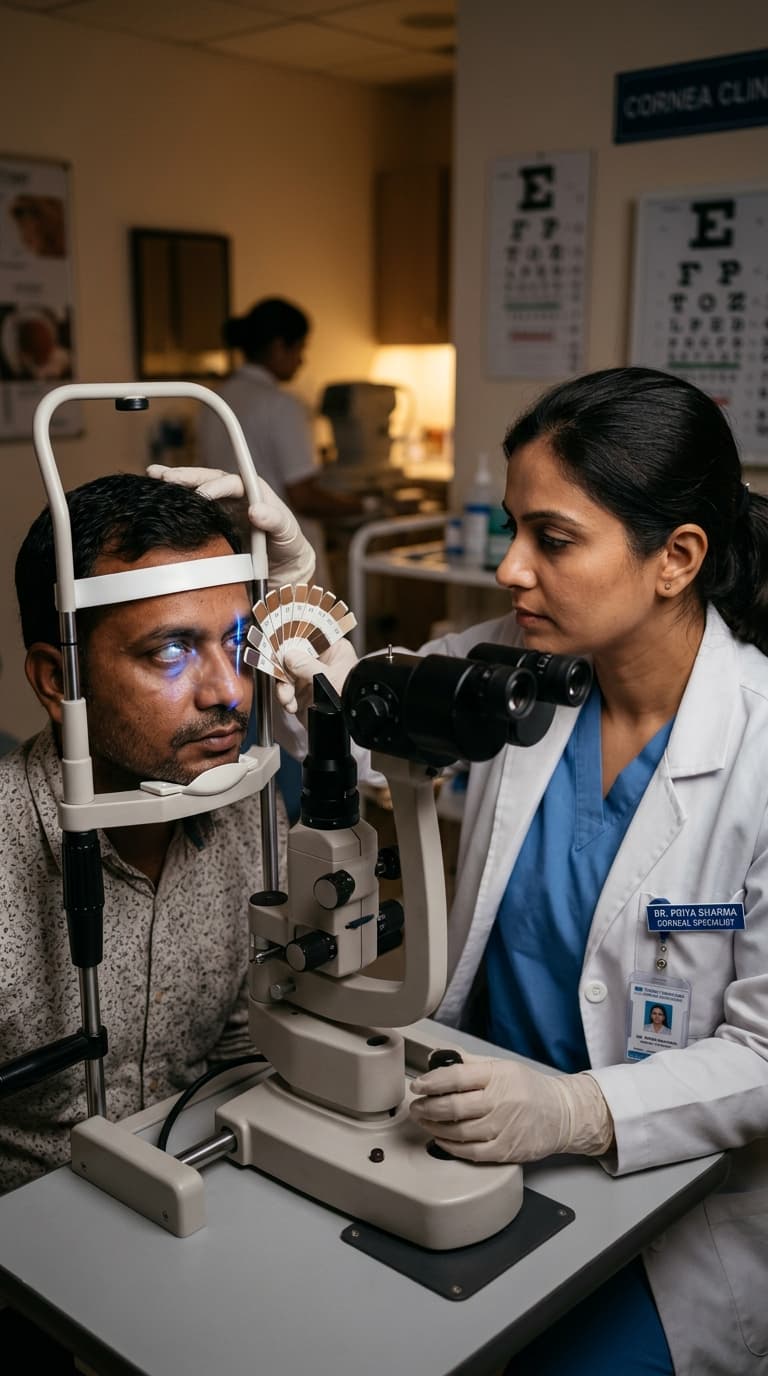
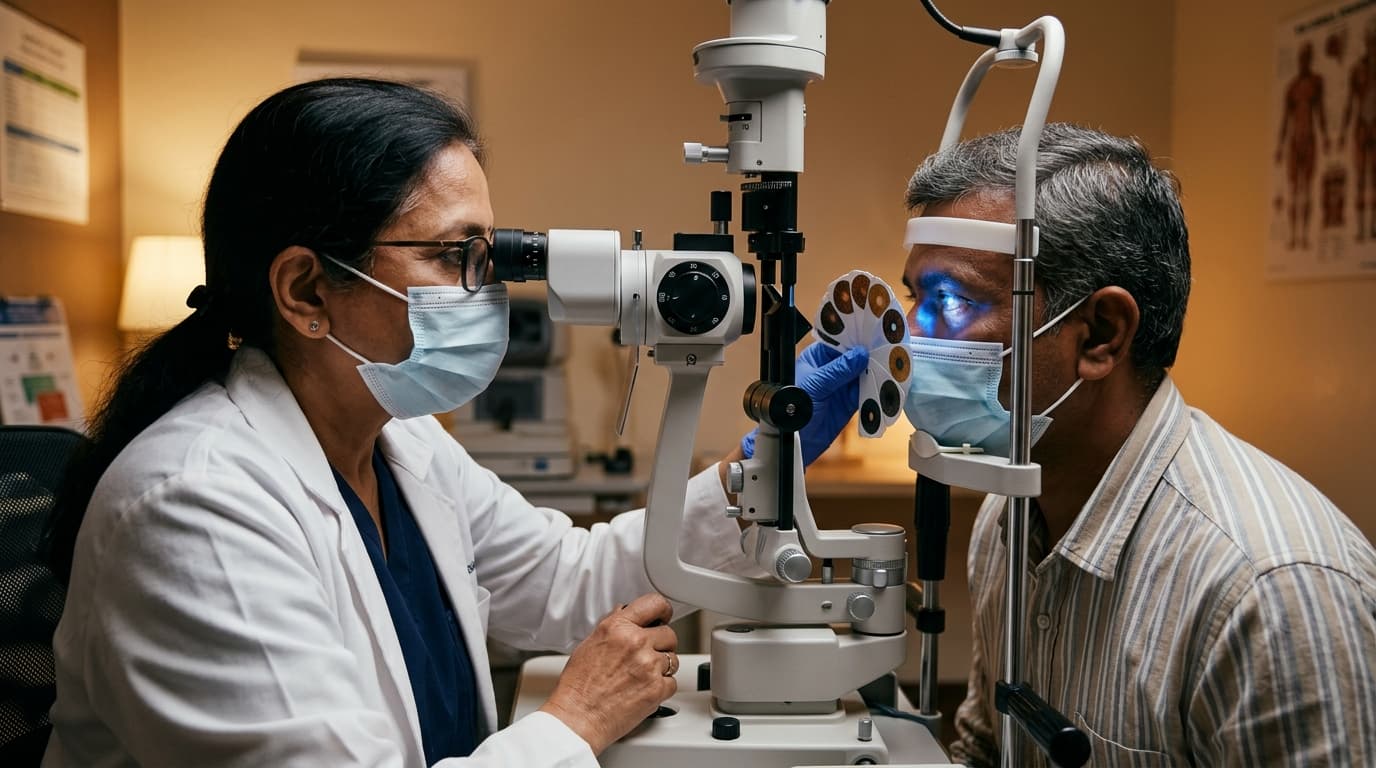
    A thorough pre-operative assessment is performed including slit lamp examination, B-scan ultrasound if indicated, and colour matching of the pigment to the fellow eye.

  2. 2

    Topical anaesthetic drops (proparacaine) are applied. For some approaches, a peribulbar block may be used for greater comfort.

  3. 3

    The corneal surface is prepared. For superficial tattooing, the epithelium over the opacity is gently removed or micropunctured to create channels for pigment entry.

  4. 4

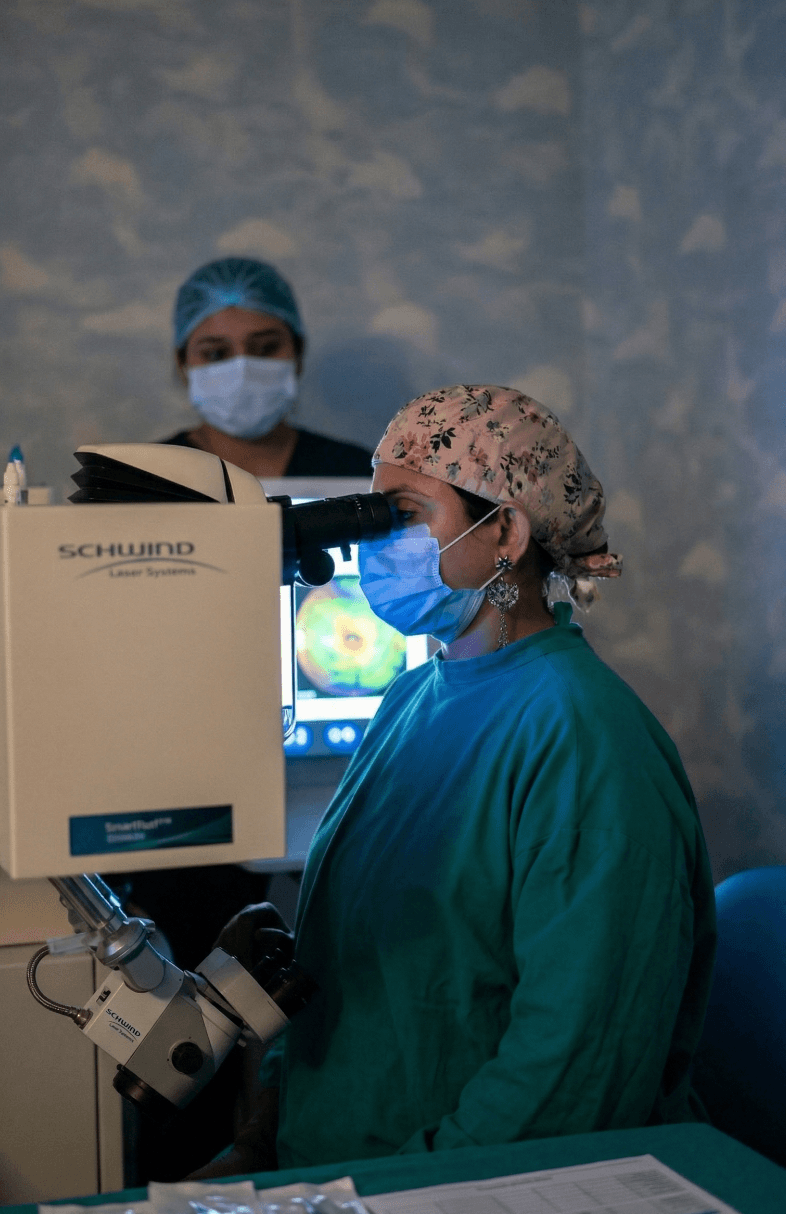
    The selected biocompatible micronised mineral pigment — colour-matched to your fellow eye — is carefully deposited into the corneal stroma using a 30-gauge needle or automated micropuncture device over the opacity.

  5. 5

    The pigment is worked into the corneal tissue until uniform, natural-looking coverage of the opacity is achieved. Adjacent areas are carefully feathered for a gradual, realistic transition.

  6. 6

    The treated area is assessed under the slit lamp for coverage uniformity and colour match. Additional pigment is applied as needed.

  7. 7

    Antibiotic drops are instilled. A bandage contact lens or eye pad is placed. You go home the same day.

Have Questions About Corneal Tattooing? We Respond in Under 10 Minutes.

Have Questions About Corneal Tattooing?We Respond in Under 10 Minutes.

Free Counselling
₹7,000 Both Eyes
Netram Eye Foundation profile

Netram Eye Foundation

TODAY

Hi! Welcome to Netram Eye Foundation.

10:00 AM

Have a disfigured eye and want to know if corneal tattooing can help? Let us assess your case.

10:00 AM

MEET YOUR SURGEON

Your Vision in the Hands of Excellence

Dr. Anchal Gupta

Dr. Anchal Gupta

Fellowship in Cornea & Refractive Surgery

Achievements & Highlights

  • Expert in Cataract, Refractive (LASIK) & Cornea Procedures.

  • Among the fastest surgeons in India.

  • Thousands of successful vision correction surgeries.

  • Winner of many prestigious awards.

  • Known for precision, empathy, and ethical care.

19+

Years
Of Experience

2.5L+

Successful Procedures

7+

Areas of Surgical Expertise

A disfigured eye is not just a cosmetic matter — it affects how someone interacts with the world, their confidence in social situations, and how they feel when they look in the mirror. Restoring a natural appearance to that eye, when we can do so safely, is a meaningful and deeply human act of care.

KERATOPIGMENTATION TECHNIQUES

Corneal Tattooing Techniques — Understanding the Options

Several techniques for keratopigmentation exist in clinical practice. At Netram, we perform the technique most appropriate for each patient's specific corneal condition and eye anatomy.

TechniqueHow It WorksDepth of PigmentBest ForAt Netram
Superficial Manual (SMK)Multiple micropunctures with 30G needle; pigment deposited superficiallyEpithelium / Bowman's layerPartial opacities; most leukomasPerformed
Superficial Automated (SAK)Multi-needle automated device; uniform, faster pigment deliveryEpithelium / anterior stromaLarger opacities; better uniformitySelected cases
Manual Intralamellar (MIK)Lamellar corneal dissection; pigment placed in stromal pocketMid-stroma (300–400 µm)Dense leukomas; deeper opacitiesSelected complex cases
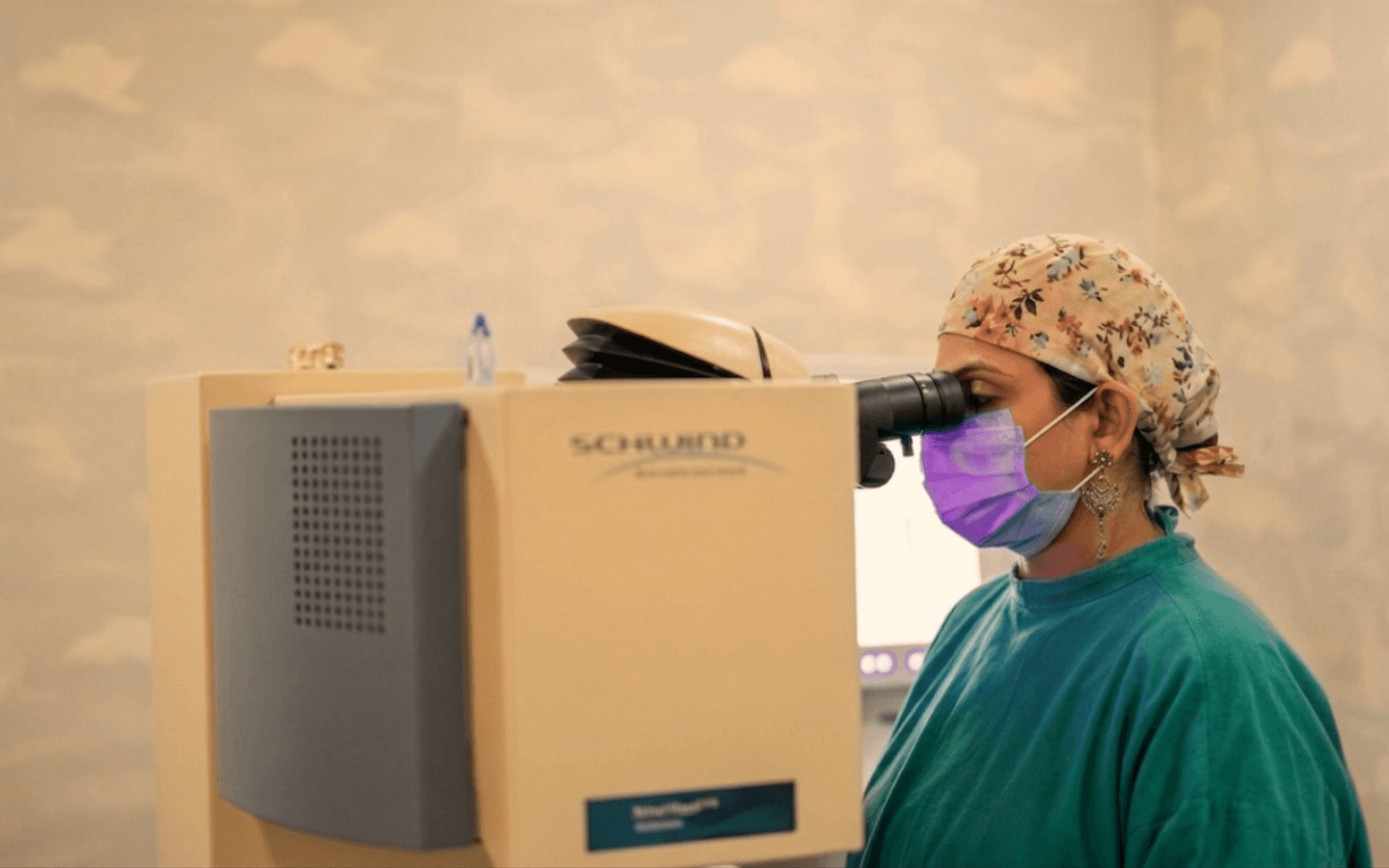
Femtosecond-Assisted (FAK)Femtosecond laser creates precise intrastromal pocket; pigment injectedPrecise mid-stromal depthPremium cosmetic; colour changeAdvanced technique

About Pigments We use third-generation micronised mineral pigments — the current gold standard for keratopigmentation. These are biocompatible, colour-stable under prolonged UV light exposure, and maintain the cornea's vascular and avascular properties. They have replaced older India ink and metallic pigments which were associated with higher complication rates and poor colour stability.

Netram Corneal Tattooing — Complete Pricing Summary

ProcedureDetailsPrice at Netram
Corneal Tattoo — Both EyesTherapeutic keratopigmentation; mineral pigments; colour-matched₹7,000 (both eyes)
Pre-op EvaluationSlit lamp, B-scan (if needed), colour matching, counsellingIncluded in consultation
Bandage Contact LensTherapeutic soft lens for epithelial healing (3–5 days)Included
Touch-Up SessionFor colour fading, incomplete coverage, or vascularised areasAdditional charge — consult our team
Follow-Up VisitsDay 1, Day 5, Week 4, Month 3 assessmentsIncluded in package

What to Expect — Realistic Outcomes from Corneal Tattooing

Setting the right expectations before corneal tattooing is the most important part of our pre-operative counselling. Here is an honest, evidence-based guide to what patients typically experience.

OutcomeWhat Evidence ShowsTimelineNotes
Cosmetic appearance37.5% excellent; 56.3% good cosmesis in therapeutic KTP study (2025 PMC/PubMed). Purely cosmetic KTP: 90% excellent at 1–6 year follow-upAssessed at 4–6 weeksVascularised corneas have less predictable results
Patient satisfaction92.5% excellent satisfaction in cosmetic KTP studies; 93.75% excellent or good in therapeutic series (WHOQOL-BREF questionnaire)Month 1–3Self-confidence and social comfort are primary outcome measures
Glare / photophobia reductionSignificant reduction documented in patients treated for iris defects; improvement in functional visual symptomsWeeks 1–4Particularly effective for large iridectomies and traumatic iris loss
Pigment stabilityThird-generation mineral pigments show good colour stability at 2–5 year follow-up. Fading more common in vascularised corneas1–5 yearsTouch-up sessions address fading; more resistant than first-gen India ink
VisionKeratopigmentation does not improve or reduce vision in blind eyes. In seeing eyes with carefully selected opacities, vision is generally unchanged or occasionally slightly improved by reduced glareImmediate post-procedureProcedure is NOT intended to improve visual acuity
Touch-up requirement20–30% of patients may need a touch-up for colour uniformity or areas of fading, particularly in vascularised corneas6 months post-procedureBudgeted separately; not a complication but an expected part of long-term management

THE TREATMENT JOURNEY

Your Keratopigmentation Journey at Netram

From your first consultation to your annual review — every step in the corneal tattooing journey is guided with complete honesty and compassionate care.

PRE-OP step 1 of 4

First VisitStep 1

Full Ocular Assessment

Slit lamp examination of both eyes. B-scan ultrasound if the eye is blind or opaque. Corneal condition assessed and documented. Vision status confirmed. Photograph of both eyes taken for colour reference.

Colour MatchingStep 2

Pigment Selection

Pigment colour is carefully matched to the iris colour of the fellow eye under natural lighting conditions. Multiple pigment shades may be trialled to find the closest match. Patient and surgeon agree on the target appearance.

CounsellingStep 3

Realistic Expectations

Detailed discussion of what the procedure can achieve, the possibility of touch-up sessions, pigment fading over years, risks (inflammation, neovascularisation, infection), and aftercare requirements. All questions answered. Written consent obtained.

Day PriorStep 4

Pre-Op Instructions

No eye makeup. Arrange a companion for the day. Antibiotic drops started 24 hours before the procedure as prescribed. Avoid alcohol for 24 hours before.

PATIENT STORIES

Lives Changed at Netram Eye Foundation

Sonu Kashyap avatar

I’m very thankful to Dr. Anchal Gupta for my successful eye operation. She explained the full process clearly, built my confidence, and made me feel genuinely cared for throughout....

Sonu Kashyap

Eye Surgery Review

Prakash Chetri

Cataract Surgery

Shafiya Meditrip avatar

One month after LASIK, my vision is much clearer at 6/4, beyond expectations. Thank you to Dr. Anchal and the team for such a smooth and reassuring experience....

Shafiya Meditrip

LASIK Review

Ritika Kaushal

LASIK Surgery

Akshita Yadav avatar

I had ICL surgery at Netram and felt supported from consultation to follow-up. Dr. Anchal Gupta and Dr. Neha Sharma explained everything patiently and made the whole journey comfortable and reassuring....

Akshita Yadav

ICL Surgery Review

Subhankar

LASIK Surgery

ALL YOUR QUESTIONS ANSWERED

Frequently Asked Questions About Corneal Tattooing

What is corneal tattooing and who is it for?

Corneal tattooing (keratopigmentation) is a procedure that applies biocompatible pigment to the cornea to cosmetically restore the appearance of a disfigured, white, or scarred eye. It is for patients whose eye has been affected by corneal leukoma (dense white opacity), corneal scar, iris abnormality causing glare, phthisis bulbi, or other conditions that cause a cosmetically prominent change in the eye's appearance. It is a therapeutic cosmetic procedure — not a purely aesthetic one for healthy eyes.

Will corneal tattooing restore my vision?

No — corneal tattooing does not restore vision. It restores appearance. The procedure covers the cosmetically visible opacity or scar, making the eye look more natural — but it does not reverse the structural changes in the cornea that caused the vision loss. For blind or low-vision eyes, this is entirely expected and understood. For patients with partial vision in the affected eye, the procedure is performed with extreme care, and vision is monitored before and after.

Is the procedure painful?

Topical anaesthetic drops numb the corneal surface effectively. Most patients feel pressure and awareness of the procedure, but not pain. The most noticeable sensation is during the micropuncture of the epithelium — which is mild and brief. After the procedure, when the drops wear off, mild foreign body sensation is expected for 3–5 days while the epithelium heals. This is well-managed with prescribed drops and the bandage contact lens.

How natural will the result look?

Results vary depending on the extent and type of the original opacity, the degree of corneal vascularisation, and the skill of colour matching. For total leukomas on blind eyes, published studies show 37.5% excellent and 56.3% good cosmesis. For more limited opacities, results can be very natural-looking. The goal is not a perfect match — it is a result that is significantly more natural and harmonious than a white or disfigured eye. Dr. Anchal will give you an honest assessment of what to expect from your specific case before proceeding.

How long do the results last?

Third-generation micronised mineral pigments are significantly more stable than older India ink or metallic pigments. Most patients maintain acceptable cosmetic results for 2–5 years before any touch-up is needed. Vascularised corneas (where blood vessels are present in the scar) show more pigment fading as vessels can wash out the pigment. In avascular opacities, pigment stability is much better. Annual review is recommended to monitor the result.

Will I need touch-up sessions?

Approximately 20–30% of patients benefit from a touch-up session at 3–6 months post-procedure — particularly in vascularised areas or where initial coverage was uneven. A touch-up is not a complication; it is an expected part of long-term management of keratopigmentation, similar to how skin tattoos may need refreshing. Touch-up sessions are priced separately and discussed at your follow-up visit.

Can corneal tattooing be done to change my eye colour if my eyes are healthy?

No — at Netram Eye Foundation, we do not offer purely cosmetic keratopigmentation on healthy eyes for eye colour change. While some centres globally offer this, the procedure on healthy eyes carries documented risks including photophobia (in up to 30% at 1 month), subtle endothelial cell loss, ectasia risk in susceptible corneas, and limited long-term safety data beyond 5 years. We follow responsible clinical practice and perform keratopigmentation exclusively where there is a genuine therapeutic need. We are happy to discuss alternative options for those interested in changing eye appearance, including cosmetic contact lenses.

What are the risks of corneal tattooing?

The most commonly reported risks in therapeutic keratopigmentation include: foreign body sensation during healing (3–5 days), mild photosensitivity post-procedure (resolves within weeks), corneal neovascularisation response (more likely in already-vascularised corneas), pigment fading (addressed with touch-ups), and inflammation. Serious complications — infection, significant vision loss — are rare and minimised by strict aseptic technique. In blind eyes, the risk-benefit balance strongly favours the procedure given the life-quality benefit of restored appearance.

What is the cost of corneal tattooing at Netram Eye Foundation?

Corneal tattooing (keratopigmentation) is priced at ₹7,000 for both eyes at Netram Eye Foundation, Greater Kailash II. This includes pre-operative assessment, the procedure, bandage contact lens, post-operative medication for the first week, and all scheduled follow-up visits up to 3 months. Touch-up sessions, if needed at 3–6 months, are priced separately. Please contact our team for a personalised assessment and quote.

How is corneal tattooing different from coloured contact lenses?

Coloured or tinted cosmetic contact lenses are a non-surgical alternative — removable, reversible, and with no procedural risks. However, they require daily insertion and removal, carry infection risks (particularly important in eyes with existing corneal disease), and may not sit properly on scarred or irregular corneas. They also need to be replaced regularly and can be uncomfortable in eyes with surface problems. Corneal tattooing is a permanent option for patients where contact lenses are not tolerated, not viable on the irregular surface, or where the patient prefers a maintenance-free solution.

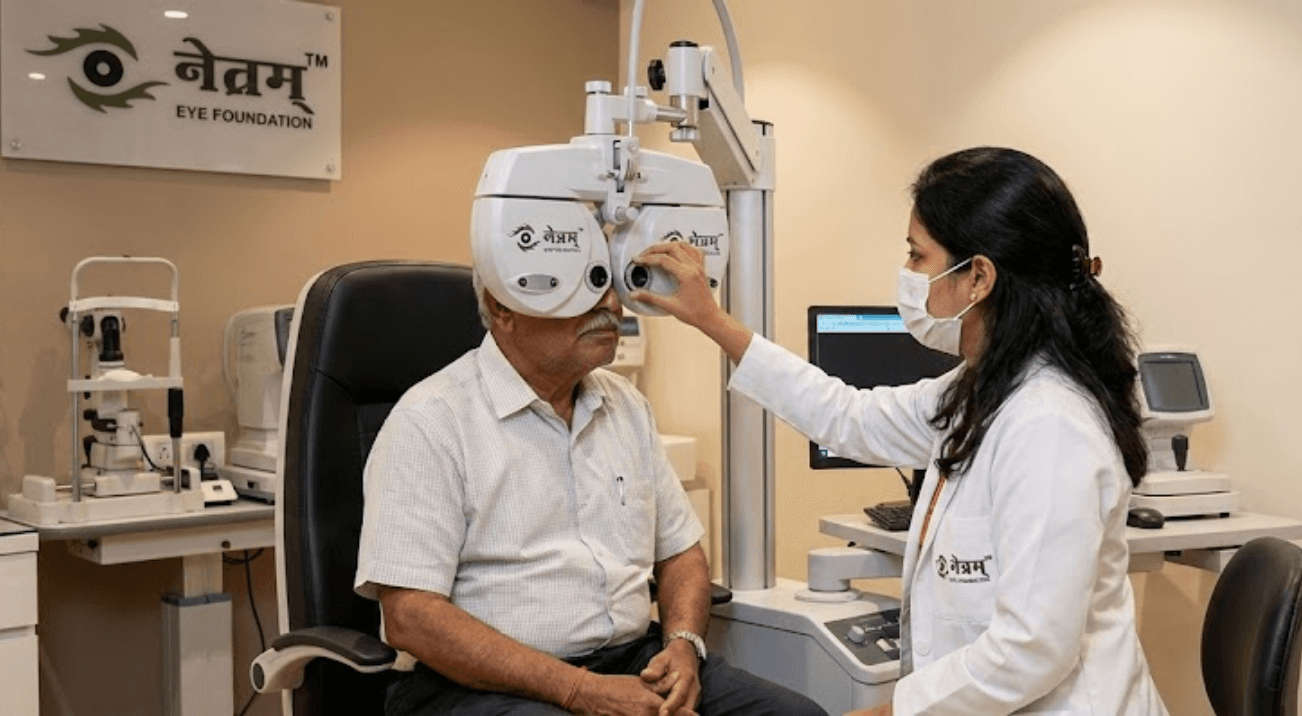
Patient receiving an eye examination

BOOK YOUR CONSULTATION

Restore Confidence. Reclaim Your Appearance.