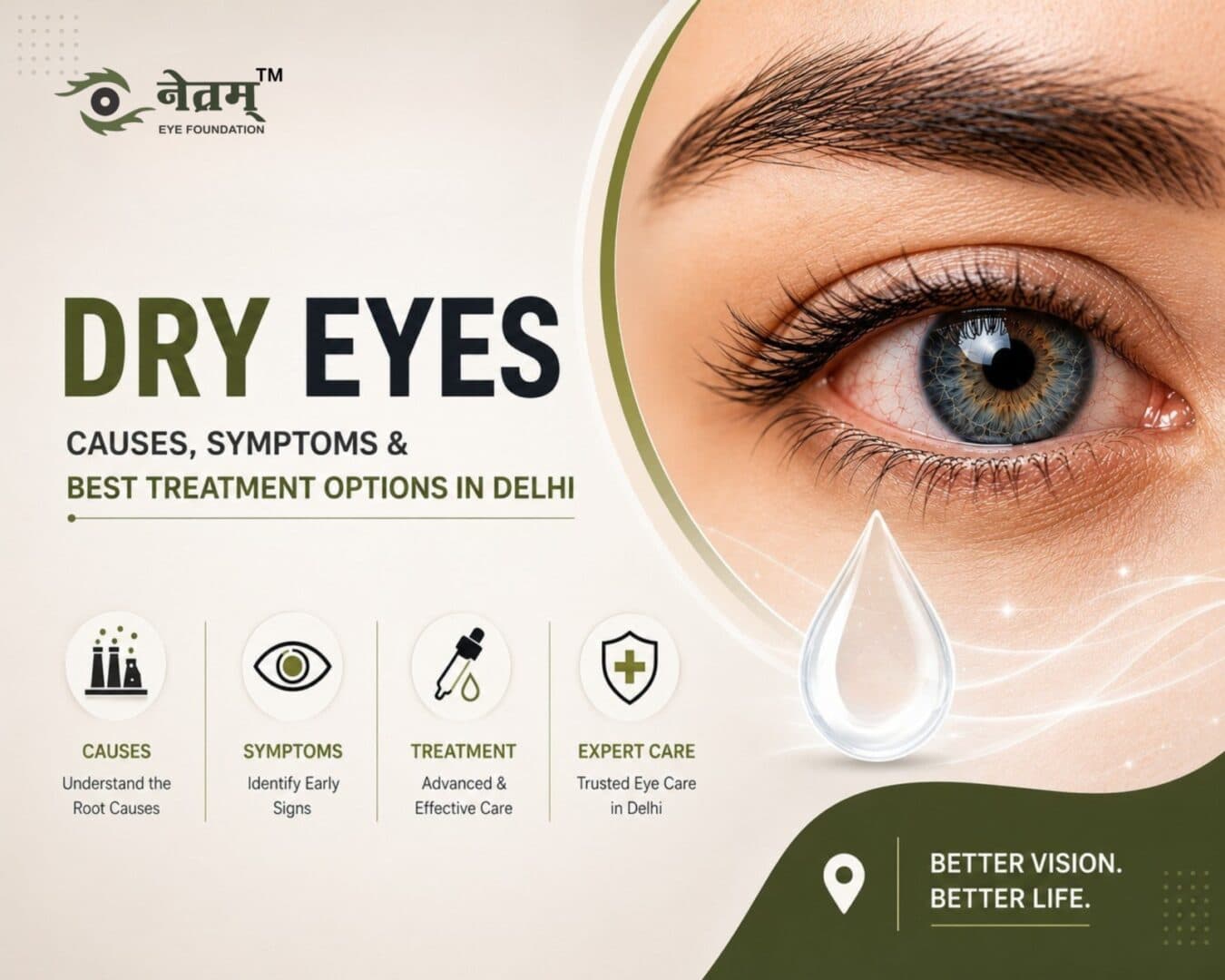
Dry Eye Treatment in Delhi: Causes, Symptoms & Best Treatment Options
Introduction: The Growing Need for Dry Eye Treatment in Delhi
Dry Eye Treatment in Delhi is becoming increasingly important as more people experience burning, itching, redness, gritty sensations and fluctuating vision. Prolonged screen time, air conditioning, pollution and other environmental factors can contribute to dry eye symptoms, particularly in urban areas such as Delhi-NCR.
Dry eye disease is more than temporary eye discomfort. It can occur when the eyes do not produce enough tears or when tears evaporate too quickly. The National Eye Institute notes that dry eye may cause burning, scratchiness, redness, light sensitivity and blurred vision.
At Netram Eye Foundation, patients can undergo detailed evaluation of the ocular surface and tear film to help identify the underlying cause of their symptoms. Depending on the diagnosis and severity, treatment may include lifestyle changes, lubricating eye drops, prescription medicines or advanced procedures.
If you are experiencing persistent dry, irritated or watery eyes, an ophthalmologist can help determine the cause and recommend an appropriate treatment plan.
What is Dry Eye Disease?
Dry eye is more than just a temporary nuisance; it is a chronic, progressive condition affecting the tear film. Tears are not just water; they are a complex mixture of three layers:
- The Lipid (Oil) Layer: Produced by the meibomian glands in the eyelids, this outer layer prevents rapid evaporation of tears.
- The Aqueous (Water) Layer: Produced by the lacrimal glands, this is the bulk of the tear and provides hydration and nutrients to the cornea.
- The Mucin Layer: This inner layer helps the tear film spread evenly across the surface of the eye.
When there is a dysfunction in any of these layers—whether due to decreased production or increased evaporation—it leads to Dry Eye Disease (DED).
Major Causes of Dry Eyes in Delhi
Dry eyes are rarely caused by a single factor. Instead, they usually result from a combination of lifestyle, environmental, and physiological triggers. Here are the primary culprits:
1. The Digital Screen Factor
Working on computers or mobile phones reduces our blink rate by nearly half. When we focus intently on a screen, we blink less frequently, leading to increased tear evaporation.
2. Environmental Factors
Living in Delhi exposes you to high levels of dust and smoke, which irritate the eyes. Furthermore, constant exposure to air conditioning (AC) reduces the ambient humidity, drying out the tear film rapidly.
3. Age and Hormonal Changes
Natural aging reduces tear production. Women are particularly at risk due to hormonal changes during menopause, which can lead to ocular surface inflammation.
4. Contact Lenses
Prolonged use of contact lenses can significantly reduce corneal sensitivity, leading to decreased blinking and tear production.
5. Meibomian Gland Dysfunction (MGD)
This is the leading cause of dry eye, where the oil-producing glands on the eyelid margin become blocked. This causes the tears to evaporate too quickly.
6. Systemic Diseases and Medications
Conditions like rheumatoid arthritis, diabetes, and Sjogren’s syndrome can cause dry eyes. Certain medications, including antihistamines and antidepressants, also reduce tear secretion.
Symptoms: Recognizing the Signs
Dry eye symptoms can vary from person to person, but the most common indicators include:
- Burning or Stinging: A persistent burning sensation is a classic sign.
- Gritty Feeling: Feeling like there is sand or a foreign body in the eye.
- Redness: Inflammation of the blood vessels in the eye.
- Blurred Vision: Fluctuating vision that often clears up with blinking.
- Light Sensitivity: Difficulty tolerating bright lights.
- Watery Eyes: Paradoxically, severe dryness can lead to excessive tearing as the eye “reflex tears” to compensate for the irritation.
Why You Shouldn’t Ignore Dry Eyes
Many patients dismiss dry eyes as a minor inconvenience. However, if left untreated, DED is a progressive disease. Persistent inflammation can damage the corneal surface, making you more susceptible to eye infections. In severe cases, chronic dry eye can lead to corneal ulcers and vision loss.
Advanced Dry Eye Diagnosis at Netram Eye Foundation
Before we can treat dry eye, we have to understand it. A “one-size-fits-all” approach rarely works. At Netram Eye Foundation, we employ the revolutionary 3-D Ocular Surface Analyzer (OSA) to assess your tear film composition.
This non-invasive diagnostic tool allows us to:
- Analyze the Lipid Layer: We measure the thickness and stability of the oil layer.
- Measure Tear Meniscus Height: This helps determine the volume of the aqueous (water) layer.
- Perform 3D Meibography: This 3D imaging allows us to visualize the structure of the meibomian glands in high detail to identify blockages or atrophy.
- Check for Blepharitis: We can detect inflammation and Demodex (mites) on the eyelid margin.
This detailed analysis helps us classify your specific type of dry eye (whether aqueous-deficient or evaporative) and design a personalized treatment plan.
Best Dry Eye Treatment in Delhi: Treatment Options
Persistent burning, gritty sensation, redness, excessive watering or fluctuating vision should not be ignored. If dry eye symptoms continue despite basic measures such as taking screen breaks or using lubricating eye drops, an eye specialist can evaluate the tear film and ocular surface to identify the underlying cause.
The right Dry Eye Treatment in Delhi depends on whether the problem is related to insufficient tear production, excessive tear evaporation, eyelid problems, inflammation or another underlying condition. Diagnostic testing can help guide treatment.
1. LipiFlow Thermal Pulsation System
If your dry eye is caused by Meibomian Gland Dysfunction (the most common cause), LipiFlow is the gold standard.
- What It Is: This FDA-approved, 12-minute procedure applies gentle heat (42.5°C) to the inner eyelid while delivering a massaging pressure to the outer eyelid.
- How It Works: It effectively clears blockages, stimulates the glands, and restores the natural secretion of oils (lipids) to stabilize the tear film.
- Benefits: It is painless, non-invasive, and often reduces dependence on artificial tears.
2. Intense Pulsed Light (IPL) Therapy
Originally used for skin rejuvenation, IPL is highly effective for treating dry eyes, especially those associated with rosacea.
- How It Works: IPL uses specific wavelengths of light to target abnormal blood vessels on the eyelid margin. By destroying these vascular structures, it reduces inflammation and prevents the access of inflammatory mediators to the meibomian glands.
- Benefits: It improves meibomian gland activity, reduces inflammation, and balances the tear film.
3. Punctal Plugs
This treatment is ideal for patients who suffer from a lack of “aqueous” (watery) tears.
- What They Are: Tiny, biocompatible devices are inserted into the tear ducts (puncta) in the corners of the eyelids.
- How They Work: They block the drainage channel, helping your natural tears stay on the eye’s surface longer, keeping them moist.
4. Prescription Eye Drops and Lifestyle Modifications
For mild to moderate cases, we may recommend:
- Artificial Tears: Preservative-free drops are preferred to avoid further irritation.
- Anti-inflammatory Drops: Medications like cyclosporine or lifitegrast may be prescribed to reduce ocular inflammation.
- The 20-20-20 Rule: When using digital devices, take a 20-second break every 20 minutes to look at something 20 feet away.
Frequently Asked Questions (FAQs)
1. What is the leading cause of dry eyes?
The leading cause is Meibomian Gland Dysfunction (MGD), which affects the lipid layer and causes tears to evaporate too quickly.
2. Can dry eye cause blindness?
Yes, if left untreated. Severe, chronic dry eye can lead to corneal damage, ulcers, and in extreme cases, vision loss.
3. Is LipiFlow better than artificial tears?
Yes, for patients with MGD. While artificial tears only provide temporary relief, LipiFlow addresses the root cause by unblocking the oil glands to restore natural tear function.
4. How long does LipiFlow treatment take?
The treatment itself takes approximately 12 minutes, and patients often feel relief within weeks.
5. Is IPL therapy safe for the eyes?
Yes, when performed by an expert ophthalmologist, IPL is safe. It uses light energy to reduce inflammation and improve gland function.
6. Does LASIK surgery cause dry eyes?
LASIK can cause temporary dry eyes as the corneal nerves take time to heal. If you have pre-existing dry eyes, it is crucial to treat it before undergoing any refractive surgery.
Conclusion: Get Relief Today at Netram Eye Foundation
Dry Eye Disease is a serious condition that affects your quality of life. However, with modern technology like the 3D OSA, LipiFlow, and IPL, long-lasting relief is achievable.
Don’t let gritty, burning, or red eyes hold you back. At Netram Eye Foundation in Delhi, our corneal specialists are committed to diagnosing the root cause of your discomfort and providing a customized, advanced treatment plan.
Ready to see the world clearly and comfortably?
📞 Book an Appointment Today
Visit https://netrameyefoundation.com/ to schedule your consultation and take the first step towards healthy, hydrated eyes.