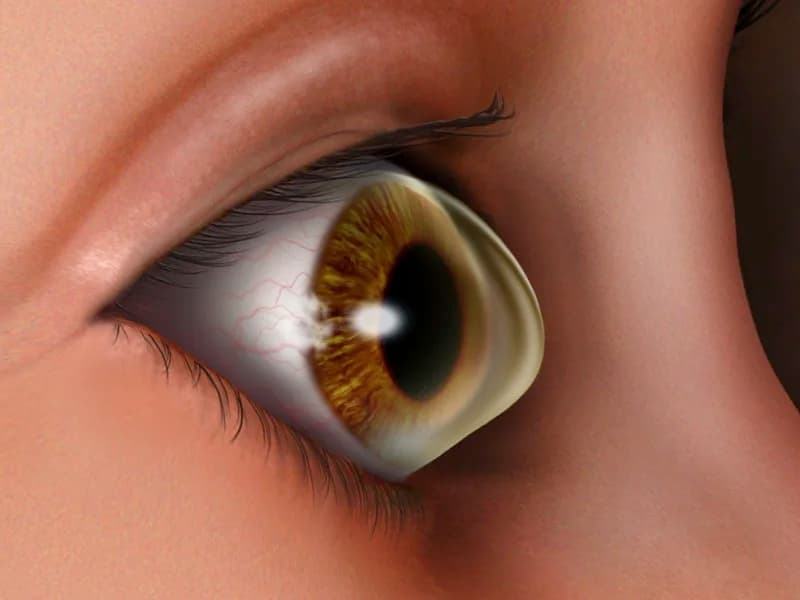
What Is Keratoconus?
Keratoconus is a progressive eye condition in which the normally round cornea becomes thin and cone-shaped. This irregular shape prevents light from focusing properly on the retina, leading to blurred and distorted vision. Keratoconus usually begins in the teenage years or early adulthood and may progress gradually over time.
Common Symptoms of Keratoconus
Blurred or distorted vision
Increasing sensitivity to light and glare
Frequent change in spectacle or contact lens power
Ghosting or double vision
Difficulty with night driving
Early detection is crucial, as timely treatment can slow or halt disease progression.
How Is Keratoconus Diagnosed?
At Netram Eye Foundation, keratoconus diagnosis is done using advanced, non-contact investigations, including:
Corneal topography & tomography to map corneal shape
Pachymetry to measure corneal thickness
Detailed slit-lamp examination
These tests help detect keratoconus even in its early stages.
When Is Keratoconus Surgery Required?
Surgery is advised when:
Glasses or contact lenses no longer provide clear vision
The disease is progressing rapidly
Corneal thinning becomes significant
Daily activities are affected due to poor visual quality
The choice of surgery depends on the stage and severity of keratoconus.
Types of Keratoconus Surgical Treatments


1. Corneal Collagen Cross-Linking (CXL)
Strengthens the cornea using riboflavin (vitamin B2) and UV light
Stops or slows progression of keratoconus
Most effective when done early
2. Intrastromal Corneal Ring Segments (ICRS)
Small arc-shaped rings implanted into the cornea
Improves corneal shape and visual quality
Often combined with cross-linking
3. Topography-Guided Treatments (Selective Cases)
Customized procedures aimed at improving corneal regularity
Suitable only in carefully selected patients
4. Corneal Transplant Surgery
For advanced keratoconus where other treatments are not effective:
DALK (Deep Anterior Lamellar Keratoplasty): Partial-thickness corneal transplant
Penetrating Keratoplasty (PK): Full-thickness corneal transplant (rarely required today)
Life After Keratoconus Surgery
Most patients experience improved vision and stability
Glasses or special contact lenses may still be needed
Regular follow-ups are essential to monitor long-term outcomes
Vision continues to improve gradually over weeks to months
Why Choose Netram Eye Foundation for Keratoconus Treatment?
Advanced diagnostic technology for early detection
Complete range of keratoconus treatments under one roof
Experienced cornea specialists and surgeons
NABH-accredited facility with patient-centric care
Personalized treatment plans tailored to each eye
Frequently Asked Questions (FAQs)
Is keratoconus surgery safe?
Yes. When performed after proper evaluation, keratoconus procedures are safe and effective.
Can keratoconus be cured permanently?
Keratoconus cannot be “cured,” but modern treatments can stop progression and significantly improve vision.
Is LASIK suitable for keratoconus?
No. LASIK is contraindicated in keratoconus patients.
What is the best age for cross-linking?
As early as possible once progression is detected.
Take the Next Step
If you or your loved one has been diagnosed with keratoconus or is experiencing frequent vision changes, early evaluation can make all the difference.
Book a comprehensive cornea evaluation at Netram Eye Foundation and protect your vision for the future.